
Learn the spec-first method for building software with AI coding agents. Write specs with acceptance criteria, edge cases, and constraints, structure context for any agent, verify output against the spec with tests, iterate on failures, and know when to hand-code. Tool-agnostic across Claude Code, Cursor, Copilot, Devin, and any agent.
Spec-driven development is the method that turns an AI coding agent from a slot machine into a reliable collaborator. Instead of typing a vague request and patching whatever comes back, you write a precise specification first, hand it to the agent, and verify the result against that spec with tests. This free course teaches the workflow end to end, and it is deliberately tool-agnostic: the same skills apply whether you run Claude Code in your terminal, Cursor in your editor, GitHub Copilot in your IDE, or a more autonomous agent like Devin.
Across seven focused lessons you will learn why spec-first beats vague prompting, how to write acceptance criteria, edge cases, and constraints that any agent can execute, how to structure a prompt with context, spec, and guardrails, and how to verify output against the spec rather than against a gut feeling. You will also practice iterating on failures, diagnosing whether the spec or the output was wrong, and recognizing when hand-coding is simply the faster path. A capstone walks you through one complete loop on a real feature so the method becomes second nature.
This course is built for developers and students who already use an AI coding agent and want to work more systematically and ship fewer surprises. It pairs naturally with the tool-specific courses on Claude Code, Cursor, and GitHub Copilot, which teach the buttons while this one teaches the repeatable method. It is completely free, and finishing every lesson plus the final exam earns you a certificate of completion you can add to your LinkedIn profile or resume.
4 modules • 7 lessons
Finish every lesson and pass the final exam to earn this free, shareable certificate.

Certificate of Completion
has successfully completed
7 lessons · Final exam passed

Michail Ouroumis
Founder, FreeAcademy.ai
Sample preview. Your name appears on the certificate when you complete the course. Learn more
It is the practice of writing a precise specification first, with acceptance criteria, edge cases, and constraints, then handing that spec to an AI coding agent and verifying the output against it with tests. The spec is the source of truth, and code is derived from it. This course teaches that loop as a repeatable method rather than as a feature of any single tool.
No. The course is deliberately tool-agnostic. The skill is knowing what to put in a spec and how to verify against it, which transfers to Claude Code, Cursor, GitHub Copilot, Devin, and any future agent. The spec lives outside the tool. For the specific buttons of each tool, the companion courses on Claude Code, Cursor, and GitHub Copilot teach those directly.
It is for developers and students who already use at least one AI coding agent and want to work more systematically. It is set at an intermediate level and assumes you can read code and run tests, but it does not require deep experience with any particular agent.
Yes, the course is completely free. You can work through all seven lessons and the capstone at your own pace, and completing the course plus the final exam earns you a certificate of completion you can share on LinkedIn or add to your resume.
Prompt engineering focuses on phrasing requests well. Spec-driven development is a full build method: it covers writing checkable specs, structuring the prompt, verifying output with tests against the spec, iterating on failures, and deciding when to hand-code. The prompt is just one step inside the larger loop this course teaches.

Master Cursor, the AI-powered code editor. Learn Chat, Cmd+K inline editing, Tab completion, Agent mode, multi-file refactoring, codebase-wide context, custom rules, and productivity workflows that dramatically speed up development.
Master Claude Code, Anthropic's agentic coding tool. Learn installation across CLI, desktop, web, and IDE extensions. Master core workflows for reading, writing, debugging, and refactoring code. Configure CLAUDE.md files, memory, slash commands, MCP servers, and hooks. Build real features and compare Claude Code with Cursor and Copilot.
Master GitHub Copilot to boost your coding productivity. Learn setup, effective prompting, managing suggestions, using Copilot Chat, writing tests and documentation, code review best practices, and understand limitations compared to other AI coding tools.

Master OpenAI Codex, the coding agent that works in your terminal and in the cloud. Learn the CLI with its three approval modes, run parallel sandboxed tasks with Codex Cloud, extend capabilities with the skills system, and coordinate multiple agents across large projects. Powered by GPT-5.3-Codex.
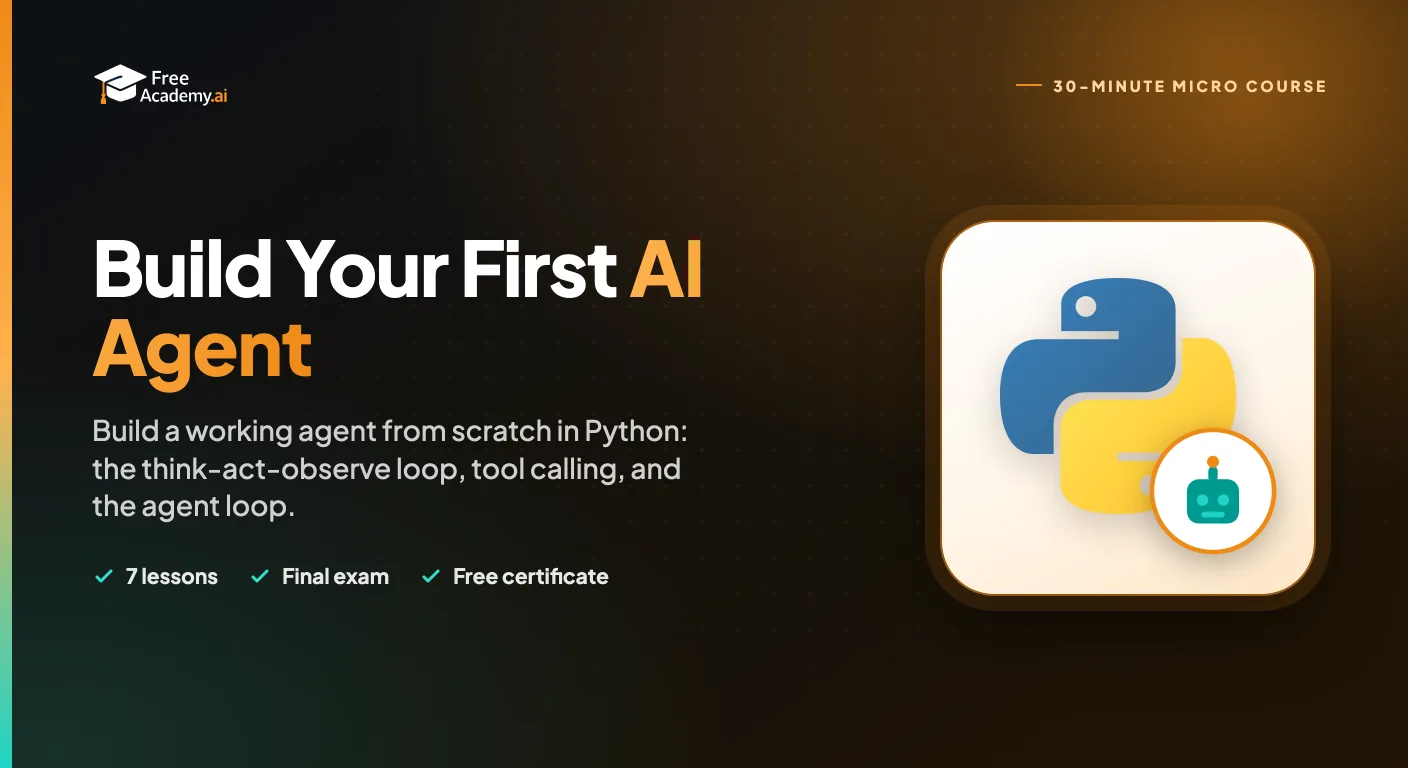
Build a working AI agent from scratch in Python. Learn the think-act-observe loop, call an LLM, give your agent a tool it can use, and handle a failed tool call. Framework-agnostic and beginner-friendly.
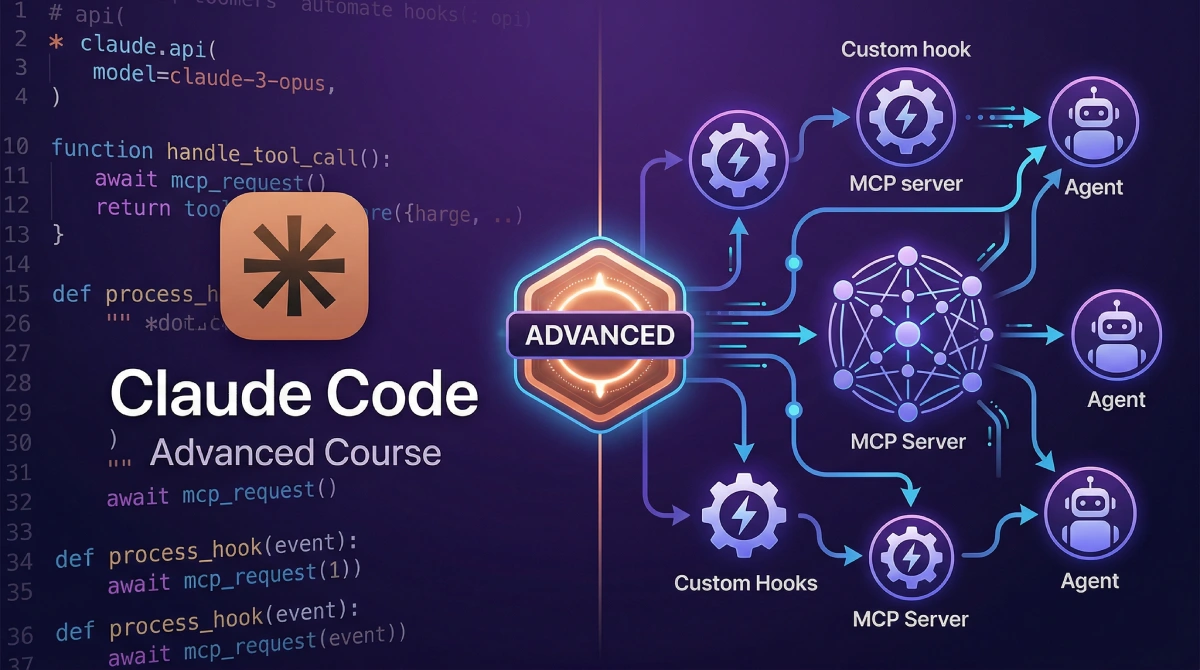
Master advanced Claude Code workflows including agent mode, multi-agent orchestration with subagents, custom slash commands and agents, hooks automation, memory systems, MCP server integrations, headless CI/CD pipelines, production agent systems, and enterprise team patterns.