Learn to leverage Claude AI for effective code review in 30 minutes. Master prompts for finding bugs, security vulnerabilities, and refactoring suggestions with hands-on practice.
This free course teaches you how to use Claude AI as a practical code review partner, covering the full workflow from understanding why AI-assisted review works to writing structured prompts that surface real bugs. In about 30 minutes you will move through a single focused module that walks you through security-focused reviews, identifying vulnerabilities in your own code, and generating actionable refactoring suggestions. No AI background is required beyond basic familiarity with writing code.
The lessons are designed for developers, students, and self-learners who want to raise the quality of their code without waiting for a senior colleague. You will learn how to frame prompts for different review goals, whether that is catching logic errors, spotting insecure patterns, or cleaning up structure. The final practice lesson puts those skills to work on real code so you finish with a repeatable method you can apply immediately.
Because the course is free and takes under an hour, there is no barrier to getting started today. Complete all the lessons, pass the short final exam, and you receive a certificate of completion you can add to your LinkedIn profile or resume to show hiring managers and collaborators that you can work productively with AI tools.
1 modules • 6 lessons
Finish every lesson and pass the final exam to earn this free, shareable certificate.
Certificate of Completion
has successfully completed
6 lessons · Final exam passed

Michail Ouroumis
Founder, FreeAcademy.ai
Sample preview. Your name appears on the certificate when you complete the course. Learn more
Teaching a class or training a team? Assign this course for free
The course covers the complete AI code review workflow: why Claude is effective as a review partner, how to structure prompts for different goals, running security-focused reviews, getting refactoring suggestions, and reviewing your own code. A hands-on practice lesson applies all of these skills to real code.
Yes, the course is completely free. You can start immediately without signing up, and completing all lessons plus the final exam earns you a certificate of completion at no cost.
The course is listed as intermediate, so you should be comfortable reading and writing code in at least one programming language. No prior experience with Claude or AI tools is required.
The single module covers six lessons: why AI code review works, structuring code review prompts, security-focused reviews, refactoring suggestions, reviewing your own code, and a practice session using real code examples.
Yes. Completing all the lessons and passing the final exam earns you a certificate of completion that you can add to your LinkedIn profile or resume as evidence of your AI-assisted code review skills.
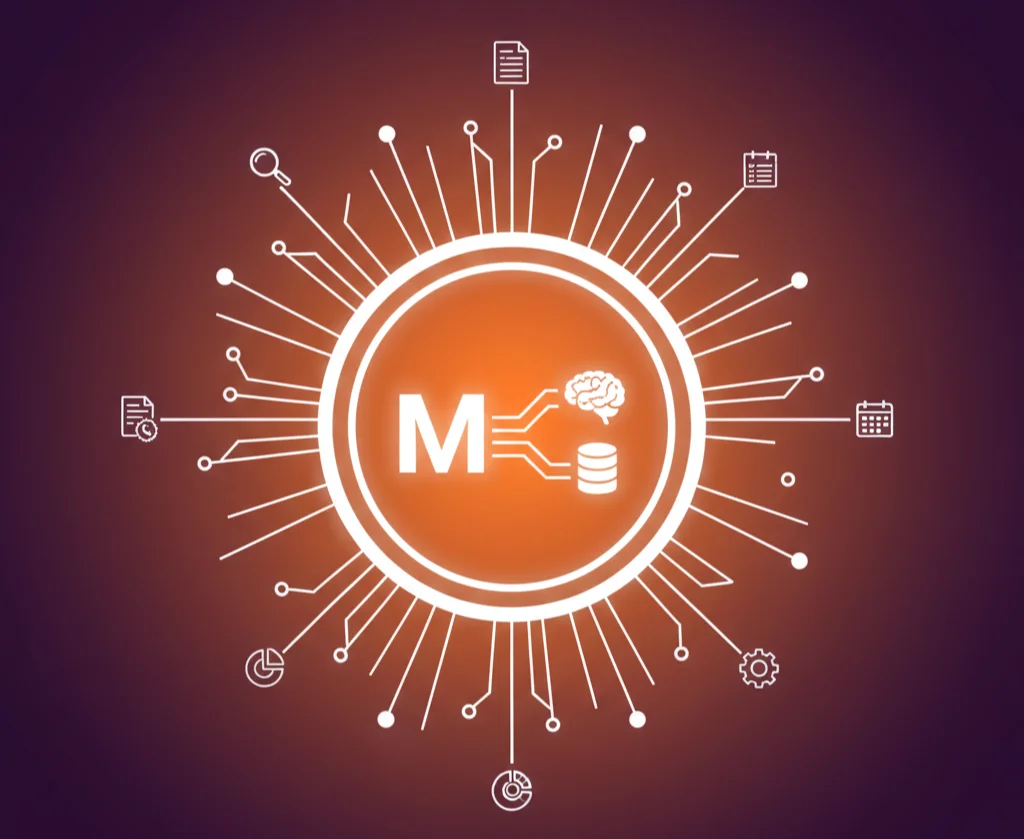
Master the Model Context Protocol (MCP) - Anthropic's open standard for connecting AI assistants to external tools and data sources. Learn to configure, use, and build MCP servers that extend AI capabilities with real-world integrations.

Master vector databases for AI applications. Learn embeddings, similarity search, and hands-on setup of Pinecone, pgvector, and Chroma. Understand indexing strategies, hybrid search, performance optimization, and how to choose the right database for your use case.
Master GitHub Copilot to boost your coding productivity. Learn setup, effective prompting, managing suggestions, using Copilot Chat, writing tests and documentation, code review best practices, and understand limitations compared to other AI coding tools.

Master the art of chaining AI prompts and building sophisticated workflows. Learn to design multi-step AI pipelines, handle errors gracefully, implement branching logic, manage context, and build production-ready AI workflows for research, content creation, and code generation.

Master the calculus that powers machine learning. Learn derivatives, partial derivatives, the chain rule, gradients, gradient descent, loss functions, and backpropagation — the essential math behind how models learn.

Master linear algebra through the lens of artificial intelligence. Learn vectors, matrices, dot products, eigenvalues, and tensors by seeing exactly how they power neural networks, transformers, embeddings, and other AI systems.