Master the calculus that powers machine learning. Learn derivatives, partial derivatives, the chain rule, gradients, gradient descent, loss functions, and backpropagation — the essential math behind how models learn.
Calculus for machine learning is not just an abstract math subject. It is the engine behind how every model trains, adjusts its weights, and improves its predictions. This free intermediate course walks you through the specific calculus concepts that matter most: derivatives, partial derivatives, the chain rule, gradients, gradient descent, and backpropagation. Each topic is taught with machine learning as the motivation, so you understand not only how the math works but why it shows up in the tools and frameworks you use.
The course is structured across six focused modules. You start by building intuition around derivatives and the rules you actually need, then move into partial derivatives and gradient vectors for functions with multiple inputs. From there, you study the chain rule in depth, including how it maps onto computational graphs, which is the direct foundation of backpropagation. The final modules cover how gradient descent optimizes models, how loss functions shape the optimization landscape, and how backpropagation ties every concept together in neural network training.
This course suits students, researchers, and anyone applying machine learning who wants to understand what is happening under the hood rather than treating model training as a black box. A basic familiarity with algebra and functions is helpful, but no prior calculus experience is required. The course is completely free, and completing it along with the final exam earns you a certificate of completion you can share on LinkedIn or include in your resume.
6 modules • 18 lessons
Finish every lesson and pass the final exam to earn this free, shareable certificate.
Certificate of Completion
has successfully completed
18 lessons · Final exam passed
Michail Ouroumis
Founder, FreeAcademy.ai
Sample preview. Your name appears on the certificate when you complete the course. Learn more
The course covers the calculus that powers machine learning training: derivatives, partial derivatives, the chain rule, gradient vectors, gradient descent with its variants, loss functions, and backpropagation. Every topic is taught in the context of how neural networks and ML models learn, not as standalone pure math.
Yes, the entire course is free with no signup required. You can also take the final exam at no cost, and passing it earns you a certificate of completion you can add to LinkedIn or your resume.
No prior calculus is required. The course begins from first principles, explaining what a derivative is and building up from there. Comfort with basic algebra and functions will help you move through the material more smoothly.
The course explicitly connects the math to gradient descent, loss function optimization, regularization, and the full backpropagation algorithm. The chain rule module uses computational graphs, which is the same structure frameworks like PyTorch and TensorFlow use internally.
Understanding the underlying calculus lets you debug training problems, tune hyperparameters like learning rate with real intuition, and reason about why a model converges or diverges. It also makes reading research papers and understanding new architectures significantly easier.
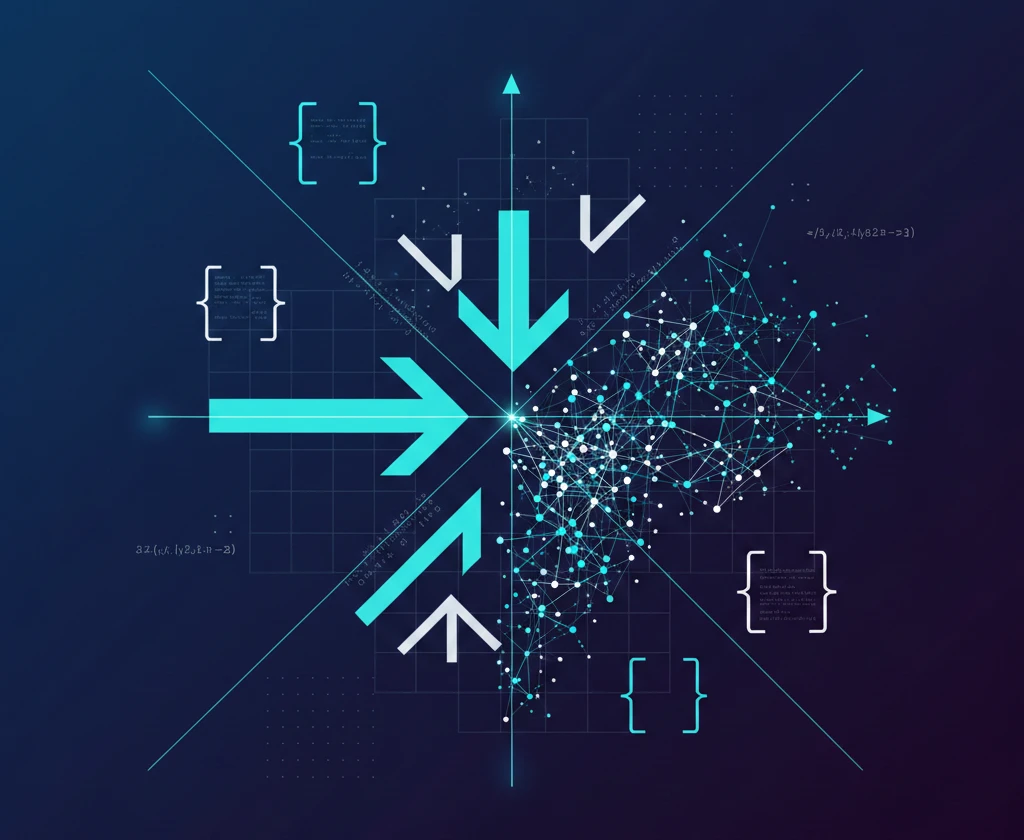
Master linear algebra through the lens of artificial intelligence. Learn vectors, matrices, dot products, eigenvalues, and tensors by seeing exactly how they power neural networks, transformers, embeddings, and other AI systems.
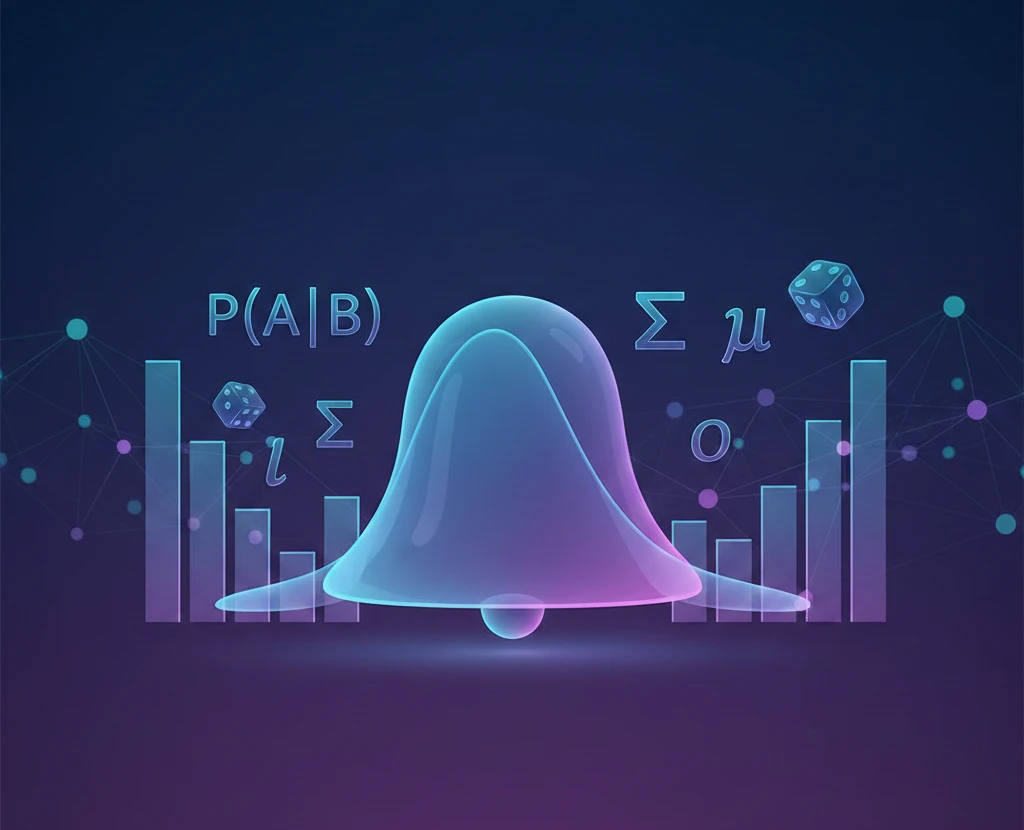
Master the probabilistic foundations of artificial intelligence. Learn probability fundamentals, Bayes' theorem, distributions, expected value, maximum likelihood estimation, and how AI systems handle uncertainty to make predictions.
Master machine learning from the ground up. Learn supervised and unsupervised learning, build models with scikit-learn, and understand the intuition behind algorithms like linear regression, decision trees, and neural networks. Hands-on Python exercises with real datasets.
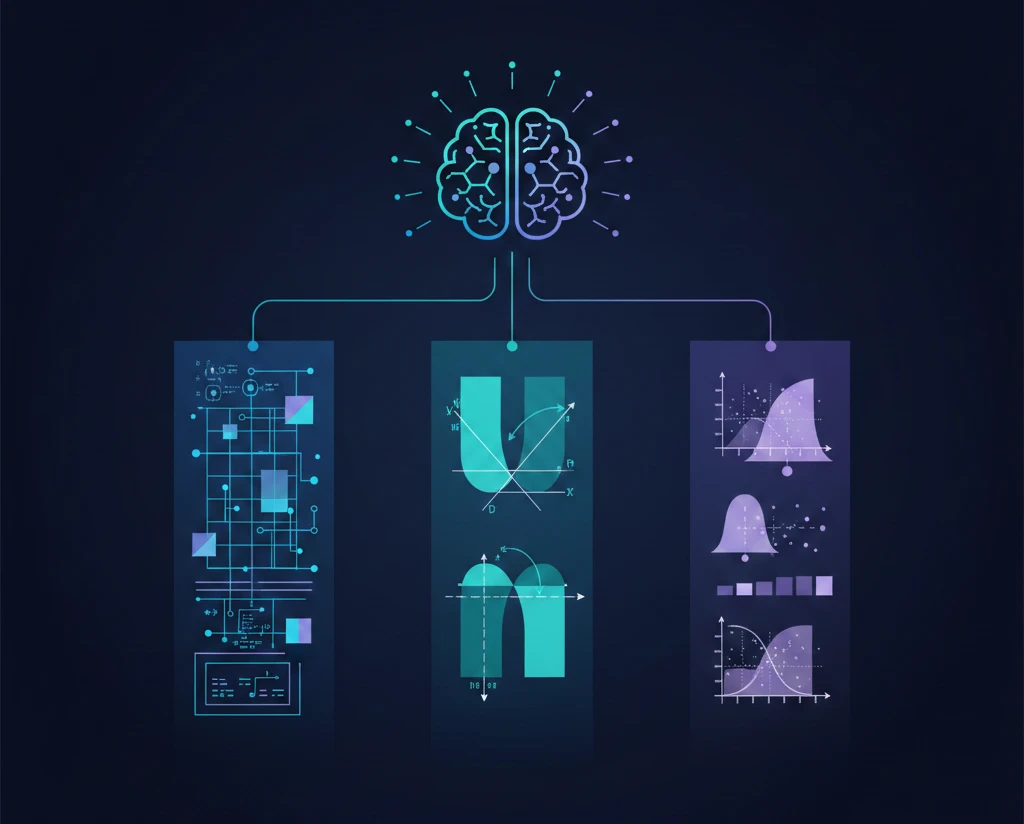
Bridge the gap between AI curiosity and AI understanding. Discover why linear algebra, calculus, and probability are the three pillars of artificial intelligence, see how each one powers real AI systems like neural networks and LLMs, and get a clear learning path to master them all.
Learn to leverage Claude AI for effective code review in 30 minutes. Master prompts for finding bugs, security vulnerabilities, and refactoring suggestions with hands-on practice.
Finally see how AI, machine learning, deep learning, and generative AI fit together. Learn where rules end and learning begins, what the "deep" in deep learning actually changes, when simpler machine learning still wins, and how to place any real product on the map. No code, no math.