Master machine learning from the ground up. Learn supervised and unsupervised learning, build models with scikit-learn, and understand the intuition behind algorithms like linear regression, decision trees, and neural networks. Hands-on Python exercises with real datasets.
Machine Learning Fundamentals with Python takes you from core concepts to working models, step by step. The course opens by explaining how machines actually learn, then walks through the three main learning paradigms: supervised learning, unsupervised learning, and reinforcement learning. From there you build practical skills with the tools professionals use every day, including NumPy, Pandas, and scikit-learn, before applying them to real datasets in hands-on coding exercises.
The intermediate-level curriculum covers the algorithms that underpin most applied ML work. You will learn the intuition behind linear regression, classification approaches such as logistic regression and K-nearest neighbors, and tree-based methods including decision trees and random forests. A dedicated module on model evaluation teaches regression and classification metrics, confusion matrices, and ROC curves so you can judge whether your models are actually working. The course then covers overfitting, train/test splits, cross-validation, and feature engineering essentials like handling missing data and encoding categorical variables. It closes with an introduction to neural networks and a capstone project where you build a complete prediction model from scratch.
This course is well suited for students, analysts, and professionals in any field who want to move beyond AI tools and understand the mechanics behind them. No prior machine learning experience is required, though basic Python familiarity will help you get the most out of the exercises. The course is completely free and no account is needed to start. Completing the lessons and passing the final exam earns a certificate of completion you can share on LinkedIn or add to your resume.
13 modules • 35 lessons
Finish every lesson and pass the final exam to earn this free, shareable certificate.
Certificate of Completion
has successfully completed
35 lessons · Final exam passed
Michail Ouroumis
Founder, FreeAcademy.ai
Sample preview. Your name appears on the certificate when you complete the course. Learn more
The course spans eleven content modules covering how machines learn, the three types of ML (supervised, unsupervised, reinforcement), core Python libraries for ML (NumPy, Pandas, scikit-learn), key algorithms (linear regression, logistic regression, K-nearest neighbors, decision trees, random forests), model evaluation metrics, cross-validation, feature engineering, and an introduction to neural networks. It ends with a capstone project where you build a prediction model end to end.
Yes, the course is completely free and requires no sign-up or account to start. You can begin any lesson immediately and work through the material at your own pace.
The course is rated intermediate, so basic familiarity with Python syntax (variables, loops, functions) will help you follow the coding exercises. You do not need prior machine learning or statistics experience, as the course builds that understanding from the ground up.
The practical toolkit module covers NumPy for numerical computing, Pandas for data handling, and scikit-learn for building and evaluating models. These are the same libraries used by data practitioners across research, business, and academia.
Yes. Completing all lessons and passing the final exam earns a certificate of completion that you can download and add to your LinkedIn profile or resume to show your machine learning skills.
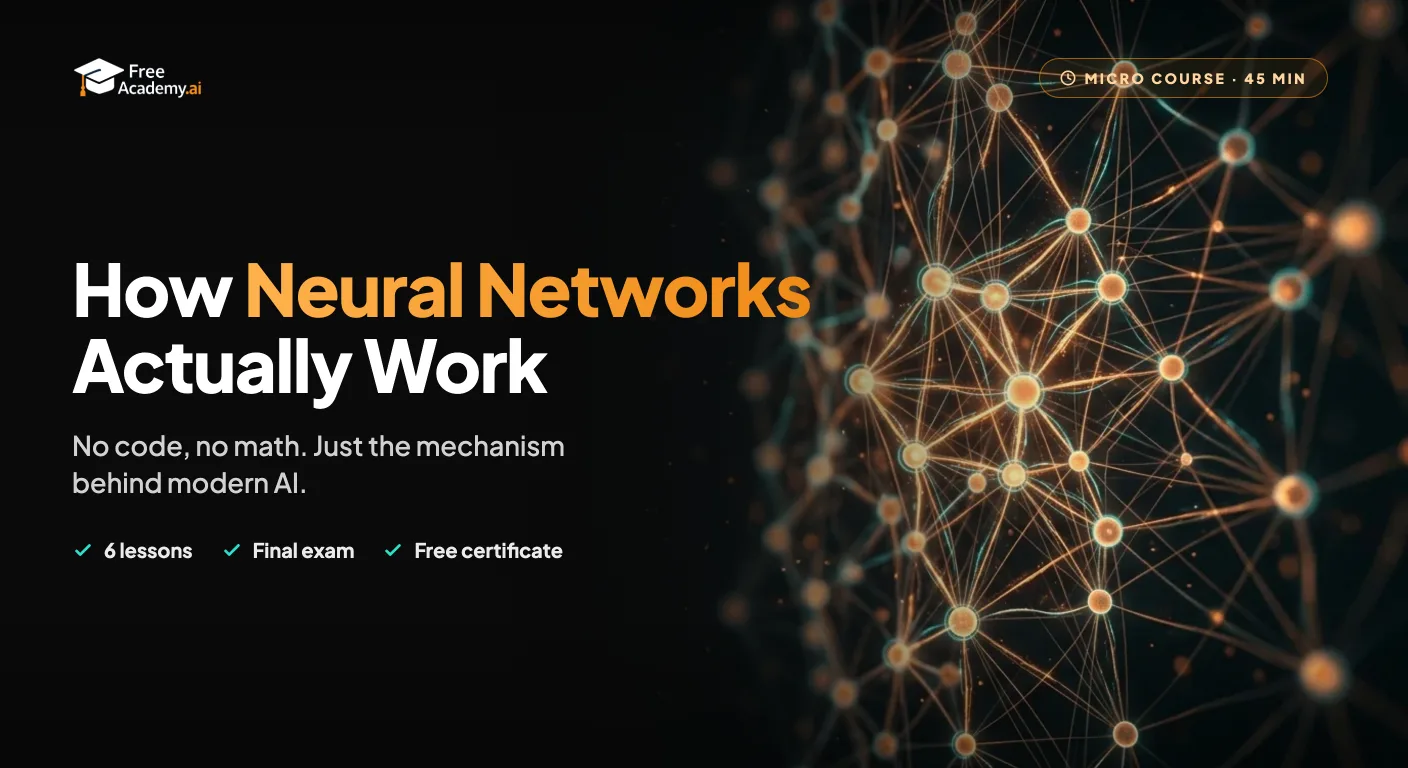
Understand the machine underneath modern AI without writing a line of code. Learn what a neuron does, why weights are the only place a model stores knowledge, how layers build their own concepts, and how training actually works through loss, gradient descent, and backpropagation.
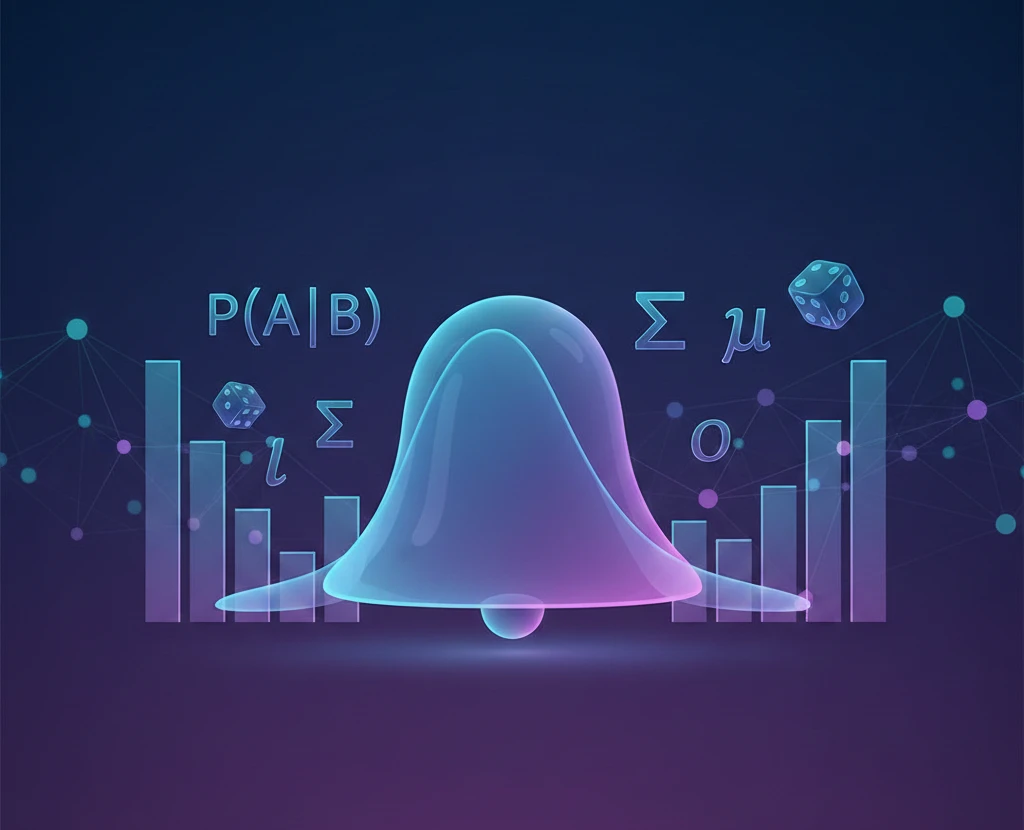
Master the probabilistic foundations of artificial intelligence. Learn probability fundamentals, Bayes' theorem, distributions, expected value, maximum likelihood estimation, and how AI systems handle uncertainty to make predictions.

Master the calculus that powers machine learning. Learn derivatives, partial derivatives, the chain rule, gradients, gradient descent, loss functions, and backpropagation — the essential math behind how models learn.
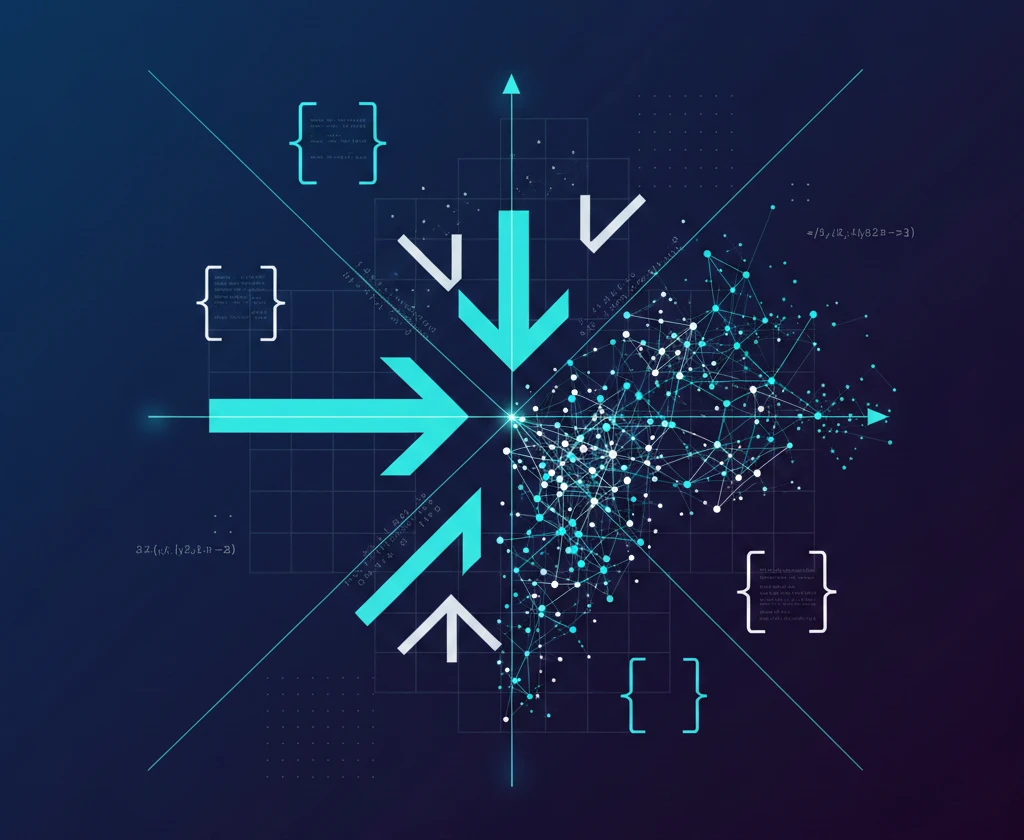
Master linear algebra through the lens of artificial intelligence. Learn vectors, matrices, dot products, eigenvalues, and tensors by seeing exactly how they power neural networks, transformers, embeddings, and other AI systems.
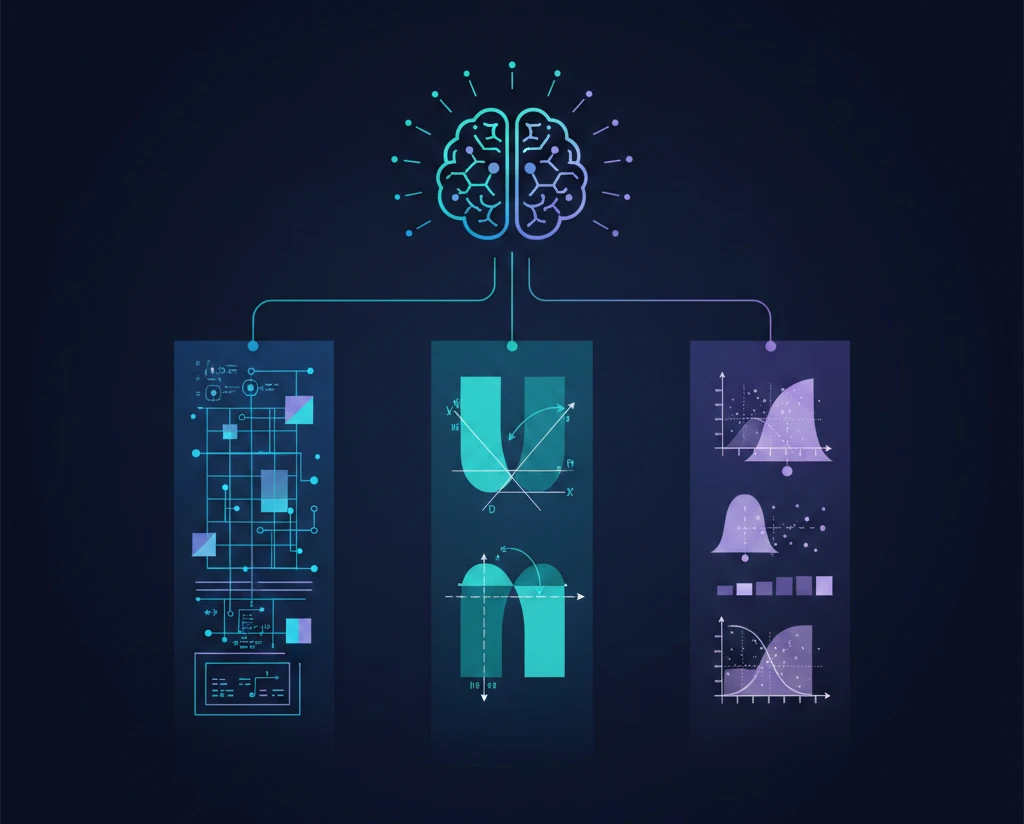
Bridge the gap between AI curiosity and AI understanding. Discover why linear algebra, calculus, and probability are the three pillars of artificial intelligence, see how each one powers real AI systems like neural networks and LLMs, and get a clear learning path to master them all.

Understand machine learning from the ground up — without writing a single line of code. Use ChatGPT, Claude, Gemini, Perplexity, and Google's Teachable Machine to build, test, and explain ML models. Built for university students and early-career learners with zero technical background. Earn a free certificate to add to your LinkedIn and resume.