

Retrieval Optimization for RAG: Chunking, Re-ranking & Quantization

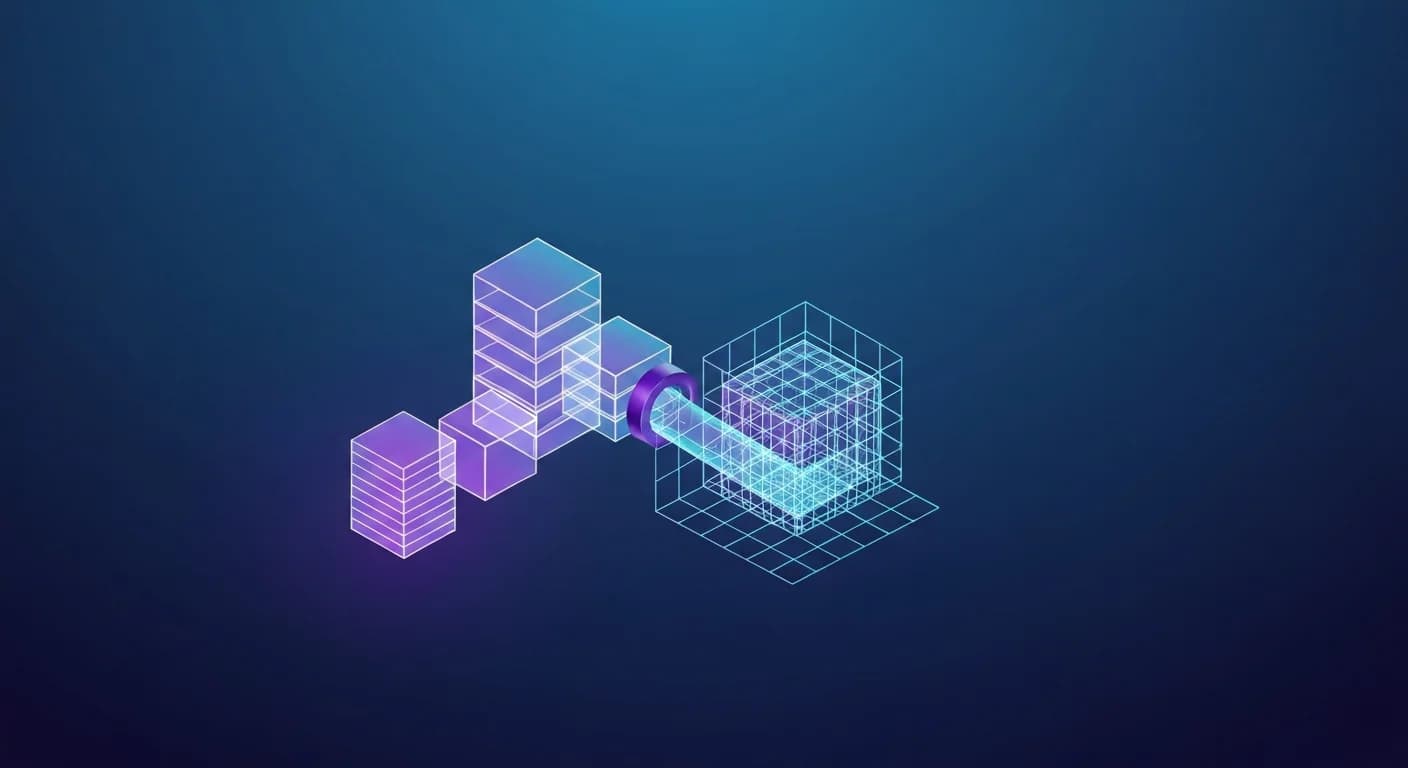
If your RAG pipeline returns irrelevant chunks, leaks budget on bloated indexes, or feels sluggish at query time, the fix usually isn't a bigger model — it's better retrieval. Retrieval optimization RAG is the discipline of squeezing more accuracy and speed out of the retrieve step before you ever touch generation, and it's where 2026's most impactful wins are happening.
In this guide we'll break down the three techniques that move the needle most: smart chunking, cross-encoder re-ranking, and vector quantization. If you're new to the topic, start with our primer on what RAG is and how it works, then come back here to make yours production-ready.
Why Retrieval Optimization RAG Matters
A RAG system has two halves: a retriever that fetches relevant context, and a generator (the LLM) that answers using that context. The generator can only be as good as what the retriever surfaces. Garbage in, hallucinations out.
Most retrieval failures fall into three buckets:
- Bad chunks — the right answer is in your corpus, but it got split across boundaries or buried in noise.
- Bad ranking — the right chunk is in the top 50 candidates, but not in the top 5 you pass to the model.
- Bad economics — your index is so large or slow that you can't afford to retrieve enough candidates in the first place.
The three techniques below target each bucket directly. Together, they often deliver 20–40% accuracy gains and 5–10× cost reductions versus naive baselines.
Technique 1: Smart Chunking
Chunking is how you split documents into the units your vector index stores. Default "split every 500 tokens" recipes leave a lot on the table.
Pick a Strategy That Matches Your Data
- Fixed-size chunks with overlap — simple and predictable. Use 256–512 tokens with 10–20% overlap. Good baseline for prose.
- Semantic chunking — split where sentence embeddings drift, so each chunk is topically coherent. Better recall on dense technical docs.
- Structural chunking — respect markdown headings, code blocks, or HTML sections. Critical for documentation and code.
- Hierarchical / parent-child — embed small chunks for precision, but return the surrounding parent chunk at query time for context.
Tune chunk size to your embedding model's context window and your average query length. Short, fact-style queries reward smaller chunks; multi-hop questions reward larger ones. Because chunks ultimately become tokens, a refresher on LLM tokenization basics helps you reason about boundaries.
Add Metadata Aggressively
Every chunk should carry source URL, section title, document type, and a timestamp. Use these as filters at retrieval time to narrow the candidate set before the vector search even runs — a classic latency win that costs nothing.
Technique 2: Re-ranking with Cross-Encoders
Embeddings are fast but lossy. They compress meaning into a single vector, so two semantically similar chunks may not be the most relevant one for a specific query. That's why a two-stage retrieve-then-rerank pipeline is now standard practice.
How It Works
- Stage 1 — Retrieve the top 50–100 candidates from your vector index using bi-encoder embeddings. This is cheap and fast.
- Stage 2 — Re-rank those candidates with a cross-encoder model that scores each (query, chunk) pair jointly. Cross-encoders are slower per pair but much more accurate.
- Pass the top 3–10 re-ranked chunks to the LLM.
Popular re-rankers in 2026 include Cohere Rerank 3.5, Voyage rerank-2.5, BGE reranker-v2, and Jina Reranker v2. Most are available behind a simple HTTP call.
Hybrid Search as a Companion
Combine dense vector search with sparse keyword search (BM25) before re-ranking. Dense search catches semantic matches; sparse search catches exact terms, names, and acronyms. Fuse the results with reciprocal rank fusion, then re-rank. This hybrid pattern is a free accuracy boost on almost every dataset.
Technique 3: Vector Quantization
As your corpus grows past a few million chunks, full-precision float32 vectors become the dominant cost. Quantization compresses vectors with minimal accuracy loss.
The Three Levels
- Scalar quantization (int8) — store each dimension as an 8-bit integer instead of 32-bit float. 4× smaller index, ~1% recall drop. Almost always worth it.
- Binary quantization — represent each dimension as a single bit. 32× smaller, fast Hamming distance. Use as a first-pass filter, then rescore the survivors with full-precision vectors.
- Product quantization (PQ) — split vectors into sub-vectors and encode each with a learned codebook. Used inside FAISS and similar libraries for huge indexes.
Most managed vector databases (Pinecone, Weaviate, Qdrant, pgvector with HNSW) support int8 or binary out of the box. If you're curious how the storage layer works under the hood, our explainer on how vector databases store embeddings covers the internals.
Putting It Together: A 2026 Retrieval Stack
A strong default pipeline looks like this:
- Ingest documents, chunk structurally with 256–512 token windows and 15% overlap.
- Embed with a modern model and store with rich metadata.
- Index with HNSW + int8 quantization for the cost-recall sweet spot.
- Retrieve the top 50 candidates with hybrid (dense + BM25) search filtered by metadata.
- Re-rank with a cross-encoder down to the top 5.
- Generate with your LLM, passing chunks plus their source URLs for citation.
Want to push further? Look into multi-vector retrieval with ColPali for documents that include charts and tables, or agentic RAG with autonomous agents for queries that need iterative search. And if you're still deciding whether RAG is even the right approach, our comparison of RAG vs fine-tuning vs prompt engineering is a useful gut-check.
Measuring What You Optimize
Retrieval optimization RAG only works if you measure it. Build an eval set of 50–200 representative queries with known-correct chunks, then track:
- Recall@k — does the right chunk appear in the top k retrieved?
- MRR / nDCG — how high does it rank?
- End-to-end answer accuracy — does the final LLM response cite the right facts?
- Latency p95 and cost per 1k queries — the constraints that decide what ships.
Change one variable at a time. "We swapped the chunker and the re-ranker and accuracy went up" tells you nothing about which change to keep.
Start Building Better RAG Systems
Retrieval optimization RAG is where engineering judgment matters more than model choice. Smart chunking, cross-encoder re-ranking, and quantization will take you from a demo to a system that holds up in production.
If you want a guided path, our free Vector Databases for AI course covers indexing and search end to end, and the Full-stack RAG with Next.js and Supabase course walks you through shipping a real app. Start with one bottleneck in your current pipeline, measure, and iterate — that's how production RAG gets built.
Enjoyed this article?
Join The FreeAcademy Weekly
One practical AI email every Tuesday. New free courses, AI tips, and a short note from the founder.
Free forever. Unsubscribe anytime.
Related articles
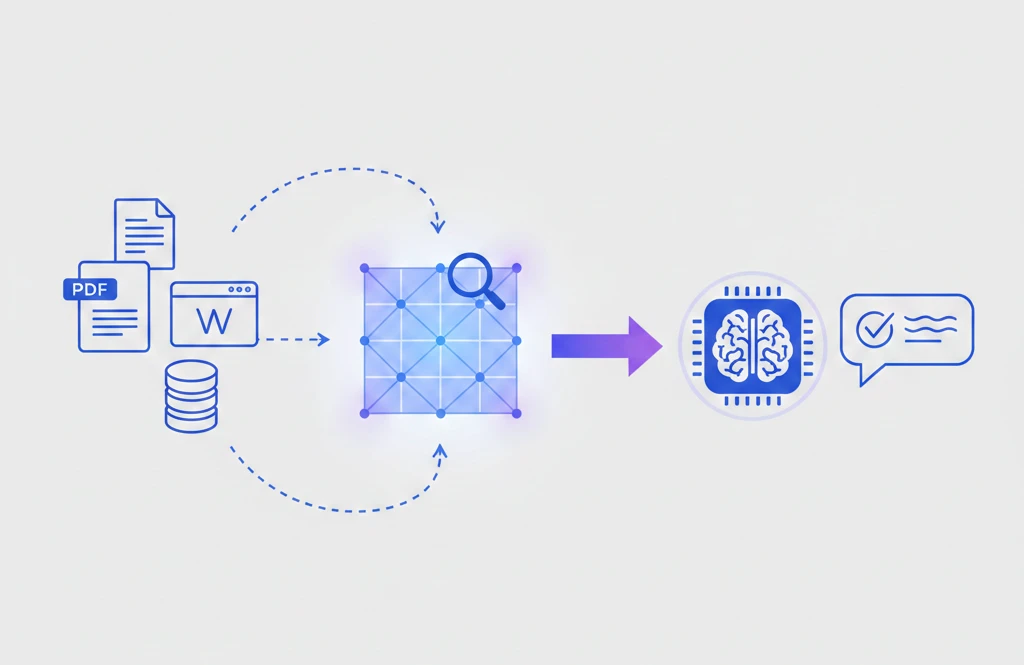
What is RAG (Retrieval Augmented Generation)? Explained for Beginners
Learn what Retrieval Augmented Generation (RAG) is, how it works step by step, and why it matters for building AI applications that use your own data.
What Is Multi-Vector Retrieval? Vision RAG with ColPali (2026)
Multi-vector retrieval explained: how ColPali, late interaction, and vision RAG outperform single-vector embeddings on PDFs, charts, and complex docs in 2026.
Agentic RAG Explained: How AI Agents Supercharge RAG in 2026
Discover how agentic RAG combines AI agents with retrieval-augmented generation to deliver smarter, multi-step answers, better accuracy, and real autonomy in 2026.