Agentic RAG Explained: How AI Agents Supercharge RAG in 2026

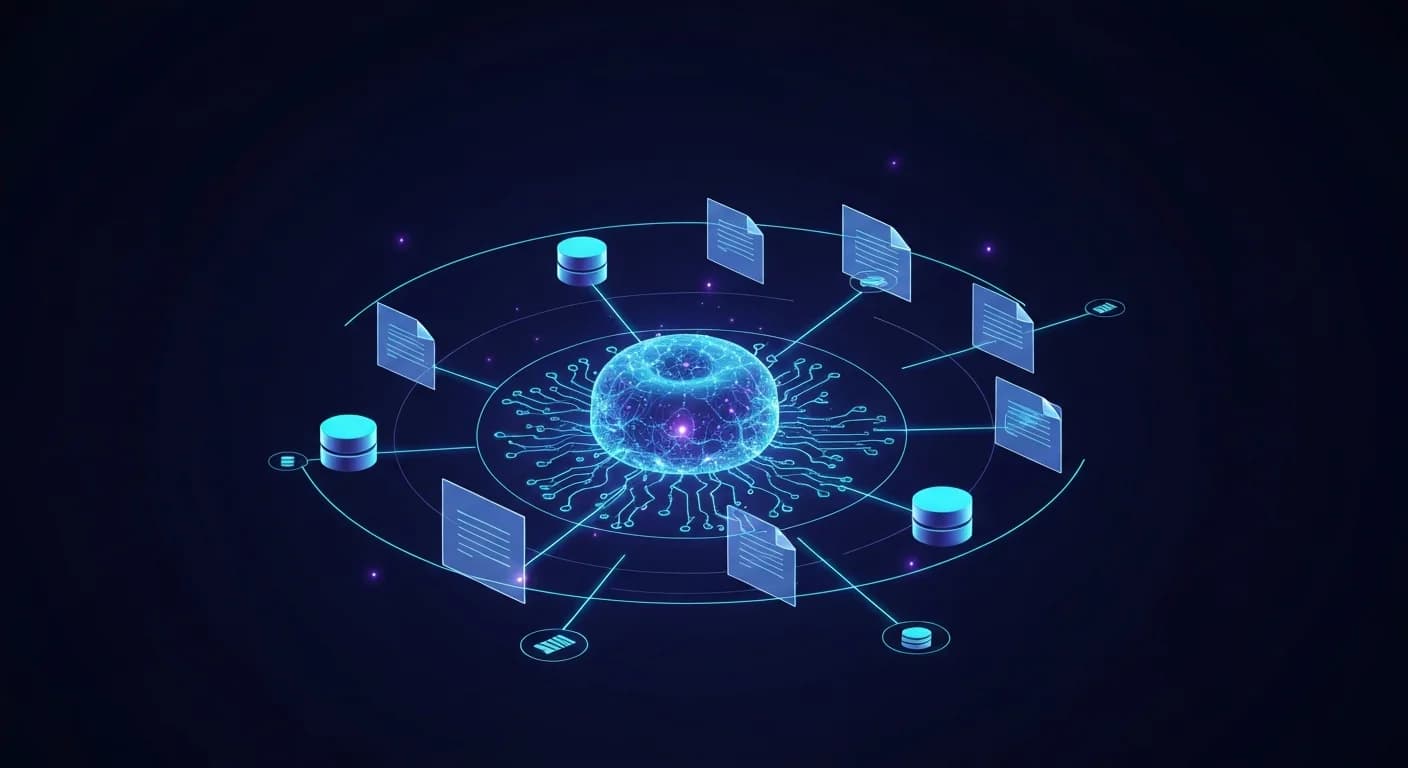
If classic retrieval-augmented generation felt like giving your large language model a library card, agentic RAG is like handing it a research assistant, a web browser, and a to-do list. In 2026, agentic RAG has become the default pattern for building AI systems that answer complex questions, navigate messy data, and take real action on behalf of users. This guide breaks down how it works, why it matters, and how to start building with it today. If you're a business leader evaluating this space, our partner site Cynked has a primer on what business owners need to know about AI agents that pairs well with this deeper dive.
What Is Agentic RAG?
Agentic RAG is an architecture that combines retrieval-augmented generation (RAG) with autonomous AI agents that can plan, choose tools, and iterate over multiple retrieval steps. Where a traditional RAG pipeline is linear — embed query, fetch top-k chunks, stuff them into a prompt, generate an answer — agentic RAG adds a reasoning loop on top.
The agent decides things like:
- Do I need to retrieve at all, or can I answer directly?
- Which knowledge source should I query: vector DB, SQL, the web, or an API?
- Was the retrieval good enough, or should I rewrite and try again?
- Do I need to combine results from multiple searches before answering?
That decision-making turns RAG from a static pipeline into a dynamic agentic workflow.
Classic RAG vs. Agentic RAG
Classic RAG is great for FAQ-style questions where a single retrieval round is enough. It struggles when users ask multi-hop questions ("Compare our Q3 churn with last year's, then draft a board update"), when data lives across several stores, or when the top-k chunks aren't quite right.
Agentic RAG handles all three cases by treating retrieval as a tool call rather than a hard-coded step.
Why Agentic RAG Matters in 2026
Several trends have pushed agentic RAG from experiment to production standard this year:
- LLMs got cheaper and faster, so extra reasoning hops no longer blow the budget.
- Tool use and function calling became reliable across Claude, GPT, and Gemini model families.
- Enterprise knowledge is fragmented — no single vector store holds everything, so agents need to route.
- Evaluation tooling matured, letting teams measure when agents actually help versus when they hallucinate more.
The result: organizations are shipping agentic RAG systems for customer support, legal research, financial analysis, and internal knowledge assistants — and they are reportedly outperforming vanilla RAG on common accuracy benchmarks, often by sizeable margins. For a business-side view of this shift, see Cynked's analysis of how agentic AI is replacing enterprise automation in 2026. Retail and DTC teams in particular have a head start — Cynked maps out 7 AI agents every e-commerce business should deploy in 2026, most of which lean on agentic RAG under the hood.
Core Components of an Agentic RAG System
A production-grade agentic RAG stack typically has five moving parts.
1. The Orchestrator Agent
This is the LLM brain running the reasoning loop. It receives the user query, decides the next action, calls a tool, inspects the result, and either answers or loops again. Frameworks like LangGraph, LlamaIndex Agents, and the Vercel AI SDK make this easier — see our LangChain vs LlamaIndex comparison for a breakdown.
2. Retrieval Tools
Instead of one vector search, the agent has a toolbox:
- Vector search over embedded documents
- Keyword / BM25 search for exact matches
- SQL queries against structured data
- Web search for fresh information
- API calls to internal services
- Voice channels, increasingly powered by AI voice agents for customer service that can hand off to the same retrieval backend
Each tool is exposed with a schema the agent can read, so it knows which one to reach for.
3. Query Rewriting and Planning
Before retrieving, the agent often rewrites the query — expanding acronyms, splitting a compound question, or generating multiple sub-queries. For complex tasks, it drafts a mini plan: "First find the policy doc, then find recent exceptions, then summarize."
4. Self-Correction and Reflection
After each retrieval, the agent evaluates the results. Are they relevant? Complete? If not, it rewrites and tries again — a pattern sometimes called corrective RAG or self-RAG. This is the single biggest quality unlock over classic pipelines. It's also a useful filter when vetting vendors — Cynked's guide on agent washing and how to spot fake AI agents before you buy calls out reflection and tool use as two of the clearest signals of a real agentic system.
5. The Generator
Finally, once the agent has gathered enough context, it generates the answer with citations. Because retrieval was targeted and validated, the final prompt is cleaner and hallucinations drop sharply.
A Simple Agentic RAG Example
Imagine a user asks an internal assistant: "What's our refund policy for enterprise customers in Germany, and has it changed since last quarter?"
A classic RAG pipeline would embed the whole question and hope the top chunks cover both parts. An agentic RAG system does this instead:
- Plan: identify two sub-questions — current policy, and changes over time.
- Retrieve #1: vector search for "enterprise refund policy Germany" → finds the current policy doc.
- Retrieve #2: SQL query on the policy changelog table filtered to last 90 days → finds two amendments.
- Reflect: the agent notices one amendment is ambiguous and runs a follow-up search.
- Generate: produces a grounded answer with links to both the policy and the changelog entries.
That kind of multi-step reasoning is impossible without the agent layer.
How to Start Building with Agentic RAG
If you already have a RAG prototype, upgrading to agentic RAG is an incremental step rather than a rewrite:
- Wrap your existing retriever as a tool the agent can call.
- Add a second tool (web search, SQL, or a different index) so routing becomes meaningful.
- Introduce a reflection step that grades retrieval quality before generation.
- Add evaluation — faithfulness, context precision, and answer correctness — so you can prove the upgrade actually helps.
- Build a staging harness so you can test AI agents before they reach production, not after a customer-facing failure.
To get hands-on, our walkthrough on how to build a RAG app with Next.js and Supabase is a great starting point; from there, layering an agent loop on top is a weekend project.
Common Pitfalls to Avoid
- Over-agenting simple queries. If every question triggers five tool calls, latency and cost explode. Use a cheap router model to decide when agentic behavior is even needed.
- Skipping evals. Agentic RAG can mask bad retrieval behind confident language. Measure grounding, not just user satisfaction.
- One giant tool. Splitting "search" into vector, keyword, and structured flavors lets the agent reason about where an answer should live.
- No guardrails. Add max-iteration limits and timeouts so runaway loops don't drain your token budget.
Conclusion: Agentic RAG Is the New Default
Classic RAG was a breakthrough, but it treated the LLM as a passive consumer of whatever the retriever handed over. Agentic RAG flips that relationship — the model actively decides what to look up, when, and how to combine it. In 2026, that's what separates hobby chatbots from reliable AI products. The org chart is shifting to match — Cynked covers how smart companies are restructuring around AI agents in 2026 and why agent-aware roles are now showing up next to traditional engineering ones.
Ready to go deeper? Explore our free courses on AI agents, RAG systems, and production LLM engineering at FreeAcademy.ai — everything you need to ship your first agentic RAG application this month.
Enjoyed this article?
Join The FreeAcademy Weekly
One practical AI email every Tuesday. New free courses, AI tips, and a short note from the founder.
Free forever. Unsubscribe anytime.
Related articles
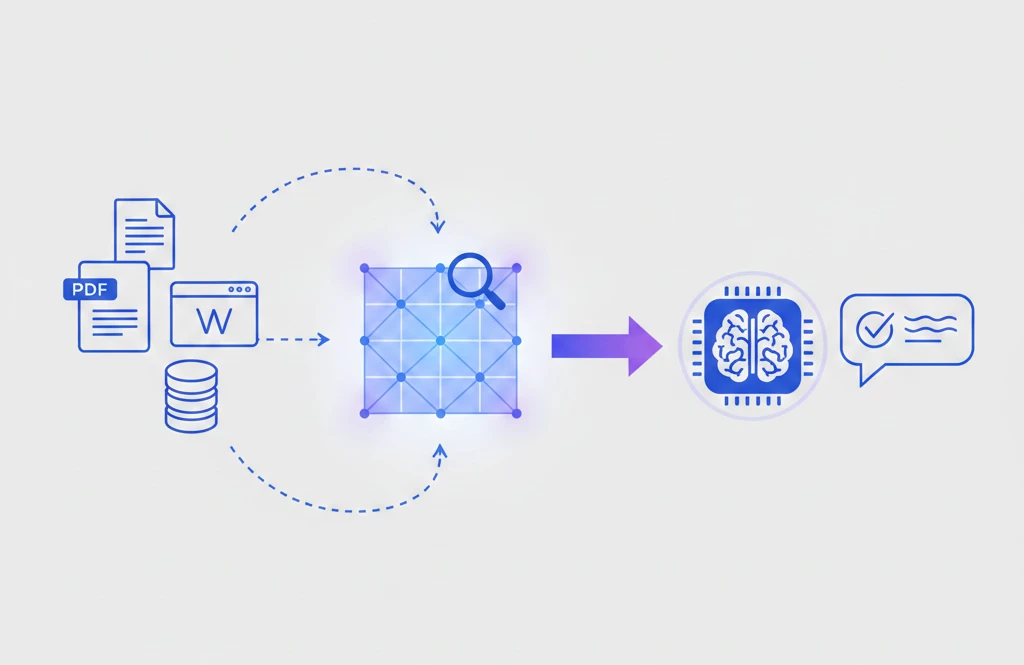
What is RAG (Retrieval Augmented Generation)? Explained for Beginners
Learn what Retrieval Augmented Generation (RAG) is, how it works step by step, and why it matters for building AI applications that use your own data.
Retrieval Optimization for RAG: Chunking, Re-ranking & Quantization
Master retrieval optimization RAG techniques in 2026: smart chunking, cross-encoder re-ranking, and vector quantization to cut latency, cost, and hallucinations.
What Is Multi-Vector Retrieval? Vision RAG with ColPali (2026)
Multi-vector retrieval explained: how ColPali, late interaction, and vision RAG outperform single-vector embeddings on PDFs, charts, and complex docs in 2026.