

What Is Multi-Vector Retrieval? Vision RAG with ColPali (2026)

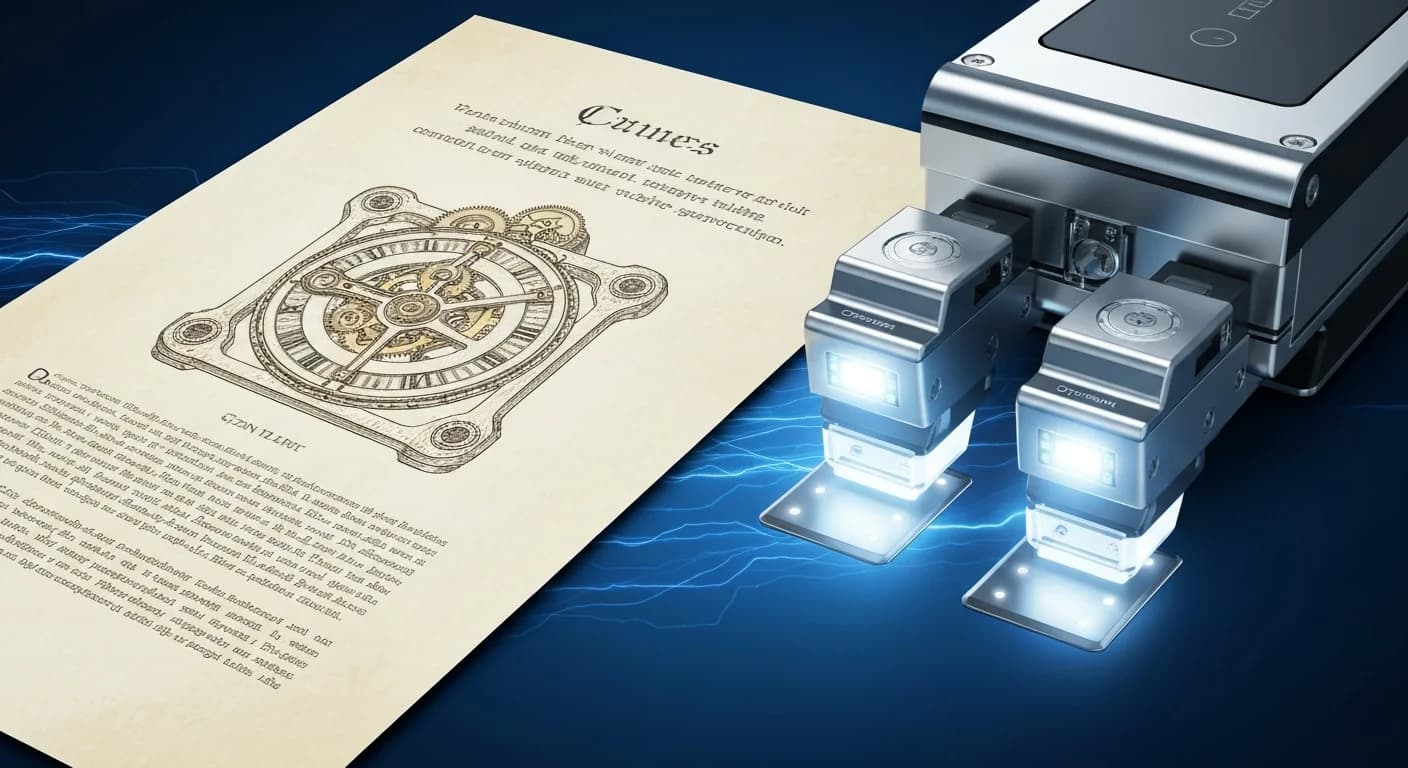
If you have ever built a RAG pipeline over PDFs full of charts, tables, and screenshots, you already know the pain: text extraction loses layout, OCR drops critical numbers, and your top-k results miss the page that actually answers the question. Multi-vector retrieval — and the new wave of vision-first models like ColPali — fix this by representing each document as many vectors instead of one.
In this guide, you will learn what multi-vector retrieval is, how ColPali brings late-interaction scoring to images of pages, and when it beats classic single-vector RAG in 2026.
What Is Multi-Vector Retrieval?
Classical RAG compresses an entire passage into a single dense vector. You then query a vector database, run a cosine similarity search, and pull the top matches. This works well for short, semantically uniform chunks — but it falls apart on long, structured, or visually rich content.
Multi-vector retrieval keeps multiple embeddings per document. Instead of one 768-dim vector representing a whole page, you store one vector per token, per patch, or per region. At query time, every token in the query is matched against every vector in the document, and the scores are combined using a technique called late interaction.
This idea was pioneered by ColBERT for text. Late interaction means:
- Encode the query into N token vectors.
- Encode the document into M token (or patch) vectors.
- For each query token, find its maximum similarity against all document vectors (MaxSim).
- Sum those max scores to get the final relevance.
The result: fine-grained matching that catches signals a single averaged vector would smooth away. If you are new to dense vectors, our AI embeddings explained post is a good warm-up before going further.
Why Single-Vector RAG Breaks on Real Documents
Real-world documents are messy. A 20-page financial report contains tables, footnotes, headers, captions, and figures — each carrying meaning that disappears when squashed into one vector. Common failure modes include:
- Long context dilution. Averaging 1,000 tokens into one vector blurs the signal of the 5 tokens that matter.
- Layout loss. Text extraction strips columns, captions, and reading order.
- Multimodal blindness. Charts, diagrams, and screenshots become invisible if your pipeline only embeds text.
- OCR errors. Numbers in tables are exactly where OCR fails most often.
If you have read what is RAG, you know retrieval quality is the single biggest lever on answer quality. Multi-vector retrieval directly attacks the weak link.
ColPali: Multi-Vector Retrieval for Vision RAG
ColPali (Contextualized Late Interaction over PaliGemma) skips text extraction entirely. It treats every page as an image, runs it through a vision-language model, and produces a grid of patch-level embeddings. The query is still text, but it is matched against image patches using the same MaxSim late-interaction trick.
The pipeline looks like this:
- Render each PDF page to an image (e.g., 1024x1024).
- Pass the image through ColPali to get ~1,024 patch vectors per page.
- Encode the user query into ~20 token vectors.
- Score each page using MaxSim across all query tokens and patch vectors.
- Return the top pages and feed them — as images — to a vision-capable LLM.
This is vision RAG, and it sidesteps the entire OCR-and-chunking nightmare. Charts, infographics, scanned receipts, and architecture diagrams all become first-class retrievable content.
Why ColPali Outperforms Text Pipelines
On the ViDoRe benchmark, ColPali and its successors reportedly beat best-in-class text pipelines (OCR + chunking + bge-large) by roughly 15 nDCG@5 points on visually rich corpora — the original paper reports 0.81 vs 0.66 nDCG@5 against a strong text baseline. The gap widens on:
- Financial filings with dense tables
- Scientific papers with figures and equations
- Slide decks and product manuals
- Multilingual documents where OCR is unreliable
This is exactly the document shape in-house legal teams deal with all day, which is one reason vision RAG is showing up in enterprise contract pipelines — Cynked's how GCs are cutting outside counsel spend with AI in 2026 walks through the business case.
Multi-Vector Retrieval vs. Single-Vector: When to Use Each
| Scenario | Best fit |
|---|---|
| Short FAQ chunks, clean text | Single-vector (bge, OpenAI, Voyage) |
| Long PDFs, mixed layout | Multi-vector text (ColBERT v2) |
| Charts, tables, scanned docs, slides | ColPali / vision RAG |
| Latency-critical, high QPS | Single-vector with re-ranker |
| Highest accuracy, willing to pay storage | Multi-vector + late interaction |
The trade-off is storage and compute. A single-vector index might use 3 KB per chunk; a multi-vector index can use 100x more. To dig into the storage layer, see how vector databases work — most modern engines (Qdrant, Vespa, Weaviate, LanceDB) now support multi-vector fields, with Qdrant and Vespa offering the most mature native MaxSim scoring.
A Practical Multi-Vector Retrieval Stack for 2026
Here is a stack we see working well in production:
- Encoder: ColPali v1.3 or ColQwen2 for vision; ColBERT v2 or Jina ColBERT for text.
- Index: Qdrant or Vespa with multi-vector + MaxSim.
- Re-ranker (optional): A cross-encoder like Cohere Rerank 3.5 on the top 50.
- Generator: Claude 4.x, GPT-5, or Gemini 3 — all accept images directly, so vision RAG works end-to-end.
- Orchestration: LangChain, LlamaIndex, or a hand-rolled agent loop. Pair with agentic RAG with AI agents when queries require iterative search.
If you want to build something hands-on, our walkthrough on how to build a full-stack RAG app is a good launchpad — swap the single-vector index for a multi-vector one and you have a vision-capable RAG system in a weekend.
Common Pitfalls
- Don’t over-chunk. With multi-vector retrieval, each page already contains hundreds of vectors. Splitting further usually hurts.
- Watch your storage budget. A 10K-page corpus can balloon to 50+ GB of vectors. Use product quantization or binary embeddings.
- Cache aggressively. Page rendering and ColPali inference are the slow steps; encode once, serve forever.
- Evaluate on your data. ViDoRe is a great proxy, but build a 50-question eval set from your real corpus before committing.
Conclusion
Multi-vector retrieval is not a new buzzword — it is the most reliable way to recover fine-grained signal that single-vector RAG throws away. ColPali takes it one step further by retrieving directly over page images, making vision RAG practical for the messy documents enterprises actually care about.
If you are starting a new RAG project in 2026, default to multi-vector. The storage cost is a fair price for the accuracy gain, and the tooling has matured enough that you no longer need a research team to ship it. Ready to go deeper? Explore our free courses on AI fundamentals to keep building from here.
Enjoyed this article?
Join The FreeAcademy Weekly
One practical AI email every Tuesday. New free courses, AI tips, and a short note from the founder.
Free forever. Unsubscribe anytime.
Related articles

Retrieval Optimization for RAG: Chunking, Re-ranking & Quantization
Master retrieval optimization RAG techniques in 2026: smart chunking, cross-encoder re-ranking, and vector quantization to cut latency, cost, and hallucinations.
Agentic RAG Explained: How AI Agents Supercharge RAG in 2026
Discover how agentic RAG combines AI agents with retrieval-augmented generation to deliver smarter, multi-step answers, better accuracy, and real autonomy in 2026.
What Are Vector Databases? A Complete Guide to How They Work
Learn what vector databases are, how they work under the hood, and why they're essential for AI applications. Understand embeddings, similarity search, and when to use vector databases vs traditional SQL.
