Last updated
Some AI models pause to "think" before they answer. Learn what reasoning models actually do, why thinking step by step helps, how models are trained to reason, when a reasoning model is worth the extra time and cost, how to prompt one well, and where their thinking still goes wrong. No code, no math.
Many AI assistants now offer a model that pauses to think before it answers. Sometimes that thinking takes a few seconds, sometimes minutes, and the answers to hard problems are often much better. This short course explains what is actually happening, in plain language with no code and no math. You will learn what makes a model a reasoning model, what "thinking" really means for a language model, and why spending more computing at answer time, called test-time compute, can beat simply building a bigger model. You will see why working through steps helps so much, using a small worked example, and how chain of thought went from a prompting trick to a trained habit. Then you will learn how models are trained to reason through practice and feedback on problems with checkable answers, like math and code, and why useful habits like self-checking and backtracking emerge on their own. The second half is practical: which tasks deserve a reasoning model, how to use thinking-effort settings, how to prompt a reasoning model differently from a fast one, and the limits to watch for, including overthinking, confident wrong reasoning, and what the visible thinking panel does and does not tell you. It works with any assistant that offers a thinking or reasoning mode.
2 modules • 5 lessons
Finish every lesson and pass the final exam to earn this free, shareable certificate.
Certificate of Completion
has successfully completed
5 lessons · Final exam passed

Michail Ouroumis
Founder, FreeAcademy.ai
Sample preview. Your name appears on the certificate when you complete the course. Learn more
Teaching a class or training a team? Assign this course for free
A reasoning model is a language model trained to work through a problem in a thinking phase before writing its final answer. It writes out intermediate steps, checks them, and sometimes backtracks, which helps most on multi-step problems like math, logic, and code.
No. Everything is explained in plain language with everyday examples. There is no code and no math notation.
No. Reasoning models are slower and use more of your usage limits. They help most on hard, multi-step problems with a clear right answer. For everyday writing and simple questions, a fast model is usually better.
No. The ideas apply to any assistant that offers a reasoning or thinking mode. If you use Claude, Prompt Engineering for Claude covers its extended thinking settings in more detail.
About 40 minutes across five short lessons. Each lesson has a quiz, and there is a final exam with a free certificate when you pass.
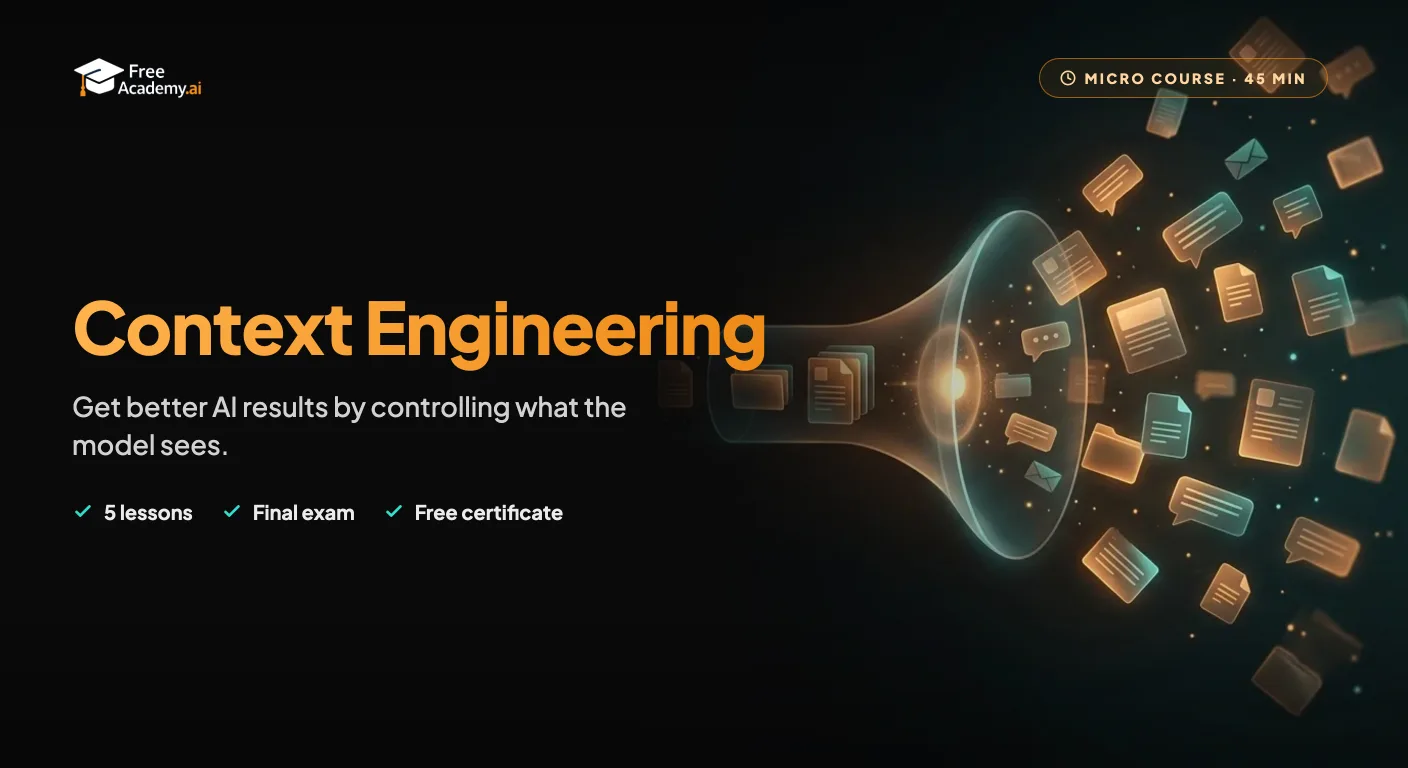
Go beyond wording a single prompt. Learn to control everything an AI model sees: build a reusable context pack, feed long documents so nothing gets lost, choose between pasting and retrieval, and manage long conversations with clean handoffs. Works with ChatGPT, Claude, Gemini, and any other assistant. No code.
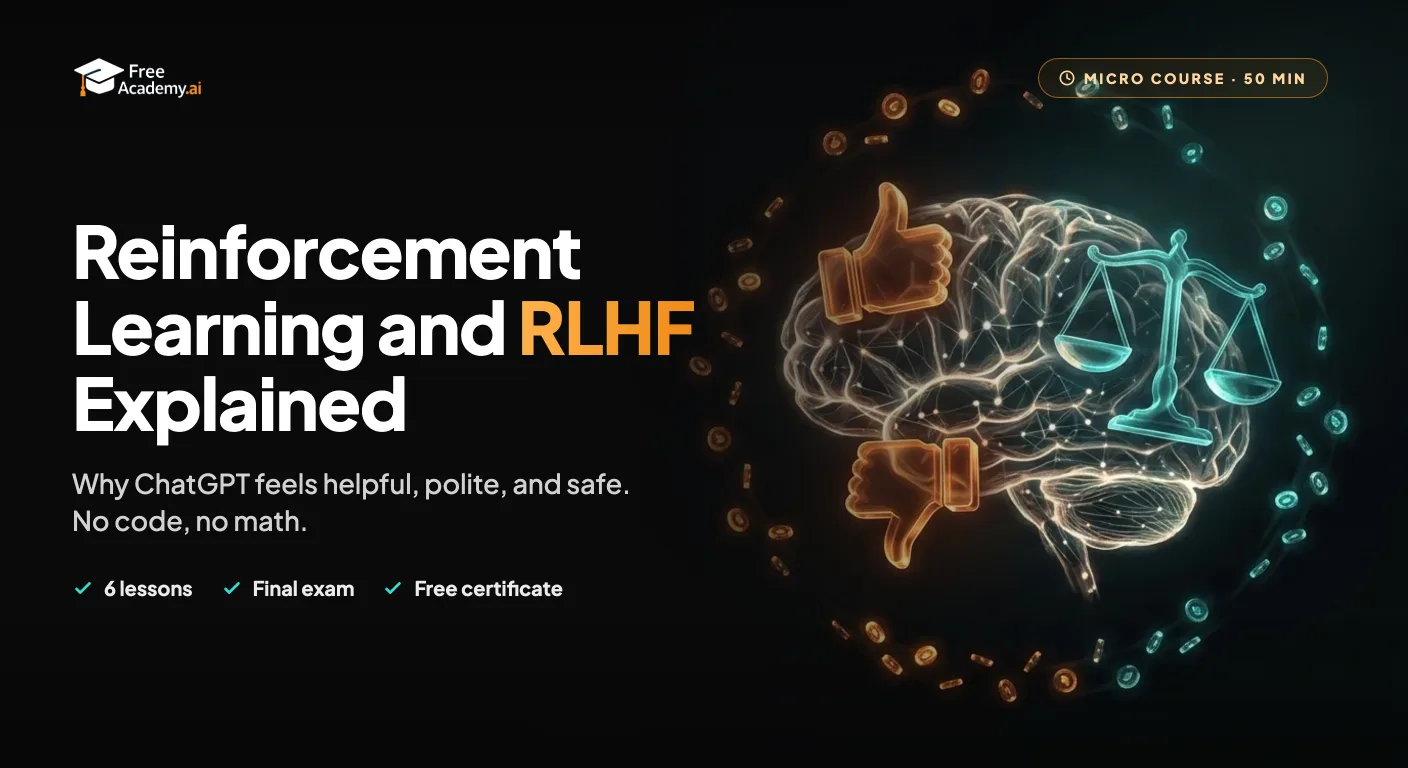
Find out why ChatGPT, Claude, and Gemini feel helpful, polite, and safe instead of just completing text. A short, no-code course on reinforcement learning, supervised fine-tuning, reward models, PPO and DPO, and the side effects of alignment like sycophancy and reward hacking. The natural next step after How LLMs Actually Work.
Go beyond generic prompt engineering and master Claude-specific techniques. Learn XML tags, extended thinking, system prompt design, CLAUDE.md files, MCP integration, and agentic workflows to unlock Claude's full potential.
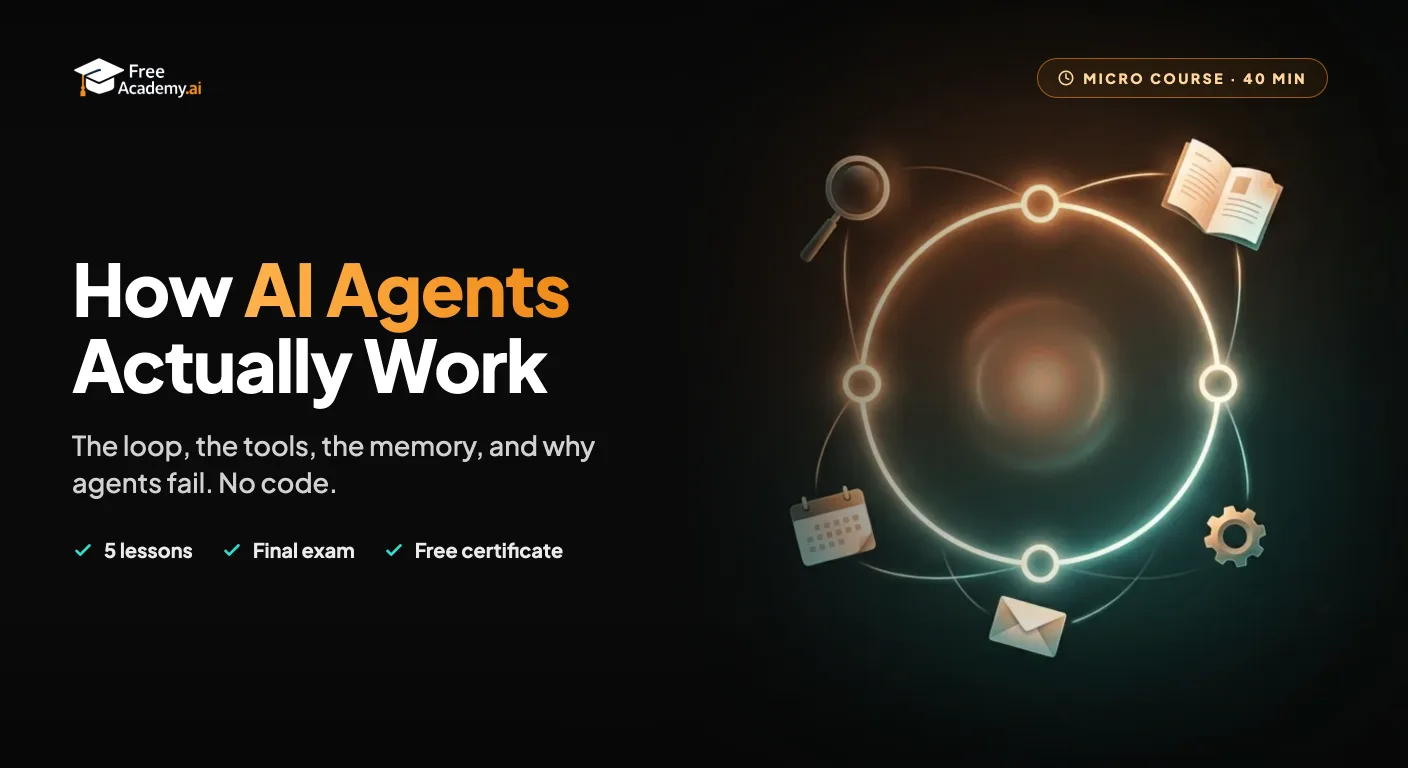
Understand what really happens when an AI agent books, searches, codes, or browses for you. Learn how a chatbot becomes an agent, follow the agent loop step by step through a real trace, see how tools and connectors work, why agents forget, why they fail, and how to judge an agent product before you trust it. No code, no math.

Master prompt engineering through hands-on exercises. Learn prompt structure, few-shot learning, chain-of-thought reasoning, and advanced techniques with instant feedback. Build real-world prompts for code generation, content writing, and data analysis.
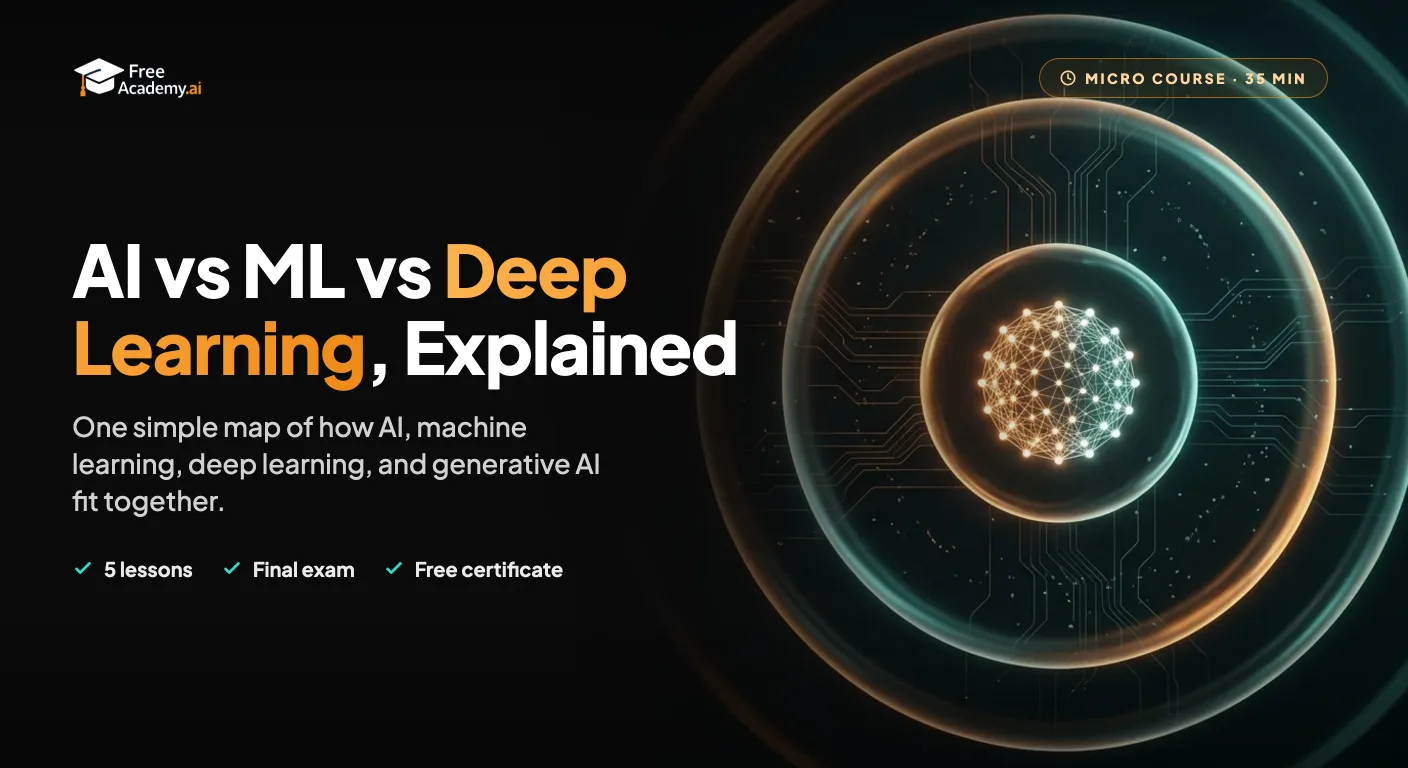
Finally see how AI, machine learning, deep learning, and generative AI fit together. Learn where rules end and learning begins, what the "deep" in deep learning actually changes, when simpler machine learning still wins, and how to place any real product on the map. No code, no math.