Lesson 1: How Much Energy and Water Does One AI Prompt Use? No sign-up needed.
Every course, exam and certificate is free. Premium only removes ads and adds extras.
Last updated
Learn how much electricity and water AI really uses. See what one prompt costs compared with everyday things, where a data center's energy and water go, how training compares with daily use, why communities debate new data centers, how to use AI with less waste, and what comes next. No code. Free certificate.
Headlines about AI's water and energy use often disagree. One says a chatbot drinks a bottle of water for a handful of answers. Another says a prompt uses only a few drops. This short course explains the real numbers in plain language, with no code. You will start with the best published figures for one text prompt, from Google, OpenAI, Mistral and independent researchers, and compare them with things you know, like a light bulb, a phone charge and a kettle. You will learn why water estimates range so widely, and why images, video and reasoning answers cost much more than a short reply. Next, you will follow the energy and water through a data center, from the power plant to your answer, and see why carbon depends on the grid. You will compare the one-time cost of training a model with the ongoing cost of using it. Then you will look at the public debate over data centers: grid limits, water, bills, jobs and local pauses, with the main arguments on each side. Finally, you will learn simple habits to use AI with less waste and how to judge new claims. Six short lessons, quizzes and a free certificate.
2 modules • 6 lessons
Finish every lesson and pass the final exam to earn this free, shareable certificate.
Certificate of Completion
has successfully completed
6 lessons · Final exam passed
Michail Ouroumis
Founder, FreeAcademy.ai
Sample preview. Your name appears on the certificate when you complete the course. Learn more
Teaching a class or training a team? Assign this course for free
Published figures range from well under 1 mL to tens of mL per answer. Google reported about 0.26 mL for a median Gemini text prompt, counting cooling water. Studies that also count the water used to make electricity and hardware give much higher numbers.
OpenAI has said an average query uses about 0.34 Wh, and independent researchers estimate about 0.3 Wh for a typical query. Long inputs, reasoning answers, images and video use much more.
It depends on the task and scale. A few short text prompts use little energy for one person, but billions of prompts, heavy tasks like video, and new data centers add up. The course explains both sides with sources so you can judge for yourself.
No. The course uses plain language and everyday comparisons. There is no code and only simple arithmetic.
About 35 minutes across six short lessons. Each lesson has a quiz, and there is a final exam with a free certificate when you pass.
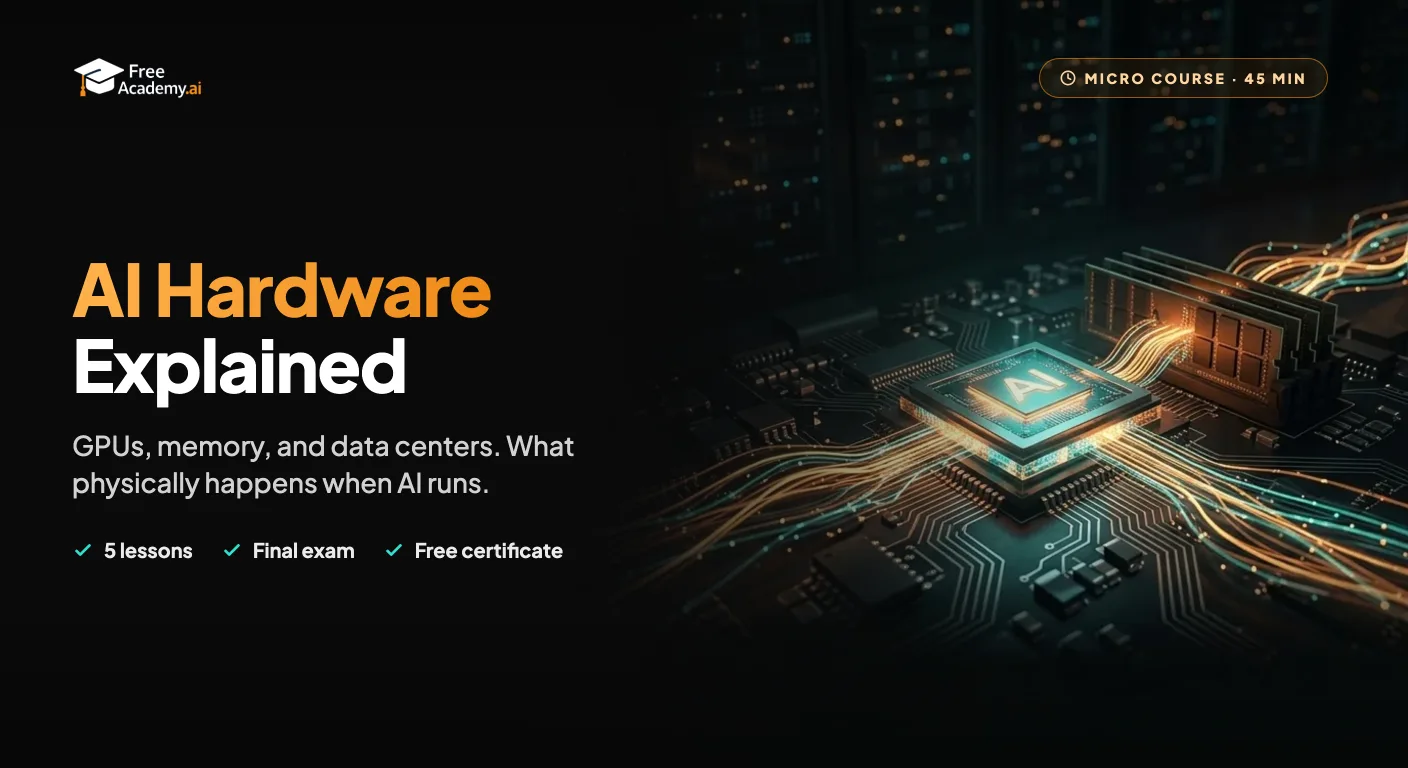
Learn what physically happens when AI runs. See which parts of a computer matter for AI, why GPUs and AI chips took over, why memory is the real limit on model size and speed, how quantization shrinks models, and what goes on inside the data centers that train and serve them. No code, no math.
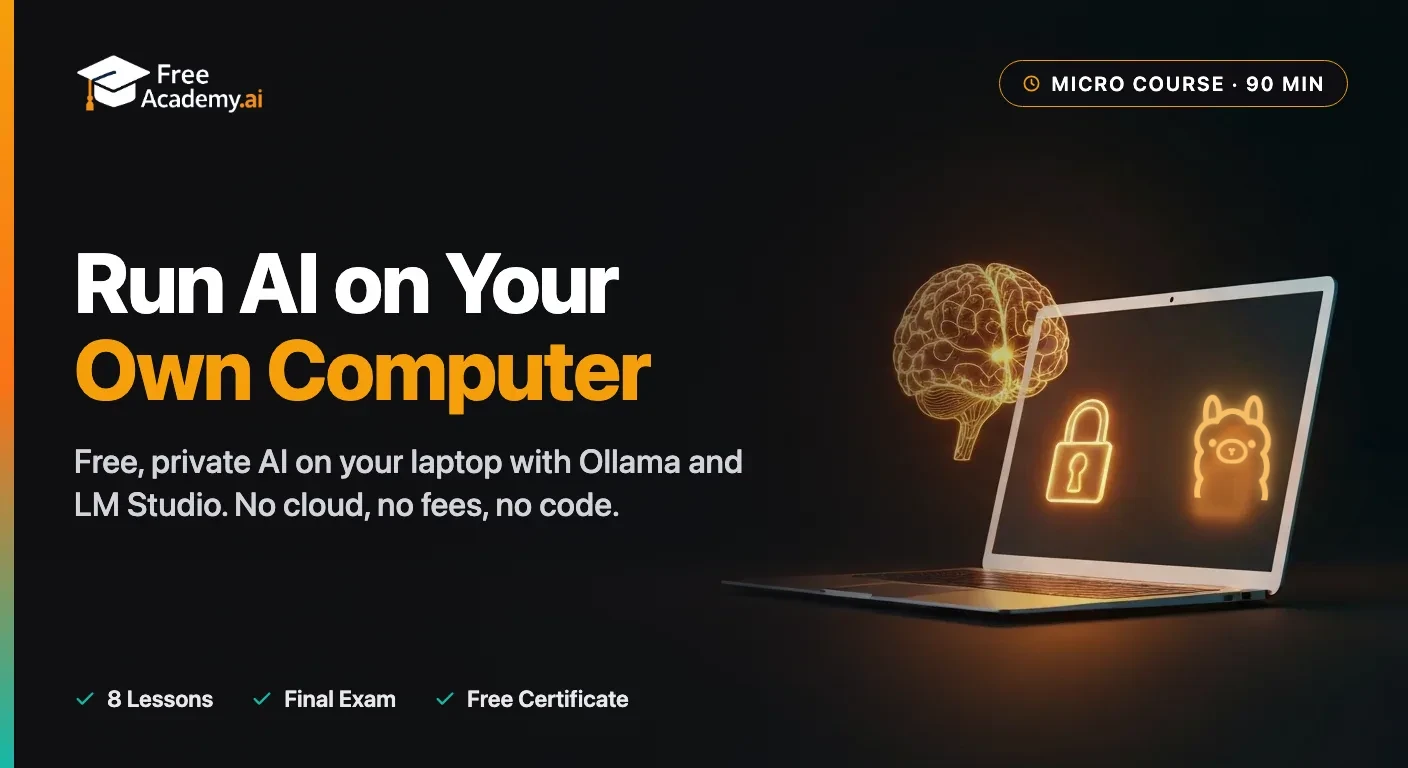
Run a free, private ChatGPT-style AI model right on your own laptop with Ollama and LM Studio. A beginner micro course: understand why local AI is private and free, check what your computer can actually run, install both tools, choose the right model, and use it every day to chat, draft, and summarize documents. No coding background needed, and your data never leaves your machine.

Learn the principles, practices, and skills to use AI responsibly. Explore bias, fairness, privacy, transparency, hallucinations, deepfakes, AI agent permissions, human approval, and the EU AI Act through hands-on exercises with ChatGPT, Claude, and Gemini. Perfect for university students and early-career learners. No coding required, and you earn a free certificate to add to your LinkedIn and resume.
Master Google Gemini from scratch, then go deeper. Learn what Gemini is, set up your account, write effective prompts, and use it across Google Workspace. Then run Deep Research reports you can actually trust, build and tune custom Gems, and analyze whole document sets and long video in one pass.
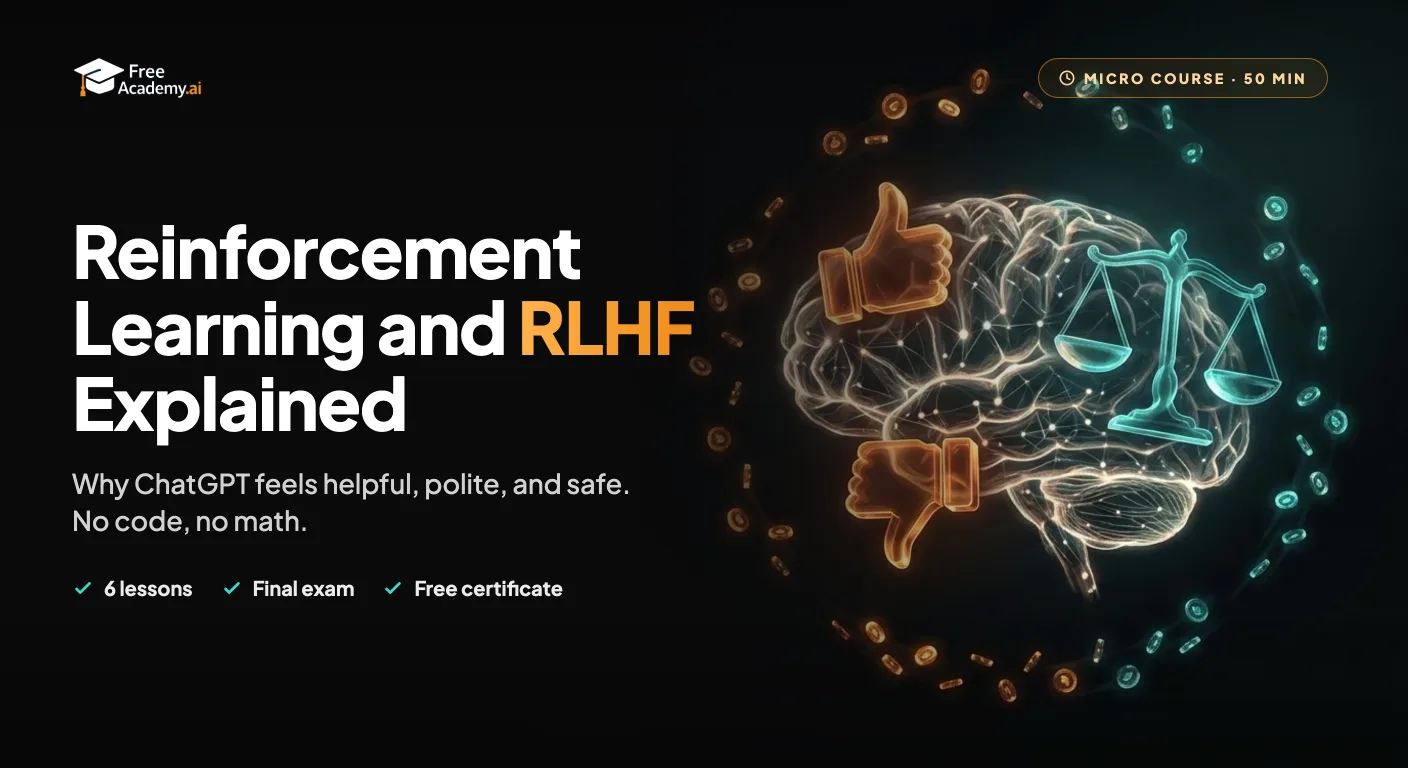
Find out why ChatGPT, Claude, and Gemini feel helpful, polite, and safe instead of just completing text. A short, no-code course on reinforcement learning, supervised fine-tuning, reward models, PPO and DPO, and the side effects of alignment like sycophancy and reward hacking. The natural next step after How LLMs Actually Work.
Use AI at work without putting your company, clients, or job at risk. Learn to classify work data, how company AI plans differ from personal accounts, what to ask before trying a new tool, extension, or agent, how to follow your AI policy and ask for approval, how to check and disclose AI output, and finish with a one-page checklist. No code.