

Agentic Workflows Explained: How LLMs Reason and Act

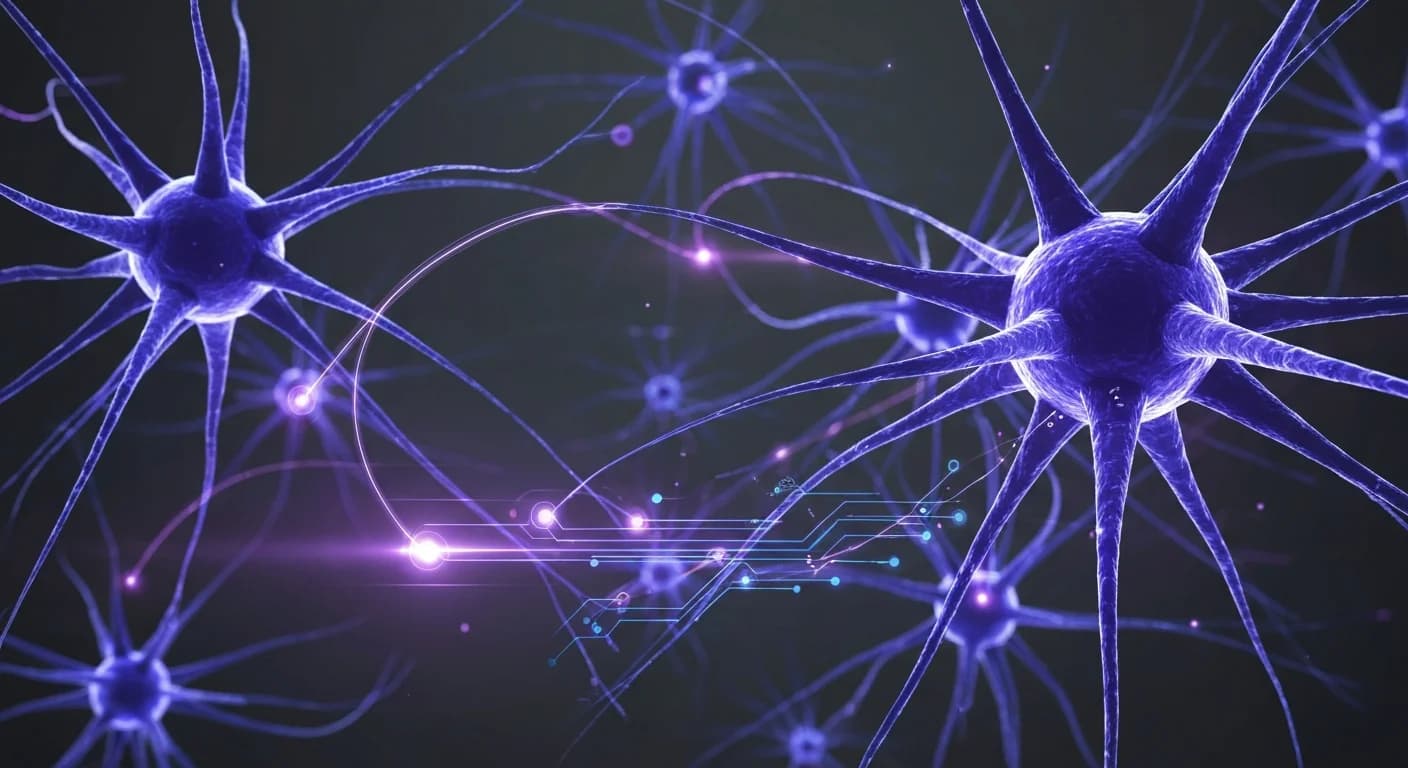
Agentic workflows are quickly becoming the dominant way teams build with large language models in 2026. Instead of one-shot prompts, these systems let LLMs reason through a problem, take actions using tools, observe the results, and even coordinate with other agents — all without a human in the loop for every step. If you've wondered how products like AutoGPT, Devin, or Claude's computer use actually operate under the hood, the answer is almost always some flavor of agentic workflows.
In this guide, we'll break down what agentic workflows are, the core reasoning patterns behind them, how multiple agents collaborate, and how you can start building your own.
What Are Agentic Workflows?
An agentic workflow is a system where a language model is given a goal, a set of tools, and the autonomy to decide what to do next. Rather than generating a single answer, the model iterates through a loop of think → act → observe → repeat until the goal is met.
Compared to traditional prompting, agentic workflows introduce three new capabilities:
- Reasoning: the model plans steps before executing.
- Acting: the model calls tools, APIs, or functions to affect the world.
- Memory: the model retains context across steps and sessions.
If you're new to the underlying concept, our primer on what AI agents actually are is a great starting point before diving deeper.
How LLMs Reason Inside Agentic Workflows
Reasoning is what turns a stateless LLM into something that behaves like an autonomous worker. Most modern implementations use variations of the ReAct pattern (Reasoning + Acting), popularized in 2022 and refined ever since.
The ReAct Loop
A typical ReAct step looks like this:
- Thought: "The user wants a weather report for Tokyo. I need live data."
- Action:
call_tool("weather_api", {"city": "Tokyo"}) - Observation:
{"temp": 18, "condition": "cloudy"} - Thought: "I have the data. Now I'll format a friendly reply."
The loop continues until the agent decides it has enough information to deliver a final answer. Reasoning models like Claude's extended thinking or OpenAI's o-series now do much of this reasoning internally before emitting actions, which dramatically improves reliability.
Planning and Decomposition
More advanced agentic workflows use explicit planning: the model first generates a multi-step plan, then executes each step, revising the plan when observations contradict assumptions. This is closely related to prompt chaining and multi-step AI workflows, but with the model — not the developer — deciding the chain.
How Agents Act: Tools, APIs, and the Real World
An agent without tools is just a chatbot. Tools are the bridge between reasoning and the outside world. Common tool types include:
- Search tools — web search, vector database retrieval, internal docs.
- Execution tools — code interpreters, shell commands, browser automation.
- Integration tools — Gmail, Slack, CRMs, payment APIs.
- File tools — read, write, edit documents and spreadsheets.
Frameworks like LangChain, LlamaIndex, and Vercel AI SDK provide standardized tool-calling interfaces. Protocols like MCP (Model Context Protocol) are standardizing how agents discover and use tools across providers.
A Minimal Python Example
from anthropic import Anthropic

client = Anthropic()

tools = [{
    "name": "get_weather",
    "description": "Get current weather for a city",
    "input_schema": {
        "type": "object",
        "properties": {"city": {"type": "string"}},
        "required": ["city"]
    }
}]

response = client.messages.create(
    model="claude-opus-4-7",
    max_tokens=1024,
    tools=tools,
    messages=[{"role": "user", "content": "What's the weather in Tokyo?"}]
)
This tiny snippet is the seed of every agentic workflow: a model that can decide on its own to call get_weather before responding.
How Agents Collaborate: Multi-Agent Systems
One of the most exciting shifts in 2026 is the move from single agents to multi-agent systems, where specialized agents coordinate on complex tasks. Common collaboration patterns include:
Orchestrator-Worker
A lead agent breaks a goal into sub-tasks and delegates each to a worker agent. The orchestrator reviews results and decides what to do next. This pattern underpins Anthropic's multi-agent research system and most enterprise setups.
Debate and Critique
Two agents argue opposing positions while a third judges, often producing more accurate answers than any single model. Useful for high-stakes reasoning like legal analysis or code review.
Role-Based Teams
Frameworks like CrewAI let you spin up a team where each agent has a role — researcher, writer, editor — and they pass work between them. If this pattern interests you, explore our CrewAI multi-agent micro course for a hands-on walkthrough.
Common Patterns in Production Agentic Workflows
When building real systems, a few architectural patterns keep showing up:
- Router agents that classify incoming requests and send them to the right specialist.
- Reflection loops where an agent critiques its own output and retries.
- Human-in-the-loop checkpoints for approvals on risky actions (payments, emails, deletions).
- Memory layers combining short-term conversation history with long-term vector storage.
- Guardrails that validate tool inputs and filter outputs before they reach users.
The difference between a demo and a production-grade agentic workflow usually comes down to these operational details — not the model choice.
How to Start Building Agentic Workflows
You don't need a research budget to experiment. Pick one narrow task — summarizing your inbox, scraping competitor pricing, generating weekly reports — and build the smallest possible agent around it. Iterate from there.
Helpful next steps:
- Browse our curated list of the best free agentic AI courses for 2026.
- If you prefer Python, take the Agentic AI with Python & LangChain course.
- JavaScript developers can start with Building AI Agents with Node.js & TypeScript.
Conclusion
Agentic workflows represent a fundamental shift from "AI that answers" to "AI that acts." By combining reasoning, tool use, memory, and collaboration, they unlock automation that was impossible even 18 months ago. The teams that learn to design, debug, and deploy these systems will have an outsized advantage in 2026 and beyond.
Start small, instrument everything, and keep a human in the loop until you trust the agent. The best way to understand agentic workflows is to build one — today.
Enjoyed this article?
Join The FreeAcademy Weekly
One practical AI email every Tuesday. New free courses, AI tips, and a short note from the founder.
Free forever. Unsubscribe anytime.
Related articles
What Are AI Agents and How Do They Work? (Simple Explanation)
Learn what AI agents are, how they differ from chatbots, and how they use tools, planning, and memory to complete real-world tasks autonomously.
How to Evaluate AI Agents: Metrics, Benchmarks & Testing 2026
A practical 2026 guide to evaluating AI agents: the metrics, benchmarks, and testing strategies that actually predict production reliability and user trust.
How to Use AI Agents in Your Daily Workflow (2026 Guide)
AI agents can now browse the web, write code, manage files, and execute multi-step tasks autonomously. Here is how to actually put them to work in your daily routine — no coding required.