Master the fundamentals of Amazon Web Services (AWS). Learn about cloud computing basics, core AWS services including EC2, S3, RDS, and Lambda, security best practices, and cost management. Perfect for developers, IT professionals, and anyone starting their cloud journey.
This free AWS Cloud Fundamentals course walks you through cloud computing from the ground up, using Amazon Web Services as your hands-on environment. You start by understanding what cloud computing actually is and why it matters, then move straight into setting up an AWS account and configuring IAM so your environment is secure from day one. From there, you work through the core services that power most real-world cloud projects: EC2 for virtual servers, Lambda for serverless functions, S3 for object storage, RDS for managed databases, and the networking layer that ties everything together with API Gateway, CloudFront, and Route 53.
The course is structured for beginners, whether you are a developer, IT professional, student, or career-changer who wants to understand how cloud infrastructure works in practice. Each module builds on the last, so by the time you reach the final sections on security best practices and AWS cost management, you already have enough context to understand why those decisions matter. The AWS Free Tier coverage means you can follow along without spending money.
The course is completely free to take. Pass the final exam at the end and you earn a certificate of completion you can add to your LinkedIn profile or resume to show employers and collaborators that you have a working grasp of AWS fundamentals.
5 modules • 12 lessons
Finish every lesson and pass the final exam to earn this free, shareable certificate.
Certificate of Completion
has successfully completed
12 lessons · Final exam passed

Michail Ouroumis
Founder, FreeAcademy.ai
Sample preview. Your name appears on the certificate when you complete the course. Learn more
Teaching a class or training a team? Assign this course for free
The course covers the full beginner stack on AWS: cloud computing concepts, account setup and IAM, EC2 and Lambda compute services, S3 and RDS for storage and databases, API Gateway, CloudFront, Route 53 for networking, and a final module on security best practices and cost management. Every topic is grounded in the AWS Console so you can follow along hands-on.
Yes, the course itself is completely free with no signup required on FreeAcademy. AWS also offers a Free Tier that covers the services taught here, so you can practice in a real AWS environment without incurring charges if you stay within the Free Tier limits. The course includes a dedicated lesson on using and monitoring those limits.
No prior cloud experience is needed. The course starts from the very beginning with an explanation of what cloud computing is before touching any AWS service. Basic comfort navigating a web interface is enough to get started, and the AWS Console overview lesson orients you before the hands-on modules begin.
You will work with EC2 for virtual servers, Lambda for serverless computing, S3 for object storage, RDS for managed relational databases, API Gateway, CloudFront for content delivery, and Route 53 for DNS management. The course focuses on these foundational services because they appear in the majority of real AWS architectures.
Yes. Completing the course and passing the final exam earns you a certificate of completion from FreeAcademy. You can share it on LinkedIn or attach it to a resume as evidence that you understand AWS cloud fundamentals.
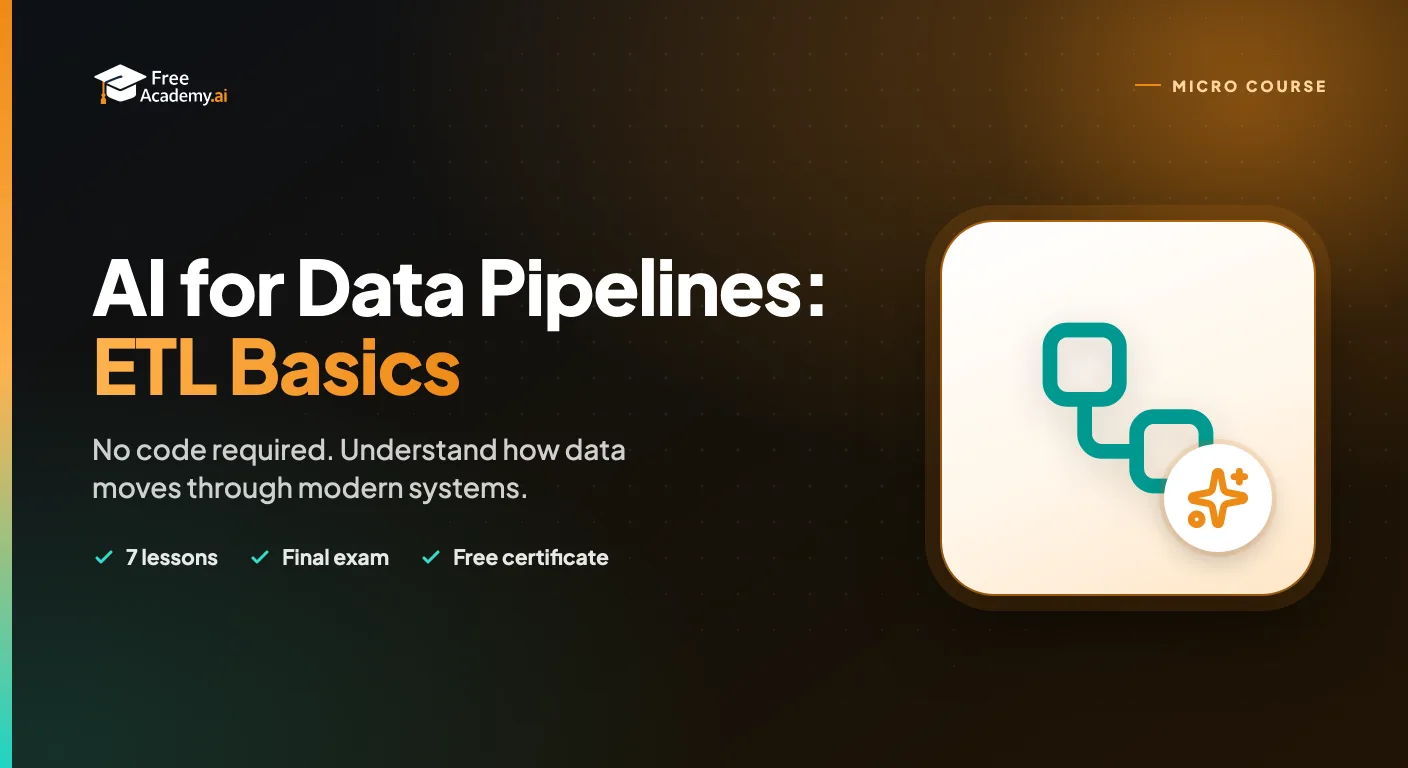
Understand how data moves through modern systems, no code required. Learn ETL vs ELT, cloud storage with Amazon S3, AWS Glue basics, data validation, and pipeline monitoring, plus how AI tools help you design, explain, and document pipelines.
Explore the intersection of economics and sustainability. Learn how economic principles can be adapted to address environmental challenges, climate change, resource management, and social equity. Perfect for students, policymakers, and anyone interested in building a sustainable future.

Discover the economic forces driving AI products. Learn cost structures, pricing strategies, two-sided markets, compute commodities, and network effects through the lens of ChatGPT and other AI services.
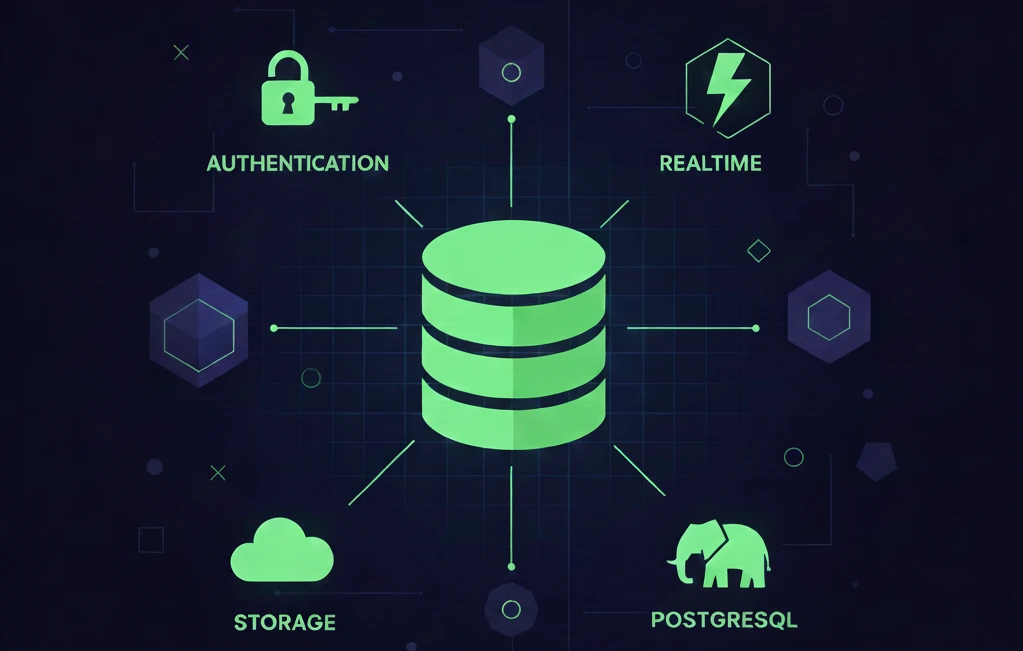
Master Supabase concepts from the ground up. Learn about PostgreSQL foundations, authentication, Row Level Security, realtime subscriptions, storage, Edge Functions, and security best practices. Perfect for developers who want to understand how Supabase works before building applications.
Learn n8n, the free and self-hostable workflow automation tool. Build real automations by importing ready-made JSON workflows, then customize them with expressions and the Code node. No prior coding required.

Master Microsoft Copilot across the entire Microsoft 365 ecosystem. Learn to use Copilot in Word, Excel, PowerPoint, Outlook, and Teams to draft documents, analyze data, build presentations, manage email, and automate workflows. Includes prompt engineering techniques specific to Copilot.