What Is Physical AI? Robots That See, Think, and Act, Explained

Physical AI is artificial intelligence that acts in the real world instead of on a screen. It is what you get when the kind of model behind ChatGPT or Claude becomes the brain of a robot: cameras and sensors go in, understanding happens in the middle, and physical action comes out.
For the past few years AI progress meant text, images, and code. In 2026 the same model families are moving into machines, and "physical AI" has become the term for that shift. This guide explains what it is, why it is suddenly everywhere, and what it means if you are learning AI today.
From One-Trick Robots to General-Purpose Machines
Robots are not new. Factories have used them for decades. But a traditional industrial robot is programmed for a single repetitive task. It welds the same joint or moves the same box, thousands of times, in a cage, because it has no idea what is around it.
Physical AI is different in kind, not just degree:
- It perceives. Cameras, depth sensors, and microphones feed a model that understands scenes, objects, and people, the way our Computer Vision Basics course describes AI vision.
- It reasons. Vision language models let the robot connect what it sees to what it is told. "Pick up the blue crate behind the pallet" is language plus vision plus planning.
- It acts. The model outputs movement, not text. Walk there, grip that, place it here.
That combination means one robot can do many tasks in unstructured places, such as a warehouse aisle, a hospital corridor, or a kitchen, instead of one task in a cage. It is the same jump we saw in software AI: from narrow tools to general models.
Why 2026 Is the Year It Got Real
Three things came together:
The models got good enough. The multimodal advances we covered in Multimodal AI Basics turned out to transfer to robotics. A model that can look at a photo and reason about it can, with training on movement data, look at a scene and act in it.
Pilots turned into production. Humanoid and mobile robots moved from demo videos into real factories and warehouses this year, working alongside people rather than replacing whole lines. Industry analysts describe 2026 as the year the paradigm shifted from specialized machines to general-purpose physical AI.
The money arrived. Analysts project the physical AI market to grow from roughly $1.5 billion in 2026 to more than $15 billion by 2032, a compound growth rate above 47 percent. Chip makers, carmakers, and every major AI lab now have a robotics story.
None of this means a robot is coming to your house next year. Homes are the hardest environment there is: cluttered, unpredictable, and full of children and pets. Factories and warehouses come first because they are semi-structured and the economics are clear.
The Stack, in Plain English
When you read about physical AI, most of it fits into four layers:
| Layer | What it does | Software AI equivalent |
|---|---|---|
| Perception | Turns camera and sensor data into understanding | Image and video models |
| Reasoning | Decides what to do next from goals and context | LLMs and agents |
| Control | Turns decisions into smooth, safe movement | Nothing quite like it, this is the hard robotics part |
| Simulation | Trains and tests robots in virtual worlds before the real one | Training data and evals |
The interesting point for learners: two of these four layers are things you can already study for free. Perception is computer vision. Reasoning is the same model-and-agent thinking taught in How LLMs Actually Work and our agent courses. The robot body is new; the brain is not.
What It Means for Your Career
You do not need a mechanical engineering degree to be relevant here.
- If you work in manufacturing, logistics, or operations, the near-term change is robots as coworkers. The scarce skill is people who understand both the workflow and what the AI can and cannot do, so they can supervise it, spot its failures, and design processes around it.
- If you are a student or developer, the transferable skills are AI fundamentals, data work, and simulation. Companies deploying robots need people who can evaluate model behavior, manage training data, and test systems, which is the same skill set AI software teams need today.
- If you are AI-curious but non-technical, understanding the concepts is the win. Knowing what a vision language model is, and why perception is hard, already puts you ahead of most people reading the same headlines.
A sensible free path: start with AI Essentials if you are new, then Computer Vision Basics for the perception layer, then Introduction to Machine Learning for how these systems learn. All no-code.
Key Takeaways
- Physical AI means foundation models controlling machines that perceive, reason, and act in the real world.
- The difference from traditional robotics is generality: one robot, many tasks, unstructured environments, natural-language instructions.
- 2026 is the inflection year because vision language models matured, pilots became production deployments, and investment surged, with the market projected to grow from about $1.5 billion to over $15 billion by 2032.
- The stack is perception, reasoning, control, and simulation. Half of it is the AI you can already learn today.
- The career opportunity is not only building robots. It is understanding, supervising, and working alongside them.
The robot body is the new part. The brain is the AI you can start learning right now, for free.
Enjoyed this article?
Join The FreeAcademy Weekly
One practical AI email every Tuesday. New free courses, AI tips, and a short note from the founder.
Free forever. Unsubscribe anytime.
Related articles
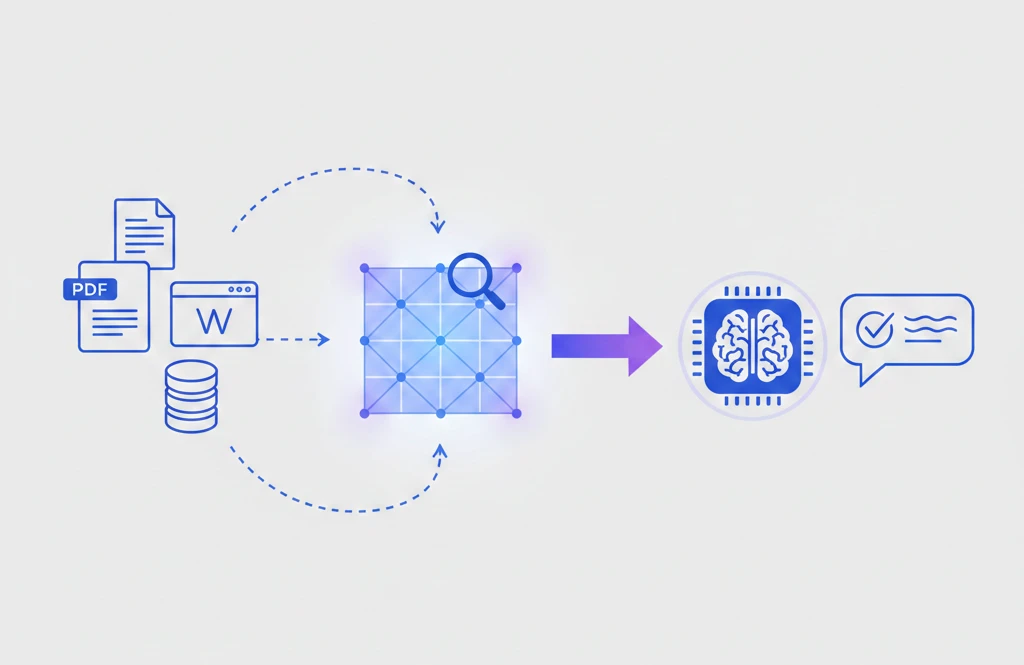
What is RAG (Retrieval Augmented Generation)? Explained for Beginners
Learn what Retrieval Augmented Generation (RAG) is, how it works step by step, and why it matters for building AI applications that use your own data.

What Is Vibe Coding? How AI Generates Full Apps in Minutes
Learn what vibe coding is, how AI tools generate complete applications from natural language prompts, and what this means for the future of software development.
Which AI Subscription Is Worth It in 2026? ChatGPT Plus vs Claude Pro vs Gemini vs Perplexity
A buyers guide to the best paid AI subscription in 2026. Pick one $20 plan: ChatGPT Plus, Claude Pro, Google AI Pro, or Perplexity Pro, by what you actually do.