

Python vs Go for Microservices: Performance, Scalability & DX Comparison (2026)

Choosing between Python and Go for your next microservice is one of the most common architectural decisions backend teams face in 2026. Both languages power microservices at massive scale — Python dominates ML-adjacent services and rapid prototyping, while Go is the go-to choice for high-throughput infrastructure. But the real answer isn't "always pick X." It depends on what your service actually does.
This guide compares Python and Go across performance benchmarks, concurrency models, developer experience, deployment characteristics, and real-world use cases so you can make a data-driven decision.
Looking for a broader comparison that includes Java, Node.js, and Rust? See our Best Programming Languages for Microservices Architecture guide.
Python vs Go at a Glance
| Criteria | Python (FastAPI) | Go (Gin/Fiber) |
|---|---|---|
| Type system | Dynamic (optional type hints) | Static, compiled |
| Concurrency model | asyncio + multiprocessing | Goroutines (M:N scheduling) |
| Typical latency (p99) | 5–15 ms | 0.5–2 ms |
| Throughput (req/s, JSON API) | 8,000–25,000 | 50,000–200,000+ |
| Memory per instance | 30–80 MB | 8–20 MB |
| Docker image size | 150–400 MB (slim) | 10–25 MB (scratch/distroless) |
| Cold start | 0.5–2 s | 10–50 ms |
| Learning curve | Low | Low–Medium |
| Ecosystem maturity | Excellent (ML, data, web) | Good (cloud, infra, networking) |
| Hiring pool | Very large | Growing |
The numbers tell a clear story on raw performance, but performance alone rarely determines the right choice.
Performance Benchmarks
Performance matters in microservices because you're paying per CPU-second and every millisecond of inter-service latency compounds across the call chain. Let's look at what the numbers actually look like in realistic scenarios.
JSON Serialization and HTTP Handling
A standard "return a JSON payload" benchmark using FastAPI (Python) and Gin (Go):
Python — FastAPI
from fastapi import FastAPI
from pydantic import BaseModel

app = FastAPI()

class Product(BaseModel):
    id: int
    name: str
    price: float
    in_stock: bool

@app.get("/products/{product_id}")
async def get_product(product_id: int) -> Product:
    return Product(
        id=product_id,
        name="Wireless Headphones",
        price=79.99,
        in_stock=True,
    )
Go — Gin
package main

import (
    "net/http"
    "strconv"

    "github.com/gin-gonic/gin"
)

type Product struct {
    ID      int     `json:"id"`
    Name    string  `json:"name"`
    Price   float64 `json:"price"`
    InStock bool    `json:"in_stock"`
}

func main() {
    r := gin.New()

    r.GET("/products/:id", func(c *gin.Context) {
        id, _ := strconv.Atoi(c.Param("id"))
        c.JSON(http.StatusOK, Product{
            ID:      id,
            Name:    "Wireless Headphones",
            Price:   79.99,
            InStock: true,
        })
    })

    r.Run(":8080")
}
Benchmark Results (4-core VM, 100 Concurrent Connections)
| Metric | Python (FastAPI + Uvicorn) | Go (Gin) | Difference |
|---|---|---|---|
| Requests/sec | ~12,500 | ~95,000 | 7.6x |
| Avg latency | 8.1 ms | 1.05 ms | 7.7x |
| p99 latency | 18.3 ms | 2.8 ms | 6.5x |
| Memory (RSS) | 52 MB | 12 MB | 4.3x |
These benchmarks use wrk with 100 concurrent connections on a 4-core cloud VM. Python runs with 4 Uvicorn workers; Go runs as a single process with GOMAXPROCS=4.
What the Numbers Mean in Practice
A 7x throughput gap sounds dramatic, but context matters:
- If your service handles < 1,000 req/s, both languages are more than adequate. The bottleneck is almost certainly your database, not your HTTP framework.
- If your service handles 1,000–10,000 req/s, Python works but you may need more instances. Go handles this on a single pod.
- If your service handles > 10,000 req/s, Go's efficiency translates directly into fewer instances and lower cloud bills.
For most CRUD microservices behind an API gateway, Python's throughput is sufficient. The performance gap matters most for high-throughput gateways, real-time data pipelines, and services at the edge of your architecture.
Concurrency Models
Concurrency is where Go and Python diverge most fundamentally. How each language handles thousands of simultaneous connections defines its character as a microservice runtime.
Go: Goroutines and Channels
Go's concurrency model is built into the language. Goroutines are lightweight (2–8 KB initial stack) and multiplexed onto OS threads by Go's runtime scheduler:
package main

import (
    "fmt"
    "net/http"
    "sync"
    "time"
)

// Fan-out pattern: call 3 downstream services concurrently
func fetchDashboardData(userID string) (DashboardData, error) {
    var (
        wg      sync.WaitGroup
        profile UserProfile
        orders  []Order
        recs    []Product
        errs    = make(chan error, 3)
    )

    wg.Add(3)

    go func() {
        defer wg.Done()
        var err error
        profile, err = fetchProfile(userID)
        if err != nil {
            errs <- fmt.Errorf("profile: %w", err)
        }
    }()

    go func() {
        defer wg.Done()
        var err error
        orders, err = fetchOrders(userID)
        if err != nil {
            errs <- fmt.Errorf("orders: %w", err)
        }
    }()

    go func() {
        defer wg.Done()
        var err error
        recs, err = fetchRecommendations(userID)
        if err != nil {
            errs <- fmt.Errorf("recs: %w", err)
        }
    }()

    wg.Wait()
    close(errs)

    for err := range errs {
        if err != nil {
            return DashboardData{}, err
        }
    }

    return DashboardData{
        Profile:         profile,
        RecentOrders:    orders,
        Recommendations: recs,
    }, nil
}
You can spin up millions of goroutines without thinking about thread pool sizes. This is Go's killer feature for microservices — concurrent I/O is the default, not an opt-in.
Python: asyncio and multiprocessing
Python offers two distinct concurrency mechanisms. asyncio handles I/O-bound concurrency within a single thread, while multiprocessing handles CPU parallelism:
import asyncio
import httpx

async def fetch_dashboard_data(user_id: str) -> dict:
    """Fan-out: call 3 downstream services concurrently."""
    async with httpx.AsyncClient() as client:
        profile_task = client.get(f"http://profile-svc/users/{user_id}")
        orders_task = client.get(f"http://orders-svc/users/{user_id}/orders")
        recs_task = client.get(f"http://recs-svc/users/{user_id}/recommendations")

        profile_resp, orders_resp, recs_resp = await asyncio.gather(
            profile_task, orders_task, recs_task,
            return_exceptions=True,
        )

    # Check for errors
    for resp in [profile_resp, orders_resp, recs_resp]:
        if isinstance(resp, Exception):
            raise resp
        resp.raise_for_status()

    return {
        "profile": profile_resp.json(),
        "recent_orders": orders_resp.json(),
        "recommendations": recs_resp.json(),
    }
Python's asyncio works well for I/O-bound workloads, but there are important limitations:
- The GIL: CPython's Global Interpreter Lock means only one thread executes Python bytecode at a time. For CPU-bound work, you need
multiprocessingor a separate worker process. - Two worlds: Mixing async and sync code requires care. Calling a blocking function inside an
asynchandler stalls the entire event loop. - Stack depth: Unlike goroutines, Python coroutines are not preemptively scheduled. A coroutine that never yields blocks the loop.
Python 3.13 update: The experimental free-threaded build (no-GIL) landed in Python 3.13 and is stabilizing in 3.14. This could meaningfully close the CPU-parallelism gap for Python microservices in the near future.
Concurrency Comparison
| Aspect | Go | Python |
|---|---|---|
| I/O concurrency | Goroutines (millions) | asyncio tasks (thousands) |
| CPU parallelism | Native (GOMAXPROCS) | multiprocessing / free-threaded |
| Memory per unit | 2–8 KB per goroutine | ~2 KB per coroutine, ~30 MB per process (multiprocessing) |
| Scheduling | Preemptive (runtime) | Cooperative (event loop) |
| Learning curve | Low (sync-looking code) | Medium (async/await, two ecosystems) |
Developer Experience
Raw performance isn't the only metric. How fast your team ships reliable code matters just as much — maybe more — for most engineering organizations.
Syntax and Readability
Python is famously readable. Its syntax reads close to pseudocode, which makes onboarding fast and code reviews efficient:
from fastapi import FastAPI, HTTPException
from pydantic import BaseModel, Field
from datetime import datetime

app = FastAPI()

class CreateOrderRequest(BaseModel):
    product_id: int
    quantity: int = Field(gt=0, le=100)

class OrderResponse(BaseModel):
    id: int
    product_id: int
    quantity: int
    total: float
    created_at: datetime

@app.post("/orders", response_model=OrderResponse, status_code=201)
async def create_order(req: CreateOrderRequest) -> OrderResponse:
    product = await product_service.get(req.product_id)
    if not product:
        raise HTTPException(status_code=404, detail="Product not found")

    order = await order_service.create(
        product_id=req.product_id,
        quantity=req.quantity,
        total=product.price * req.quantity,
    )
    return order
Go is deliberately simple. There are fewer ways to do things, which means less debate in code reviews but more boilerplate:
func (h *OrderHandler) CreateOrder(c *gin.Context) {
    var req CreateOrderRequest
    if err := c.ShouldBindJSON(&req); err != nil {
        c.JSON(http.StatusBadRequest, gin.H{"error": err.Error()})
        return
    }

    if req.Quantity <= 0 || req.Quantity > 100 {
        c.JSON(http.StatusBadRequest, gin.H{"error": "quantity must be between 1 and 100"})
        return
    }

    product, err := h.productService.Get(c.Request.Context(), req.ProductID)
    if err != nil {
        c.JSON(http.StatusNotFound, gin.H{"error": "product not found"})
        return
    }

    order, err := h.orderService.Create(c.Request.Context(), OrderParams{
        ProductID: req.ProductID,
        Quantity:  req.Quantity,
        Total:     product.Price * float64(req.Quantity),
    })
    if err != nil {
        c.JSON(http.StatusInternalServerError, gin.H{"error": "failed to create order"})
        return
    }

    c.JSON(http.StatusCreated, order)
}
Go's explicit error handling (if err != nil) is the most polarizing aspect of the language. It makes error paths visible and forces you to handle them, but it also means more lines of code for the same logic.
Ecosystem and Libraries
| Need | Python | Go |
|---|---|---|
| HTTP framework | FastAPI, Flask, Django, Litestar | Gin, Fiber, Echo, Chi |
| ORM / DB | SQLAlchemy, Tortoise, Prisma | GORM, sqlx, Ent, sqlc |
| Validation | Pydantic (built into FastAPI) | go-playground/validator |
| gRPC | grpcio | google.golang.org/grpc |
| Message queues | celery, kombu, aio-pika | sarama, watermill, nats.go |
| ML / AI | PyTorch, TensorFlow, scikit-learn | Limited (gonum, Gorgonia) |
| Observability | opentelemetry-python | opentelemetry-go |
| Testing | pytest (excellent) | testing (built-in, good) |
| API docs | Auto-generated (FastAPI/OpenAPI) | swaggo/swag, oapi-codegen |
Python's ecosystem is broader, especially for data science and ML. Go's ecosystem is more focused on infrastructure, networking, and cloud-native tooling.
Development Velocity
Python typically enables faster initial development:
- REPL-driven development — Test ideas interactively
- No compile step — Save and reload
- FastAPI auto-docs — Swagger UI generated from type hints
- Pydantic validation — Request/response validation from models
Go trades some initial velocity for long-term maintainability:
- Compile-time errors — Catch bugs before running
- Single binary — No "works on my machine" issues
- go vet / staticcheck — Catch subtle bugs automatically
- Consistent style —
gofmtmeans all Go code looks the same
Microservice Frameworks Compared
Python: FastAPI vs Flask
FastAPI has become the default choice for Python microservices:
# FastAPI — async, auto-docs, Pydantic validation
from fastapi import FastAPI

app = FastAPI(title="Product Service", version="1.0.0")

@app.get("/products/{product_id}")
async def get_product(product_id: int):
    return await db.fetch_product(product_id)
- Async-native with full type hint support
- Auto-generated OpenAPI docs at
/docs - Built-in request validation via Pydantic
- ~12,000–25,000 req/s with Uvicorn
Flask is still used but mainly for legacy services or simple internal tools:
# Flask — simple, synchronous, mature
from flask import Flask, jsonify

app = Flask(__name__)

@app.route("/products/<int:product_id>")
def get_product(product_id):
    product = db.fetch_product(product_id)
    return jsonify(product)
- Synchronous by default (async support added later)
- Larger extension ecosystem
- ~3,000–6,000 req/s with Gunicorn
For new microservices, FastAPI is the clear winner in the Python ecosystem.
Go: Gin vs Fiber vs Echo
Gin is the most popular Go web framework:
// Gin — fast, middleware-rich, battle-tested
r := gin.Default()
r.GET("/products/:id", getProduct)
r.Run(":8080")
- ~95,000 req/s
- Mature middleware ecosystem
- Most Go tutorials and examples use Gin
Fiber is inspired by Express.js and built on fasthttp:
// Fiber — Express-like syntax, fasthttp engine
app := fiber.New()
app.Get("/products/:id", getProduct)
app.Listen(":8080")
- ~130,000+ req/s (fasthttp engine)
- Familiar syntax for JavaScript developers
- Growing ecosystem
Echo balances performance and features:
// Echo — high performance, clean API
e := echo.New()
e.GET("/products/:id", getProduct)
e.Start(":8080")
- ~90,000 req/s
- Excellent middleware and routing
- Good documentation
All three Go frameworks dramatically outperform Python frameworks on raw throughput. Choose based on team preference — you can't go wrong with any of them.
Deployment and Containerization
Container size, startup time, and resource consumption directly affect your cloud costs and scaling behavior.
Docker Image Comparison
Python Dockerfile
FROM python:3.13-slim

WORKDIR /app
COPY requirements.txt .
RUN pip install --no-cache-dir -r requirements.txt
COPY . .

EXPOSE 8000
CMD ["uvicorn", "main:app", "--host", "0.0.0.0", "--port", "8000", "--workers", "4"]
Go Dockerfile (multi-stage)
FROM golang:1.23 AS builder
WORKDIR /app
COPY go.mod go.sum ./
RUN go mod download
COPY . .
RUN CGO_ENABLED=0 GOOS=linux go build -o /server .

FROM gcr.io/distroless/static-debian12
COPY --from=builder /server /server
EXPOSE 8080
CMD ["/server"]
Container Metrics
| Metric | Python (slim) | Go (distroless) |
|---|---|---|
| Image size | 180–350 MB | 8–15 MB |
| Startup time | 1–3 s | 10–50 ms |
| Memory at idle | 35–60 MB | 5–10 MB |
| Memory under load (1k req/s) | 80–150 MB | 15–30 MB |
| CPU at idle | ~1% | ~0% |
Cost Implications
Let's model a real scenario: a service handling 5,000 req/s across multiple pods on Kubernetes.
| Python | Go | |
|---|---|---|
| Instances needed (5k req/s) | 4–6 pods | 1 pod |
| Memory per pod | 256 MB request | 64 MB request |
| CPU per pod | 500m request | 250m request |
| Total memory | 1–1.5 GB | 64 MB |
| Total CPU | 2–3 cores | 0.25 cores |
At cloud pricing, Go can reduce compute costs by 5–10x for high-traffic services. For low-traffic services (< 500 req/s), the difference is negligible — you're running one pod either way.
When to Choose Python
Python is the right choice when:
1. ML/AI Integration
If your microservice serves ML model predictions, Python is the obvious choice. The entire ML ecosystem — PyTorch, TensorFlow, scikit-learn, Hugging Face Transformers — is Python-first:
from fastapi import FastAPI
from transformers import pipeline

app = FastAPI()
classifier = pipeline("sentiment-analysis")

@app.post("/analyze")
async def analyze_sentiment(text: str):
    result = classifier(text)
    return {"label": result[0]["label"], "score": result[0]["score"]}
Rewriting model serving in Go means wrapping Python anyway (via cgo, subprocess, or HTTP calls to a Python model server). Just write the whole service in Python.
2. Data Processing and ETL
Python's data manipulation libraries are unmatched:
import pandas as pd
from fastapi import FastAPI

app = FastAPI()

@app.post("/reports/sales-summary")
async def generate_sales_summary(start_date: str, end_date: str):
    df = pd.read_sql(
        "SELECT * FROM sales WHERE date BETWEEN %s AND %s",
        db_conn, params=[start_date, end_date],
    )
    summary = (
        df.groupby("region")
        .agg(total_revenue=("amount", "sum"), order_count=("id", "count"))
        .sort_values("total_revenue", ascending=False)
    )
    return summary.to_dict(orient="records")
3. Rapid Prototyping
When you need to validate an idea quickly, Python's development speed is hard to beat. You can go from zero to a deployed microservice with database, auth, and auto-generated docs in an afternoon.
4. Your Team Knows Python
If your engineering team is Python-proficient and not experienced with Go, the productivity hit of learning Go will cost more than the performance you'd gain — unless your service genuinely needs Go-level throughput.
When to Choose Go
Go is the right choice when:
1. High-Throughput API Services
If your service sits on the critical path and handles tens of thousands of requests per second, Go's efficiency directly reduces infrastructure costs:
// High-throughput rate limiter service
func (h *Handler) CheckRateLimit(c *gin.Context) {
    key := c.GetHeader("X-API-Key")
    if key == "" {
        c.JSON(http.StatusUnauthorized, gin.H{"error": "missing API key"})
        return
    }

    allowed, remaining, resetAt := h.limiter.Allow(key)
    c.Header("X-RateLimit-Remaining", strconv.Itoa(remaining))
    c.Header("X-RateLimit-Reset", strconv.FormatInt(resetAt, 10))

    if !allowed {
        c.JSON(http.StatusTooManyRequests, gin.H{"error": "rate limit exceeded"})
        return
    }

    c.JSON(http.StatusOK, gin.H{"allowed": true})
}
2. Infrastructure and Platform Services
Service meshes, API gateways, load balancers, configuration services — Go dominates this space. Kubernetes, Docker, Terraform, Prometheus, and Istio are all written in Go for good reason.
3. Low-Latency Requirements
When your SLA requires sub-5ms p99 latency, Go's compiled nature and efficient garbage collector deliver consistently:
// gRPC service with tight latency requirements
func (s *server) GetUserSession(ctx context.Context, req *pb.SessionRequest) (*pb.Session, error) {
    // Redis lookup: ~0.5ms
    session, err := s.cache.Get(ctx, "session:"+req.UserId)
    if err == nil {
        return session, nil
    }

    // DB fallback: ~2ms
    session, err = s.db.GetSession(ctx, req.UserId)
    if err != nil {
        return nil, status.Error(codes.NotFound, "session not found")
    }

    // Cache for next time
    s.cache.Set(ctx, "session:"+req.UserId, session, 5*time.Minute)
    return session, nil
}
4. Small Container Footprint Matters
If you're deploying to edge locations, serverless platforms, or resource-constrained environments, Go's tiny binaries (10–15 MB images) and instant startup make a real difference.
Real-World Examples
Understanding how large-scale organizations use Python and Go for microservices helps ground the comparison in reality.
Companies Using Both
Uber uses Go for high-throughput services (geofence, dispatch, real-time pricing) and Python for ML pipelines and data science tooling. Their Go services handle millions of requests per second for ride matching, while Python powers the ML models that predict ETAs and surge pricing.
Dropbox famously migrated performance-critical services from Python to Go. Their file synchronization and metadata services moved to Go for lower latency and reduced server count, while data analytics and ML services stayed in Python.
Spotify uses Python extensively for data pipelines and ML (recommendation engine, audio analysis) while using Go for infrastructure services and internal platform tooling.
Netflix uses Python for ML model training and data science, while their infrastructure tooling includes Go services for container orchestration and internal platform services.
The Common Pattern
A clear pattern emerges across these organizations:
- Go handles the hot path — services that process every user request and need to be fast and resource-efficient
- Python handles the smart path — services that apply ML models, process data, and perform analytics
This isn't a coincidence. It reflects the genuine strengths of each language.
Decision Framework
Use this flowchart to guide your decision:
Step 1: Does the service involve ML/AI model serving?
- Yes → Python (the ecosystem advantage is too large to ignore)
- No → Continue
Step 2: Does the service require > 10,000 req/s or sub-5ms p99 latency?
- Yes → Go (the performance gap matters at this scale)
- No → Continue
Step 3: Is this a data processing or ETL service?
- Yes → Python (pandas, NumPy, and data libraries are unmatched)
- No → Continue
Step 4: Is this an infrastructure/platform service?
- Yes → Go (single binary deployment, low resource usage, cloud-native ecosystem)
- No → Continue
Step 5: What does your team know?
- Mostly Python → Python (team velocity matters more than raw performance for most services)
- Mostly Go → Go
- Both / new team → Consider the service's long-term traffic projections. If it's likely to be high-traffic, start with Go. If it's a standard CRUD service, Python with FastAPI gets you to production faster.
Verdict: It's Not Either/Or
The best microservices architectures use both languages strategically. Python and Go aren't competitors — they're complements.
Choose Python when development speed, ML integration, or data processing matters more than raw performance. FastAPI has made Python genuinely competitive for I/O-bound web services, and the ecosystem for data and ML work is years ahead of any other language.
Choose Go when you need maximum throughput, minimal resource consumption, or predictable low latency. Go's deployment simplicity (single binary, tiny containers, instant startup) makes it ideal for services that run at scale or in resource-constrained environments.
The pragmatic approach: Start with the language your team knows. If a Python service starts hitting performance limits, profile it first — most performance issues are algorithmic or database-related, not language-related. If you genuinely need more throughput than Python can deliver, rewrite that specific service in Go. Microservices architectures exist precisely to make this kind of targeted migration possible.
The right question isn't "Python or Go?" It's "Which services need Python's strengths and which need Go's?"
Ready to put these skills into practice? FreeAcademy's free Interactive Python Practice course gets you building real Python applications with hands-on exercises, and Docker Essentials for Developers covers containerizing and deploying microservices in both languages.
Enjoyed this article?
Join The FreeAcademy Weekly
One practical AI email every Tuesday. New free courses, AI tips, and a short note from the founder.
Free forever. Unsubscribe anytime.
Related articles
Best Programming Languages for Microservices Architecture in 2026
Discover the top programming languages for building microservices, including Go, Java, Node.js, Python, and Rust. Learn their strengths, use cases, and when to choose each one for your distributed systems.

Build a REST API with FastAPI in Python: A Beginner Guide
Learn how to build a REST API with FastAPI in Python. This step-by-step tutorial covers routing, validation, CRUD operations, and deployment basics.
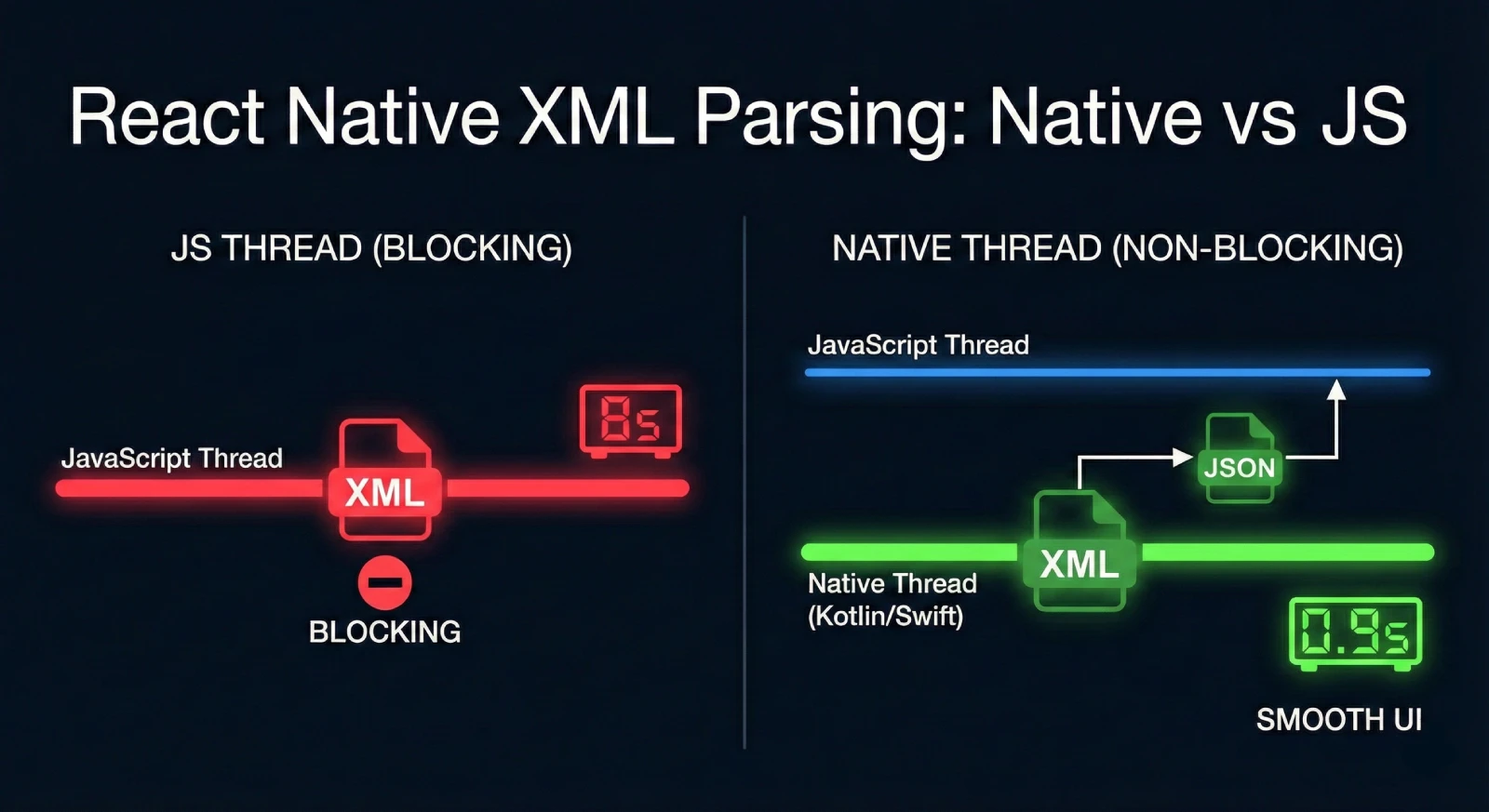
How to Fix Slow XML Parsing in React Native (Updated for 2026)
JavaScript XML parsers block your JS thread and kill performance. Learn how to use native modules for fast, non-blocking XML parsing in React Native. Updated for 2026.