Última atualização
Build a private, offline knowledge base over your own notes and PDFs using a local AI model. A hands-on beginner micro course: run a model with Ollama, turn documents into embeddings, store them in a local Chroma database, and ask questions answered from your own files. No cloud APIs, no fees, your data stays on your machine. Want to deploy it as a web app instead? See the Full-Stack RAG course (/courses/fullstack-rag-nextjs-supabase-gemini).
3 módulos • 7 aulas
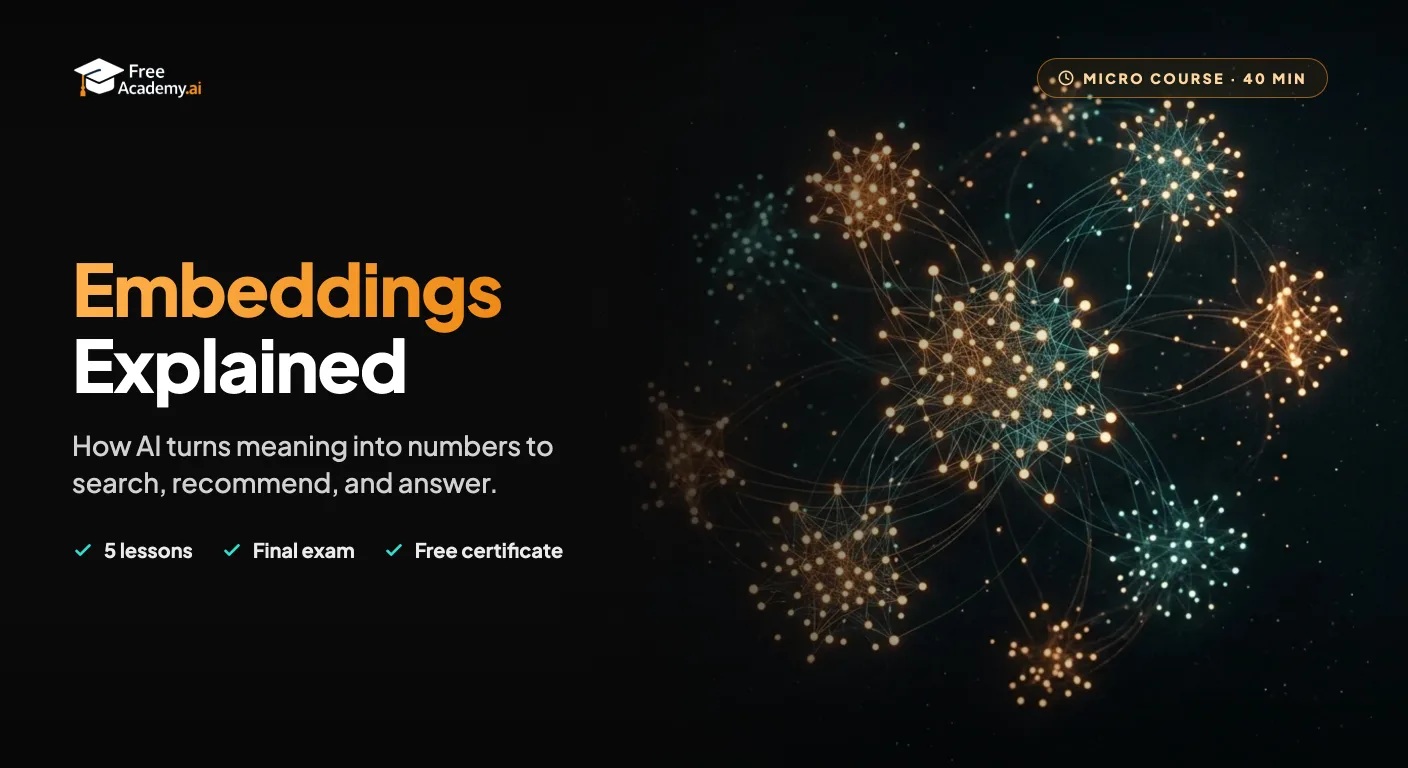
Learn the idea behind AI search, recommendations, and "chat with your documents" tools. See how embeddings turn meaning into numbers, why close means related, how semantic search beats keyword search, where embeddings show up in everyday apps, why document search sometimes misses, and how to judge tools built on it. No code, no math.
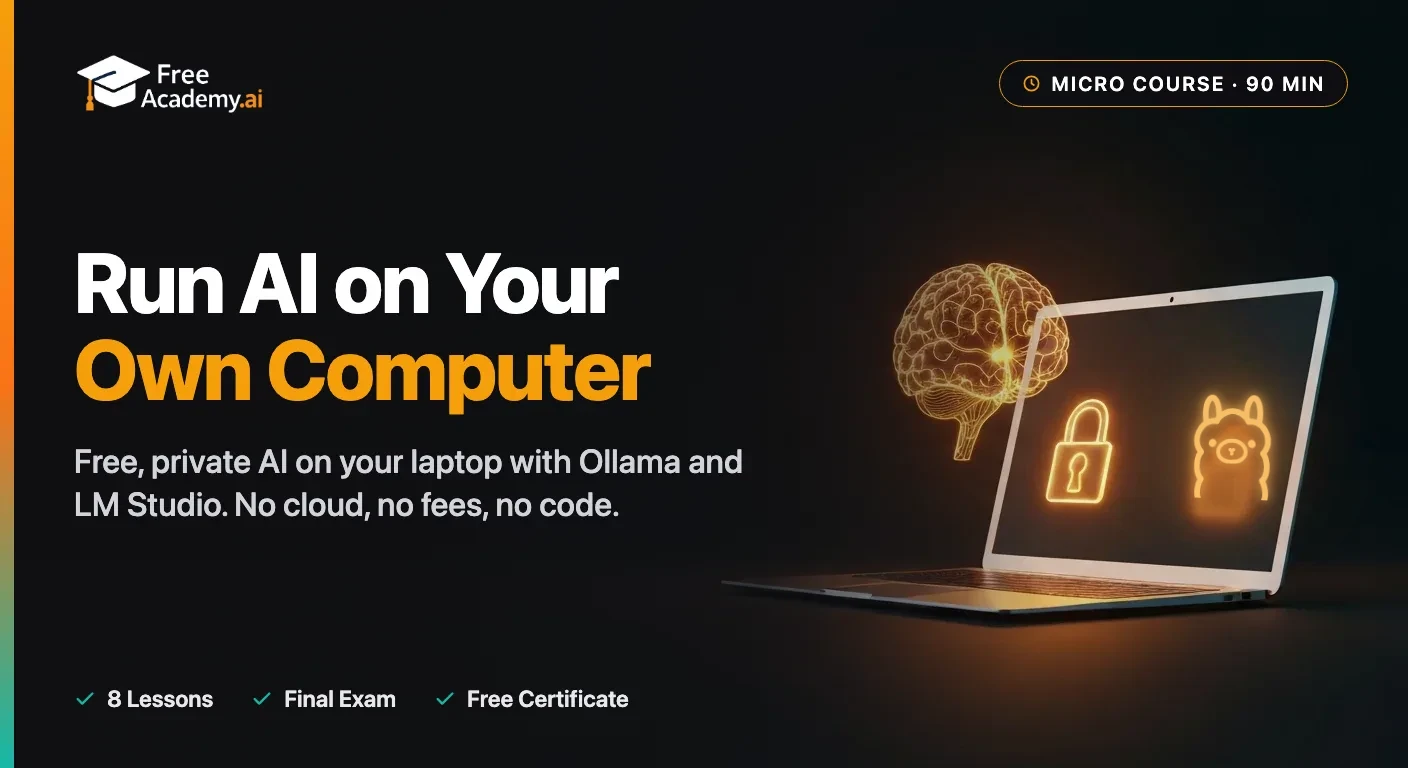
Run a free, private ChatGPT-style AI model right on your own laptop with Ollama and LM Studio. A beginner micro course: understand why local AI is private and free, check what your computer can actually run, install both tools, choose the right model, and use it every day to chat, draft, and summarize documents. No coding background needed, and your data never leaves your machine.
Set up Hermes Agent, the open-source self-hosted AI assistant from Nous Research that writes its own reusable skills and keeps all your data on your own machine. A beginner-friendly micro course: understand what makes Hermes different, install it with a single command, run your first useful tasks, and stay safe with a practical permissions checklist. Prefer a chat-app interface instead? Try the OpenClaw micro course (/courses/micro-openclaw-ai-agent).

Master vector databases for AI applications. Learn embeddings, similarity search, and hands-on setup of Pinecone, pgvector, and Chroma. Understand indexing strategies, hybrid search, performance optimization, and how to choose the right database for your use case.
Master the principles, architecture, and core components required to build production-ready RAG applications. Learn to create custom knowledge chatbots using Next.js, Supabase with pgvector, and Google's Gemini API. Perfect for JavaScript/Next.js developers who want to integrate advanced AI features.
Build a working AI agent from scratch in Python. Learn the think-act-observe loop, call an LLM, give your agent a tool it can use, and handle a failed tool call. Framework-agnostic and beginner-friendly.