A fast, practical micro course that teaches you to evaluate what you read and see online. Detect AI-generated text and images, recognize deepfakes, catch AI hallucinations, fact-check AI output against primary sources, and judge source credibility. Built for students, educators, and anyone who wants a verify-don't-trust mindset. No coding required, and you earn a free certificate of completion.
The internet is now full of text, images, and videos made or edited by AI, and almost none of it carries a label. A fluent article can be machine-written, a photorealistic photo can show an event that never happened, and a confident chatbot answer can be completely fabricated. This free micro course teaches the one skill that protects you through all of it: the ability to evaluate what you encounter instead of trusting it on sight.
In about an hour across six short lessons, you will build a verify-don't-trust mindset and the practical tools to back it up. You will learn to read AI-generated text for its tells while understanding why AI detectors are unreliable and unfair to some writers, spot AI-generated images and deepfakes using reverse image search and context rather than fading visual glitches, catch AI hallucinations and fact-check output against primary sources, and judge any source on authority, corroboration, and recency using the lateral-reading technique professional fact-checkers rely on.
The course is written for students, educators, and anyone navigating today's information flood. Students get a personal habit loop and a warning about AI-invented citations; educators get low-prep, classroom-friendly activities and reusable prompts that turn AI into a thinking partner, not an answer machine. No coding or technical background is needed, and every technique uses free, widely available tools. Finish the lessons and pass the short final exam to earn a free certificate of completion you can add to your LinkedIn profile or resume. Start building real AI literacy today.
3 modules • 6 lessons
Finish every lesson and pass the final exam to earn this free, shareable certificate.
Certificate of Completion
has successfully completed
6 lessons · Final exam passed

Michail Ouroumis
Founder, FreeAcademy.ai
Sample preview. Your name appears on the certificate when you complete the course. Learn more
It is built for students, educators, and anyone who wants to evaluate online content with confidence. The level is beginner, no coding or technical background is needed, and every technique uses free, widely available tools.
Yes, the course is completely free. After you finish the six short lessons and pass the final exam, you earn a certificate of completion that you can add to your LinkedIn profile or include on your resume.
Not with certainty, and the course is honest about that. AI text detectors produce false positives and are unfair to some writers, and visual tells in images are weakening as models improve. The course teaches you to verify claims and trace sources instead of relying on any single detector.
This course owns the evaluation lens: judging whether content is real and trustworthy. AI ethics covers principles like fairness and responsible use, and AI security covers defending against attacks and scams. The lessons link to both as complements, and you do not need either one first.
Yes. The final lesson gives educators low-prep, classroom-friendly activities like real-or-generated, trace-the-photo, and catch-the-hallucination, plus reusable prompts that turn AI into a thinking partner students still verify.
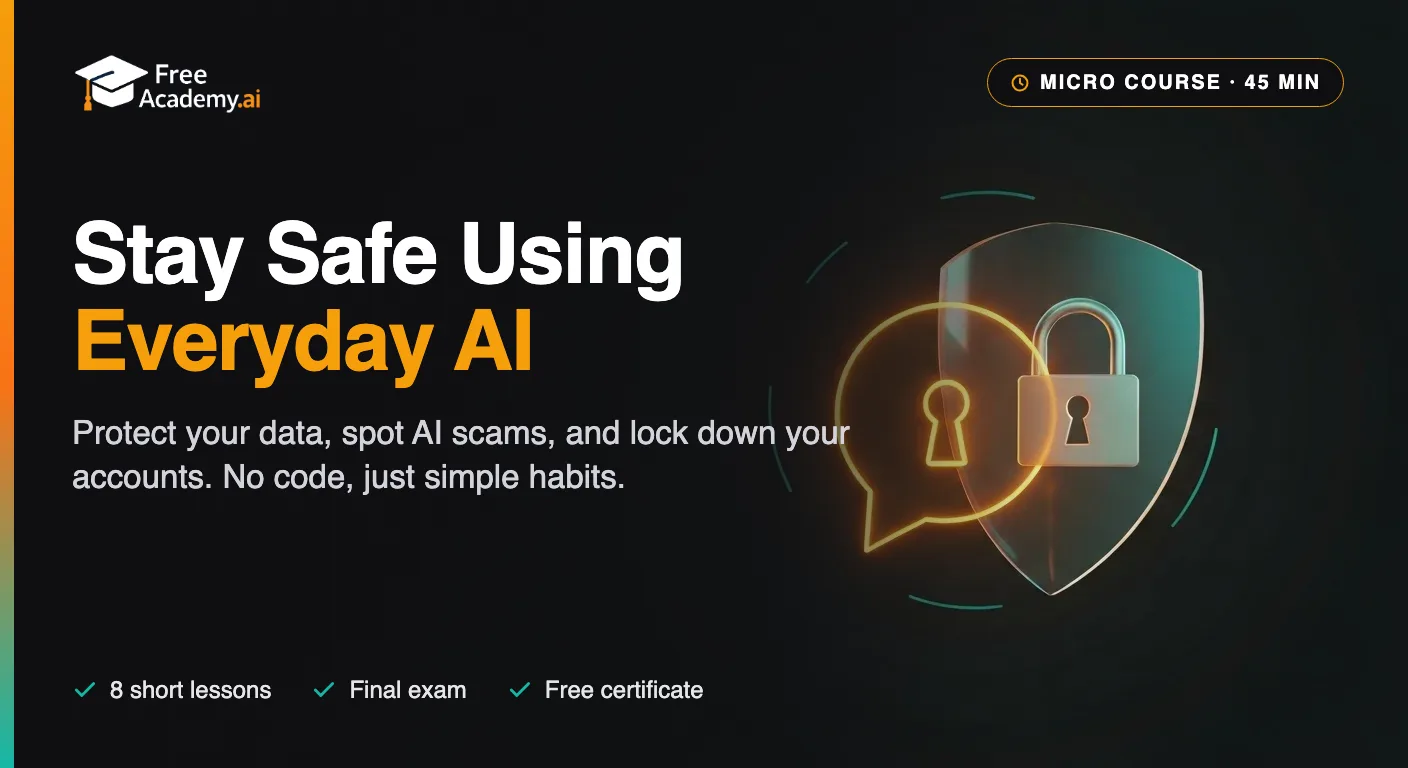
A short, no-code course on protecting yourself while you use AI. Learn what you should never paste into a chatbot, how to turn off data training in ChatGPT, Gemini, and Claude, how to spot voice-clone scam calls, deepfakes, and AI phishing, and how to keep your family safe. Practical safety habits for everyday AI users.
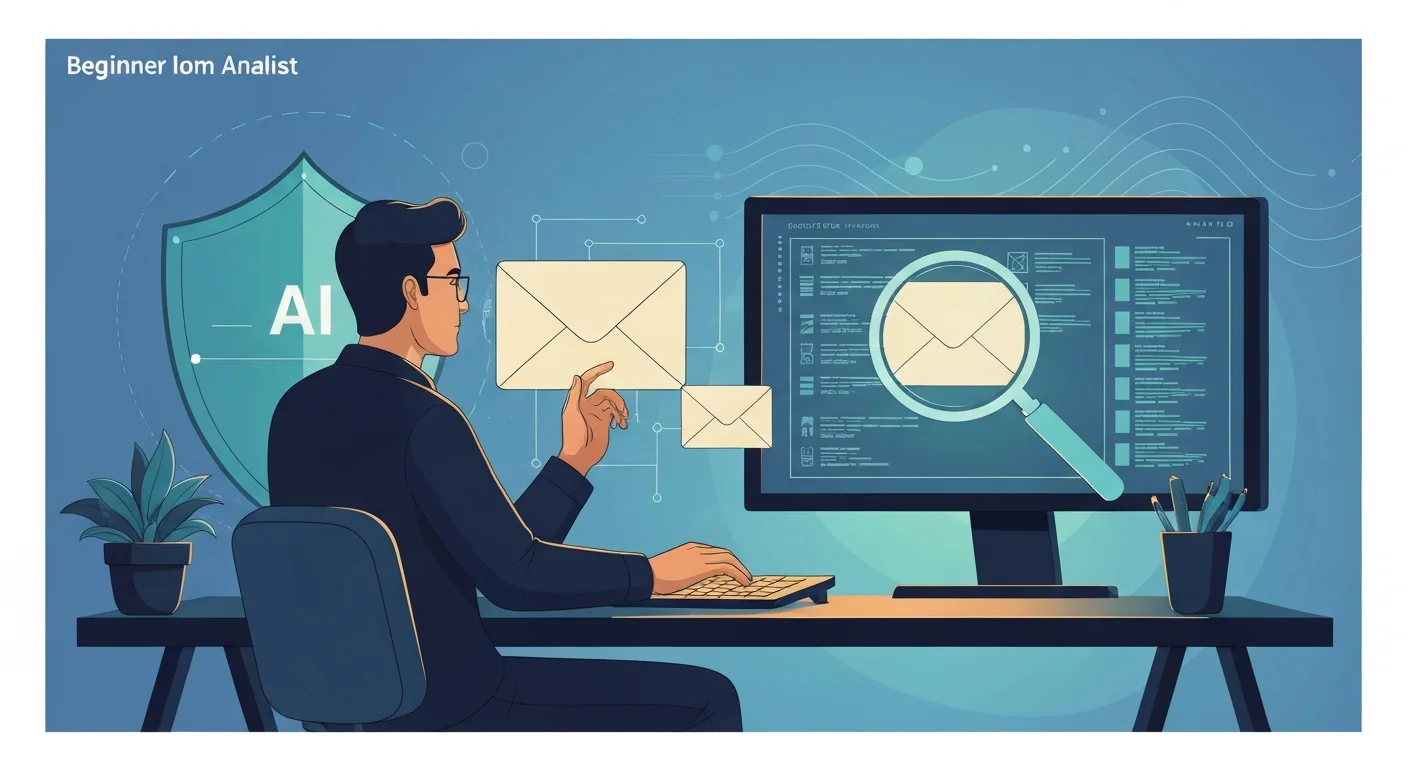
Run real security-analyst labs using free AI tools. Triage suspicious phishing emails, read and summarize security logs, hunt for threats with plain-English prompts, and learn secure prompting so you never leak sensitive data. No coding and no prior security experience required, and you earn a free certificate of completion for your LinkedIn and resume.

Learn how to use AI tools like ChatGPT, Claude, Gemini, and Perplexity to understand cybersecurity, spot phishing and scams, secure your devices and accounts, protect your privacy, and defend against AI-powered threats like deepfakes. Built for university students and early-career learners with zero prior experience — no coding required. Earn a free certificate to add to your LinkedIn and resume.

Learn the principles, practices, and skills to use AI responsibly. Explore bias, fairness, privacy, transparency, hallucinations, deepfakes, and the EU AI Act through hands-on exercises with ChatGPT, Claude, and Gemini. Perfect for university students and early-career learners. No coding required, and you earn a free certificate to add to your LinkedIn and resume.

Master AI-powered research techniques using Perplexity, ChatGPT, and Claude. Learn to craft effective research questions, fact-check AI responses, synthesize multiple sources, and create professional research reports.
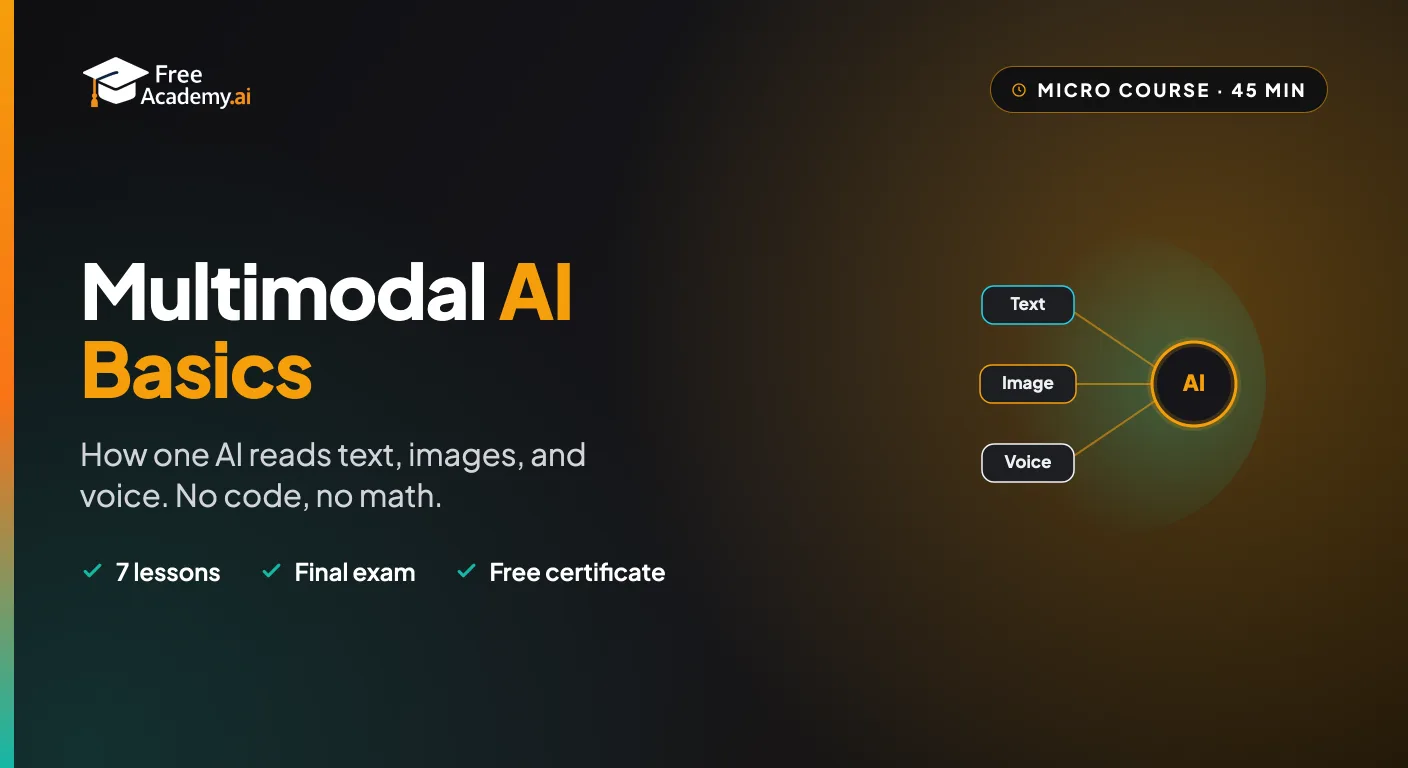
The one AI idea that ties everything together. Learn what 'multimodal' means, how a single AI model reads text, images, and voice together, what you can do with it, and where it shows up in ChatGPT, Gemini, and Claude. A short, no-code, no-math course for complete beginners.