

Why Your Content Isn't Showing Up in ChatGPT (And How to Fix It)

You've spent hours creating valuable content. Your blog posts are well-researched. Your expertise is real. But when someone asks ChatGPT a question you could answer perfectly, your content is nowhere to be found.
You're not alone. Millions of content creators, business owners, and marketers are discovering that the rules of online visibility have changed. Traditional SEO got you on Google's first page, but that doesn't guarantee you'll be cited by AI chatbots.
Let's understand why this happens and what you can do about it.
How ChatGPT Actually Finds Content
Before we fix the problem, you need to understand how ChatGPT and similar AI tools source their information.
The Training Data Factor
ChatGPT's base knowledge comes from its training data—a massive collection of text from the internet, books, and other sources. This training has a cutoff date, meaning anything published after that date isn't in the model's "memory."
Key insight: If your content was published recently or wasn't indexed in the training data, ChatGPT literally doesn't know it exists.
Real-Time Search Integration
Modern ChatGPT (and tools like Perplexity, Claude, and Google's AI Overviews) can now browse the web in real-time. When they do, they use search engines to find relevant pages, then synthesize information from those results.
This is where citability matters. Just because your page ranks on Google doesn't mean an AI will choose to cite it.
The Selection Process
When AI chatbots browse the web, they're looking for content that:
- Directly answers the user's question
- Comes from authoritative sources
- Is clearly structured and easy to extract information from
- Provides unique value or expertise
Your content needs to check these boxes to get cited.
Common Reasons Your Content Gets Ignored
1. Your Content Isn't Citable
Here's a hard truth: most web content is written for humans skimming, not for AI extraction.
What makes content hard to cite:
- Long paragraphs without clear structure
- Buried key information within walls of text
- Vague or generalized statements
- Missing definitions and direct answers
Example of uncitable content:
"Marketing is really important for businesses today. There are many different approaches you can take, and the right one depends on your specific situation. Let's explore some options..."
Example of citable content:
"Content marketing is a strategy that involves creating valuable, relevant content to attract and retain a target audience. The three main types are: blog posts, video content, and social media content."
The second version gives AI something concrete to cite.
2. No Clear Authority Signals
AI systems prioritize authoritative sources. They look for signals like:
- Author credentials and expertise
- Publication reputation
- Citations from other authoritative sources
- Clear about pages and contact information
If your content lacks these signals, AI may skip it in favor of more established sources—even if your information is better.
3. Poor Content Structure
AI chatbots need to quickly scan and extract relevant information. If your content is:
- Missing headers and subheaders
- Lacking bullet points and numbered lists
- Written in one continuous block
- Without clear sections
...it becomes much harder for AI to parse and cite.
4. Thin or Generic Content
Content that just rehashes what everyone else says gets filtered out. AI systems have seen thousands of articles on most topics. They're looking for:
- Original research or data
- Unique perspectives or expertise
- Specific, actionable information
- Real examples and case studies
Generic "10 tips for better marketing" articles rarely get cited because AI has better options.
5. Missing Schema and Metadata
Structured data helps AI understand what your content is about and what entities it covers. Without proper schema markup, you're making AI work harder to understand your content—and it might just move on to a competitor.
Quick Fixes to Improve Your AI Visibility
Fix #1: Lead with Direct Answers
Put your key information upfront. If someone might ask "What is X?", make sure your content opens with a clear, citable definition.
Before:
"In today's digital landscape, understanding X has become increasingly important..."
After:
"X is [clear definition]. It works by [brief explanation]. Here's what you need to know..."
Fix #2: Structure for Extraction
Format your content so AI can easily pull out key points:
- Use descriptive H2 and H3 headers
- Include bullet points and numbered lists
- Create clear sections that stand alone
- Add summary boxes or key takeaways
Fix #3: Build Authority Signals
- Add author bios with credentials
- Include citations to research and data
- Link to and from authoritative sources
- Display trust signals (certifications, awards, testimonials)
Fix #4: Add Original Value
Make your content worth citing:
- Include original research or data
- Share unique case studies
- Provide specific examples from your experience
- Offer actionable frameworks, not generic advice
Fix #5: Implement Structured Data
Add schema markup to help AI understand your content:
- Article schema for blog posts
- FAQ schema for Q&A content
- HowTo schema for tutorials
- Organization schema for your site
The Role of Citability in AI Visibility
Citability is the quality that makes AI want to reference your content when answering questions.
Think of it this way: when ChatGPT or Claude browses the web to answer a question, it's essentially doing what a research assistant would do. It scans multiple sources and decides which ones to quote or reference.
Your content needs to be:
- Findable — Ranking in search results so AI can discover it
- Relevant — Directly addressing the questions users ask
- Extractable — Structured so key information is easy to pull out
- Authoritative — Trustworthy enough that AI feels confident citing it
Miss any of these, and your content gets passed over.
What's Different About AI Optimization
Traditional SEO focused on:
- Keyword optimization
- Backlinks and domain authority
- User engagement metrics
- Technical site performance
AI visibility (sometimes called GEO—Generative Engine Optimization) adds new requirements:
- Clear, citable statements
- Structured, extractable content
- Strong authority signals
- Direct question answering
The good news: These changes also make your content better for human readers. Clearer structure, direct answers, and stronger expertise benefit everyone.
Common Questions About AI Content Visibility
Does SEO still matter for AI visibility?
Yes. AI chatbots still use search engines to find content. Strong SEO gets your content in front of AI systems. But ranking isn't enough—your content also needs to be citable once AI finds it.
How quickly can I improve my AI visibility?
Changes to existing content can have an impact within weeks as AI systems re-crawl your pages. However, building authority takes longer. Focus on quick wins (better structure, clearer answers) while working on longer-term authority building.
Should I create content specifically for AI?
Not exactly. Create content for humans that's also easy for AI to understand and cite. The best approach is clear, well-structured, authoritative content—which serves both audiences.
Does this apply to all AI chatbots?
The principles apply broadly to ChatGPT, Claude, Perplexity, Google's AI Overviews, and other AI-powered search tools. Each has slight differences, but the fundamentals of citability remain consistent.
Take Action Today
Getting your content cited by AI isn't mysterious—it requires intentional optimization for how these systems work.
Start with these three steps:
- Audit your top content — Is your key information buried or front-and-center?
- Add structure — Break up walls of text with headers, lists, and clear sections
- Strengthen authority — Add author bios, citations, and trust signals
Ready to master AI visibility? Our free GEO for ChatGPT & Claude micro course teaches you exactly how these AI systems find and select content—and how to optimize for each one. In just four focused lessons, you'll learn practical strategies you can implement immediately.
Want to understand ChatGPT better so you can optimize for it? See our best free ChatGPT courses for beginners for a complete learning path.
Conclusion
The shift to AI-powered search represents the biggest change to content visibility since Google launched. Content creators who adapt will thrive. Those who don't will watch their traffic and influence decline as more users turn to AI chatbots for answers.
The fix isn't complicated—it's about understanding how AI finds and selects content, then optimizing accordingly. Clear structure, direct answers, strong authority signals, and genuine expertise are what get your content cited.
Your content has value. Make sure AI can see it.
Go deeper: Learn the full discipline with our free GEO: Generative Engine Optimization course, and read What Is GEO? for the complete framework.
Enjoyed this article?
Join The FreeAcademy Weekly
One practical AI email every Tuesday. New free courses, AI tips, and a short note from the founder.
Free forever. Unsubscribe anytime.
Related articles
What is GEO? The New SEO for the AI Era
Learn what Generative Engine Optimization (GEO) is, why it matters for marketers and SEO professionals, and how to get your content cited by AI systems like ChatGPT, Claude, and Perplexity.

E-E-A-T in the Age of AI: What's Changed
Discover how E-E-A-T (Experience, Expertise, Authoritativeness, Trustworthiness) applies to AI systems like ChatGPT, Claude, and Perplexity, and what SEO professionals need to adapt.
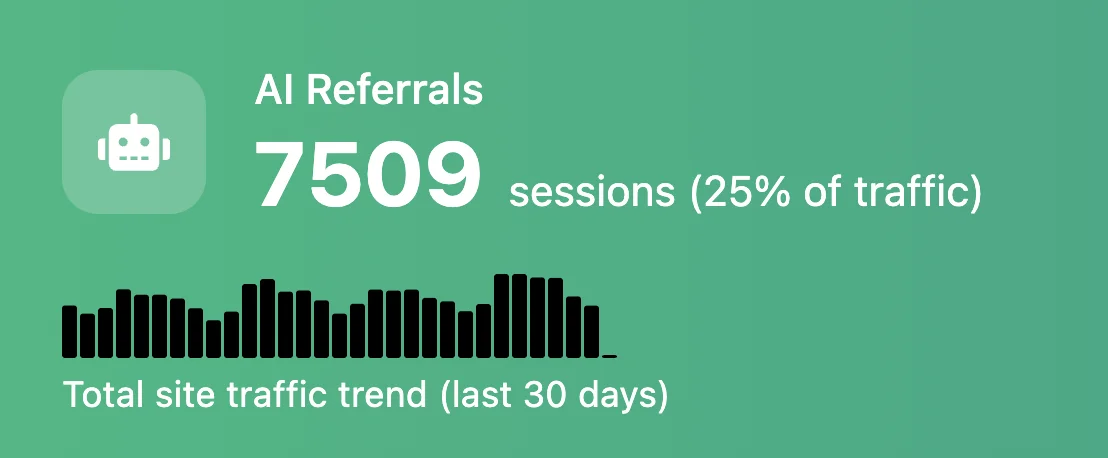
25% of Our Traffic Comes from ChatGPT and Claude — Here Is What We Learned About AI Citations
A data-driven case study: how 7,500 sessions from ChatGPT and Claude reshaped our view of SEO, brand mentions, and what makes content citable by AI in 2026.