

What is Supabase? The Open Source Firebase Alternative Explained

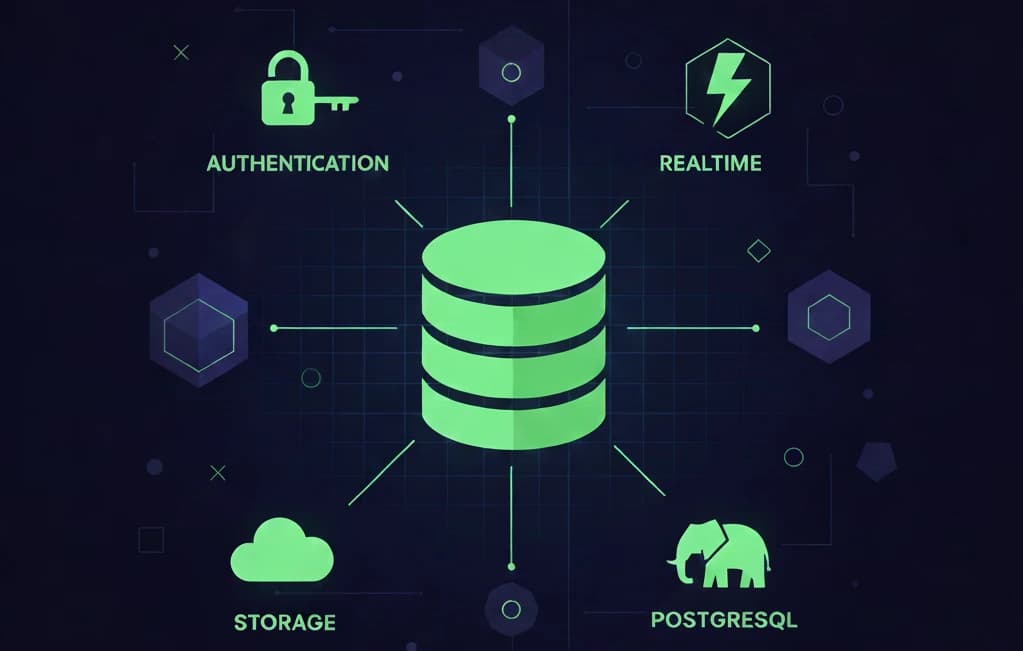
If you've been exploring backend solutions for your web or mobile application, you've likely come across Supabase. Often described as "the open source Firebase alternative," Supabase has rapidly gained popularity among developers seeking a powerful, flexible, and transparent backend platform. But what exactly is Supabase, and why are so many developers making the switch?
Understanding Supabase
Supabase is an open-source Backend-as-a-Service (BaaS) platform that provides developers with a complete backend infrastructure. Instead of building authentication, databases, file storage, and real-time functionality from scratch, Supabase offers these as ready-to-use services that you can integrate into your application within minutes.
What sets Supabase apart is its foundation: PostgreSQL. Unlike Firebase's proprietary NoSQL database (Firestore), Supabase is built entirely on PostgreSQL—one of the most powerful and trusted relational databases in the world. This means you get full SQL capabilities, proper relationships between data, and decades of battle-tested reliability. If you're new to SQL, our SQL Basics course covers PostgreSQL fundamentals from scratch.
Core Features of Supabase
PostgreSQL Database
At the heart of Supabase is a full PostgreSQL database. This gives you:
- Full SQL support: Write complex queries, joins, and aggregations
- Foreign keys and relationships: Proper data integrity between tables
- Indexes for performance: Optimize queries for speed
- Extensions: Access to powerful PostgreSQL extensions like pgvector for AI applications
- Direct database access: Connect using any PostgreSQL client or library
Authentication
Supabase provides a complete authentication system out of the box:
- Email/password authentication
- Magic link (passwordless) login
- OAuth providers (Google, GitHub, Discord, and many more)
- Phone authentication with SMS
- Multi-factor authentication (MFA)
All user data is stored in PostgreSQL, giving you full control and visibility.
Row Level Security (RLS)
One of Supabase's most powerful features is Row Level Security. RLS allows you to define access policies directly in your database:
-- Users can only read their own data
CREATE POLICY "Users can view own data"
ON profiles FOR SELECT
USING (auth.uid() = user_id);
This means security is enforced at the database level, not just in your application code. Even if someone bypasses your frontend, they still can't access data they shouldn't see.
Realtime Subscriptions
Supabase enables real-time functionality through three mechanisms:
- Postgres Changes: Subscribe to database changes (INSERT, UPDATE, DELETE)
- Broadcast: Send messages to connected clients without storing them
- Presence: Track who's online and their state
Building a chat app, collaborative document editor, or live dashboard becomes straightforward with these tools.
Storage
Supabase Storage handles file uploads with:
- Bucket organization for files
- RLS policies for access control
- Image transformations (resize, crop, format conversion)
- CDN delivery for fast access worldwide
Edge Functions
For custom server-side logic, Supabase offers Edge Functions:
- Written in TypeScript/JavaScript
- Run on Deno runtime
- Deploy globally on edge servers
- Perfect for webhooks, payment processing, or API integrations
Supabase vs Firebase: Key Differences
| Aspect | Supabase | Firebase |
|---|---|---|
| Database | PostgreSQL (relational) | Firestore (NoSQL document) |
| Query Language | SQL | Firestore query API |
| Open Source | Yes, fully | No |
| Self-Hosting | Supported | Not available |
| Vendor Lock-in | Minimal (standard PostgreSQL) | High |
| Data Export | Standard pg_dump | Firebase-specific |
| Pricing Model | Pay for resources used | Pay per operation |
When to Choose Supabase
Supabase excels when you:
- Need relational data with complex queries
- Want full SQL capabilities
- Prefer open-source solutions
- Need the option to self-host
- Want to avoid vendor lock-in
- Are building applications with structured, interrelated data
When Firebase Might Be Better
Firebase might be preferable when you:
- Need a mature mobile SDK ecosystem
- Have highly unstructured, document-oriented data
- Are already invested in the Google Cloud ecosystem
- Need Firebase's specific services (like Firebase ML)
Getting Started with Supabase
Starting with Supabase is straightforward:
- Create a project at supabase.com
- Get your API keys from the project settings
- Install the client library:
npm install @supabase/supabase-js
- Initialize and use:
import { createClient } from '@supabase/supabase-js'

const supabase = createClient(
  'https://your-project.supabase.co',
  'your-anon-key'
)

// Query data
const { data, error } = await supabase
  .from('posts')
  .select('*')
  .order('created_at', { ascending: false })
The Power of PostgreSQL
Choosing PostgreSQL as the foundation was a strategic decision by the Supabase team. PostgreSQL offers:
- Decades of development: Reliability and performance since 1986
- ACID compliance: Data integrity guarantees
- Rich ecosystem: Thousands of tools and extensions
- Scalability: Handles everything from hobby projects to enterprise applications
- Community: Massive open-source community and support
This means your Supabase knowledge transfers directly to any PostgreSQL environment. If you ever need to migrate, your data exports as standard PostgreSQL dumps. Want to sharpen your SQL skills? Check out our Interactive SQL Practice course for hands-on exercises.
Security First
Supabase takes security seriously:
- RLS by default: Tables are inaccessible until you explicitly grant access
- JWT authentication: Industry-standard token-based auth
- API key separation: Different keys for public (anon) and server (service_role) use
- SSL everywhere: All connections encrypted
- SOC 2 compliance: Enterprise-grade security practices
Real-World Use Cases
Developers are building diverse applications with Supabase:
- SaaS applications: Multi-tenant platforms with isolated customer data
- Social platforms: Real-time feeds, messaging, and presence
- E-commerce: Product catalogs, orders, and inventory management
- AI applications: Vector storage with pgvector for semantic search — often the backbone of the agent systems Cynked describes in AI Agents Explained: What Business Owners Need to Know
- Mobile apps: Cross-platform backends for iOS and Android
- Internal tools: Dashboards and admin panels
Learn Supabase In-Depth
If you're ready to master Supabase concepts, check out our comprehensive Supabase Fundamentals course. This theory-focused course covers everything from PostgreSQL basics to advanced security patterns:
- Backend-as-a-Service concepts and architecture
- PostgreSQL data types, relationships, and performance optimization
- Authentication methods and JWT token handling
- Row Level Security policies and patterns
- Real-time subscriptions and collaborative features
- Storage architecture and access control
- Edge Functions and serverless computing
- Database design patterns for production applications
- Security best practices and threat modeling
The course includes 38 lessons across 10 modules, plus a comprehensive final exam to test your knowledge.
Conclusion
Supabase represents a significant shift in backend development. By combining the reliability of PostgreSQL with the convenience of a managed platform, it offers developers the best of both worlds: power and simplicity.
Whether you're building a side project or a production application, Supabase provides the tools you need without the operational overhead of managing infrastructure yourself. And because it's open source, you're never locked in—your data and your options remain yours.
Ready to dive deeper? Start with our Supabase Fundamentals course and build a solid foundation in one of the most exciting backend platforms available today.
Enjoyed this article?
Join The FreeAcademy Weekly
One practical AI email every Tuesday. New free courses, AI tips, and a short note from the founder.
Free forever. Unsubscribe anytime.
Related articles
SQL Cheat Sheet: Commands You'll Use Daily
A comprehensive SQL quick reference covering SELECT queries, filtering, JOINs, aggregations, subqueries, CTEs, window functions, and data manipulation commands for daily use.
5 Regex Patterns Every Developer Should Know
Master essential regular expressions with these five practical patterns for email validation, URL matching, phone numbers, password strength, and log parsing.
5 SQL Mistakes That Cost Developers Jobs
Learn the most common SQL mistakes that hurt developers in interviews and on the job. From missing indexes to SQL injection vulnerabilities, avoid these pitfalls to advance your career.