Última actualización
Learn what physically happens when AI runs. See which parts of a computer matter for AI, why GPUs and AI chips took over, why memory is the real limit on model size and speed, how quantization shrinks models, and what goes on inside the data centers that train and serve them. No code, no math.
2 módulos • 5 lecciones
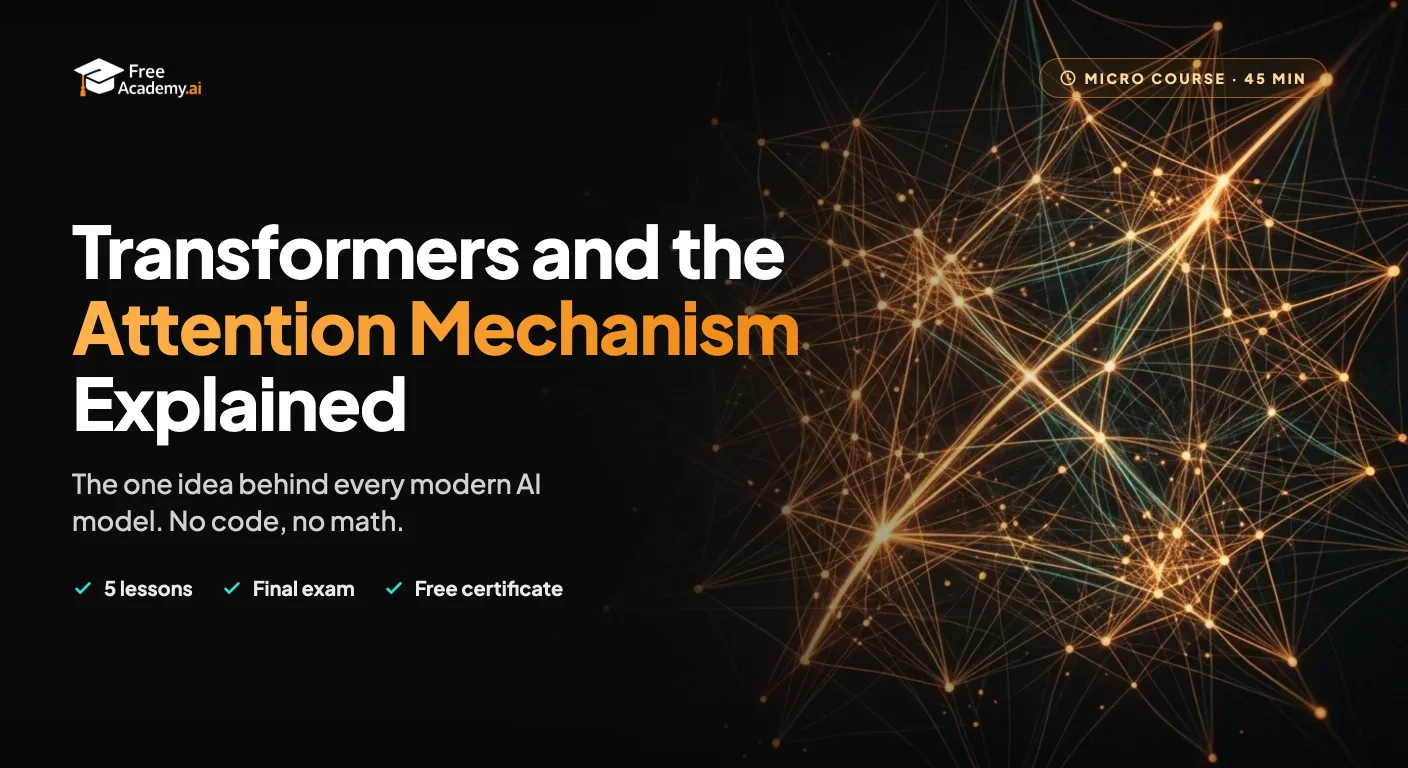
A short, no-code, no-math explainer of the attention mechanism that powers ChatGPT, Claude, and Gemini. Understand query, key, and value, why models use many attention heads, how word order is encoded, and why transformers read your whole prompt at once.
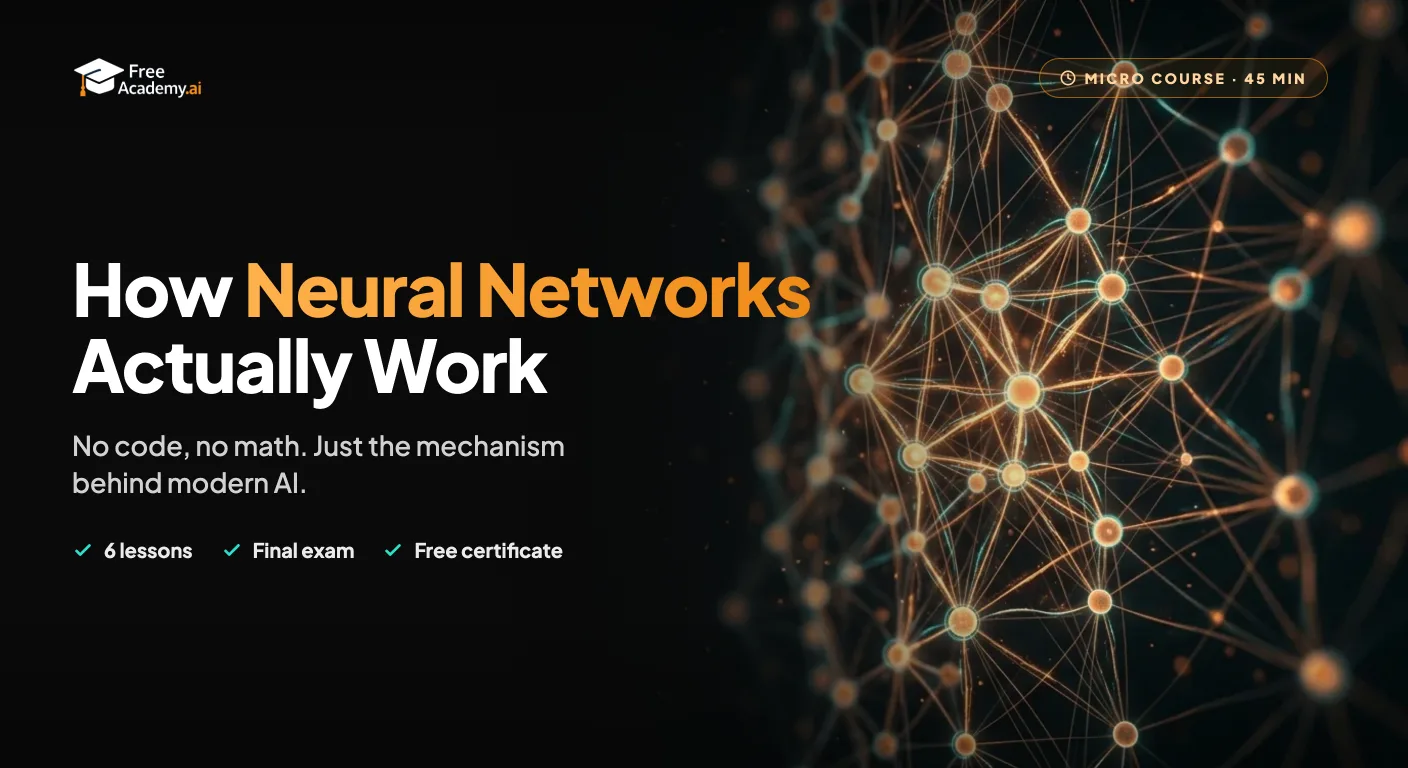
Understand the machine underneath modern AI without writing a line of code. Learn what a neuron does, why weights are the only place a model stores knowledge, how layers build their own concepts, and how training actually works through loss, gradient descent, and backpropagation.
Run a free, private ChatGPT-style AI model right on your own laptop with Ollama and LM Studio. A beginner micro course: understand why local AI is private and free, check what your computer can actually run, install both tools, choose the right model, and use it every day to chat, draft, and summarize documents. No coding background needed, and your data never leaves your machine.
Some AI models pause to "think" before they answer. Learn what reasoning models actually do, why thinking step by step helps, how models are trained to reason, when a reasoning model is worth the extra time and cost, how to prompt one well, and where their thinking still goes wrong. No code, no math.
Learn the idea behind AI search, recommendations, and "chat with your documents" tools. See how embeddings turn meaning into numbers, why close means related, how semantic search beats keyword search, where embeddings show up in everyday apps, why document search sometimes misses, and how to judge tools built on it. No code, no math.
Find out why ChatGPT, Claude, and Gemini feel helpful, polite, and safe instead of just completing text. A short, no-code course on reinforcement learning, supervised fine-tuning, reward models, PPO and DPO, and the side effects of alignment like sycophancy and reward hacking. The natural next step after How LLMs Actually Work.