
Última actualización
Use AI to run a farm or agribusiness better. Spot crop stress early, time planting and harvest around weather risk, budget for input costs, research markets before you sell, and keep supply orders and labor on schedule.
1 módulos • 5 lecciones
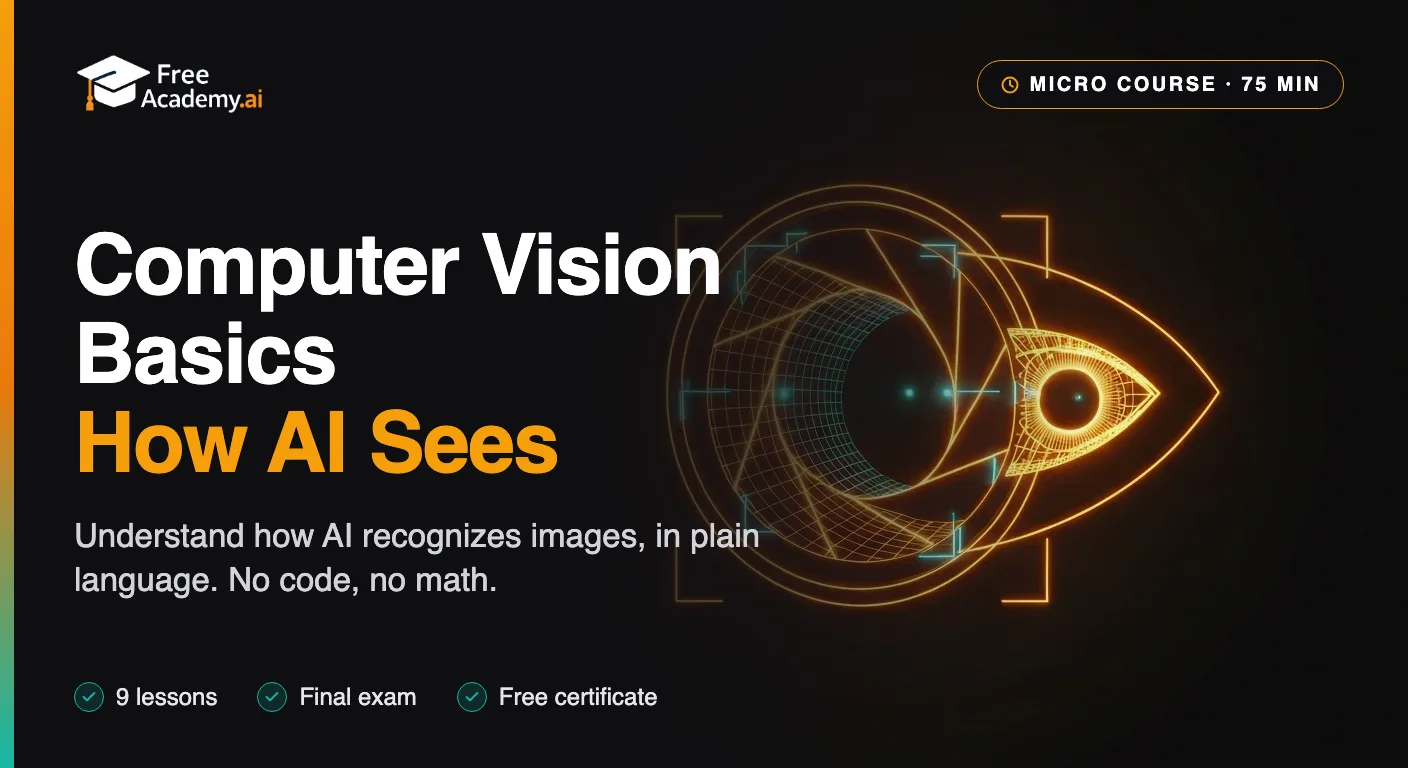
Understand how AI recognizes what is in a picture, in plain language with no code and no math. Learn how a computer turns a photo into numbers, how it learns patterns from examples, and the core vision tasks: image classification, object detection, face recognition, and OCR. See where computer vision shows up in daily life, why it fails, and how to spot bias. Finish by testing a multimodal chatbot's vision yourself. This course is about recognizing images, not generating them.

Learn how to use AI tools like ChatGPT, Claude, Gemini, and Perplexity to run a smarter, leaner business. Write marketing content, handle customer emails, build quotes and proposals, research competitors, read your finances, get found on Google, and automate the busywork. Built for solo founders, shop owners, freelancers, and side-hustlers with no technical background, using hands-on prompts you can apply today. No coding required, and you earn a free certificate for LinkedIn and your resume.

Learn how to use AI tools to transform your work as a chef. Discover practical techniques for menu development, recipe creation, food costing, allergen substitutions, prep lists, plating descriptions, wine pairings, and kitchen workflows. Built for chefs, sous chefs, line cooks, culinary students, and kitchen managers. No coding required.
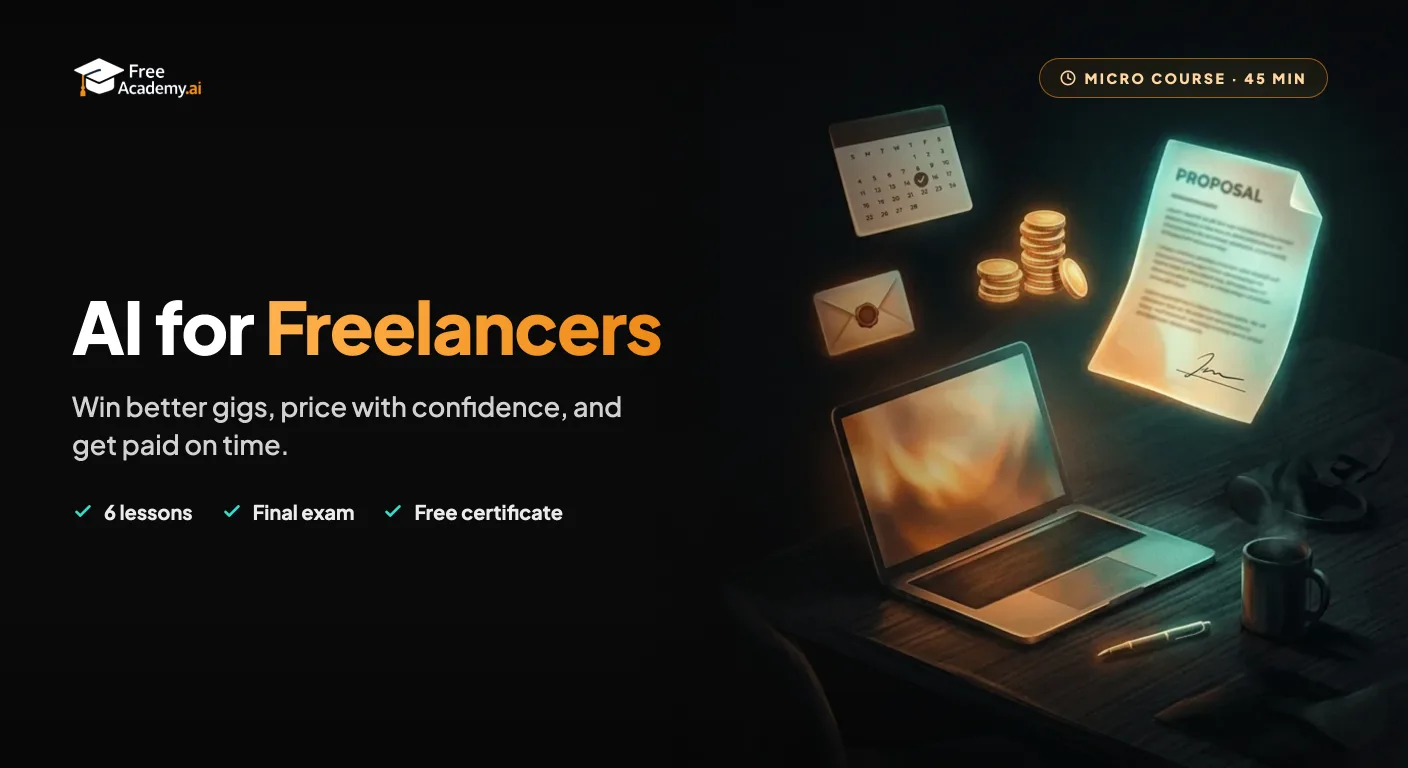
Use AI to run the business side of freelancing. Qualify gigs before you bid, write proposals that get replies, price and quote with confidence, set clear scope, push back on scope creep, and chase late payments politely. Ends with a reusable prompt toolkit you can use with every client. No code needed.
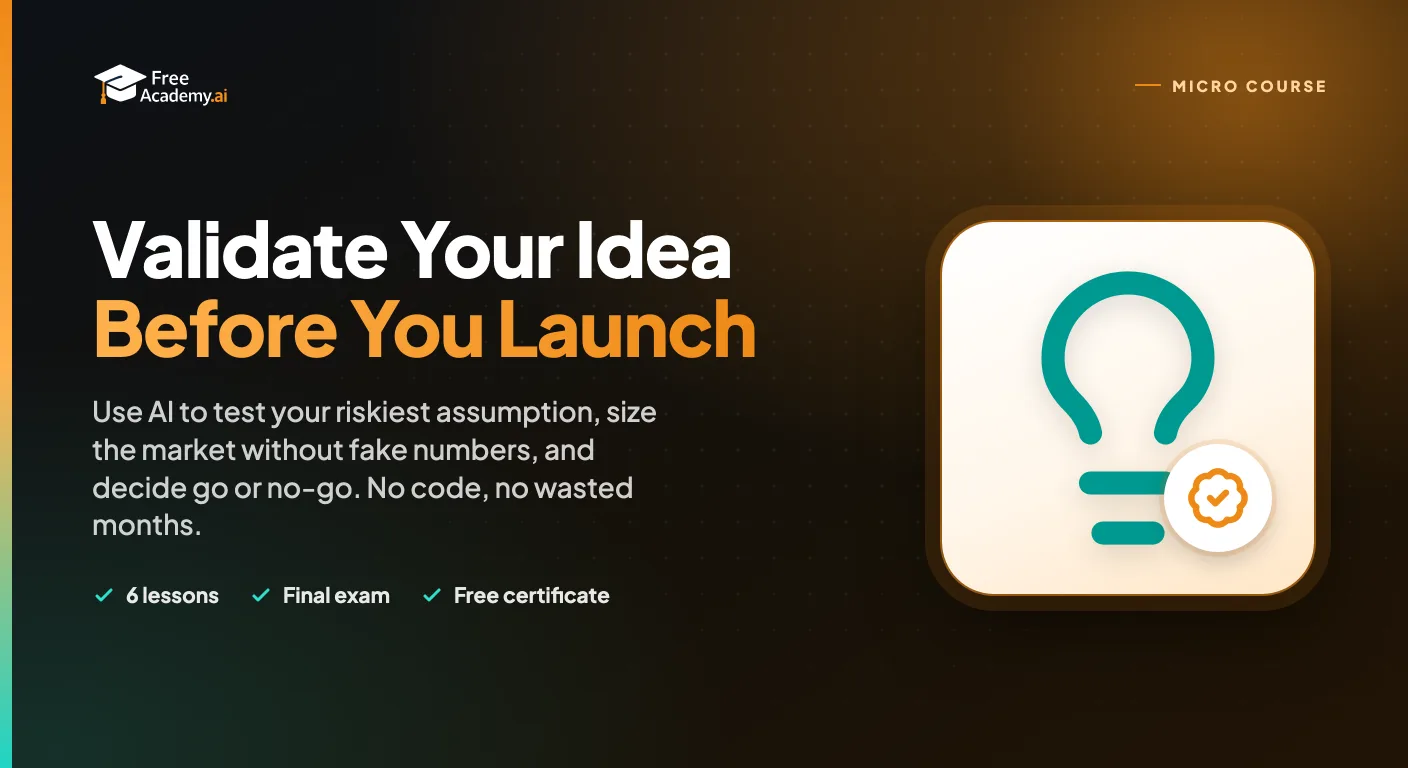
A fast, practical micro course for aspiring founders. Use AI to find your riskiest assumption, research market size without getting fooled by hallucinated numbers, draft customer interviews, map competitors, run quick demand tests, and turn the signals into a clear go or no-go decision before you spend money building.
Explore the intersection of economics and sustainability. Learn how economic principles can be adapted to address environmental challenges, climate change, resource management, and social equity. Perfect for students, policymakers, and anyone interested in building a sustainable future.